

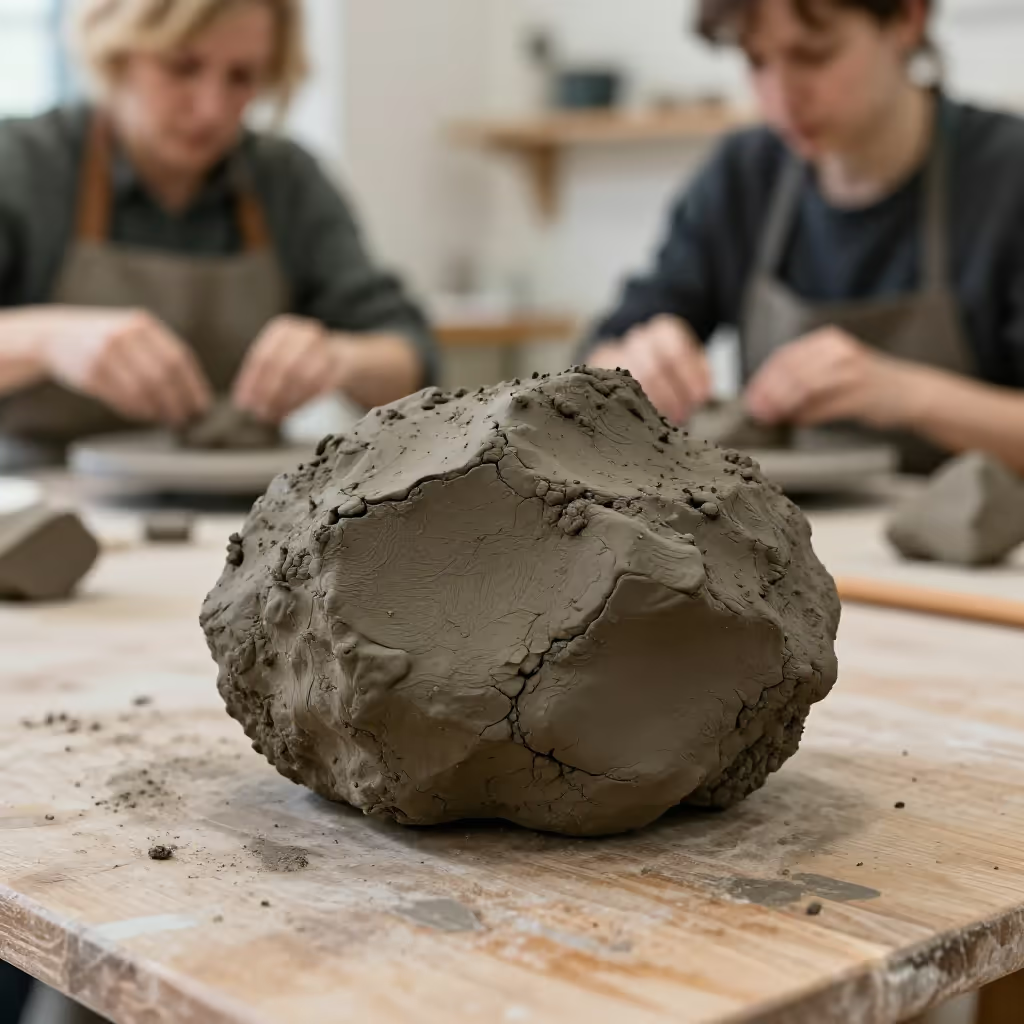
der Klumpen
lump
An irregularly shaped, solid mass made of a particular material.
EXAMPLE
Sie formte aus dem Teig einen großen Klumpen.
She formed the dough into a large lump.
lump
Loading your saved state.
lump
An irregularly shaped, solid mass made of a particular material.
Sie formte aus dem Teig einen großen Klumpen.
She formed the dough into a large lump.

lump / hulk
Colloquial for something large, heavy, and clumsy, also for a person.
Stell diesen alten Klumpen von einem Fernseher endlich in den Keller!
Put that old hulk of a television in the basement already!
The related verb 'verklumpen' means that a substance (e.g., flour in water) forms solid, irregular pieces or clumps. This helps you understand the basic meaning of 'Klumpen' (lump) as a shaped mass.
Das Saucenpulver ist im heißen Wasser verklumpt.
The sauce powder clumped in the hot water.
In its neutral meaning, 'Klumpen' (lump) is often combined with the material the mass consists of. The typical structure is 'ein Klumpen [material]' (a lump of [material]), for example 'ein Klumpen Lehm' (a lump of clay), 'ein Klumpen Gold' (a lump of gold), or 'ein Klumpen Eis' (a lump of ice).
Im Garten fand er einen großen Klumpen Lehm.
He found a large lump of clay in the garden.
This meaning is colloquial and always negative (pejorative). It expresses that a thing or person is perceived as shapeless, heavy, old, or clumsy.
Was für ein alter Klumpen von einem Auto!
What an old hulk of a car!
You can recognize the colloquial meaning when 'Klumpen' (lump/hulk) refers to a finished object (e.g., a piece of furniture) or a person and the tone of the sentence is derogatory. The neutral meaning usually refers to raw materials.
Beweg dich mal, du alter Klumpen!
Move it, you old lump!
chunk
“Brocken” and “Klumpen” both refer to an irregular solid amount. A “Brocken” is more likely to be a large piece that has been separated from a solid whole. A “Klumpen,” by contrast, is a cohesive mass of material that has collected or clumped together.
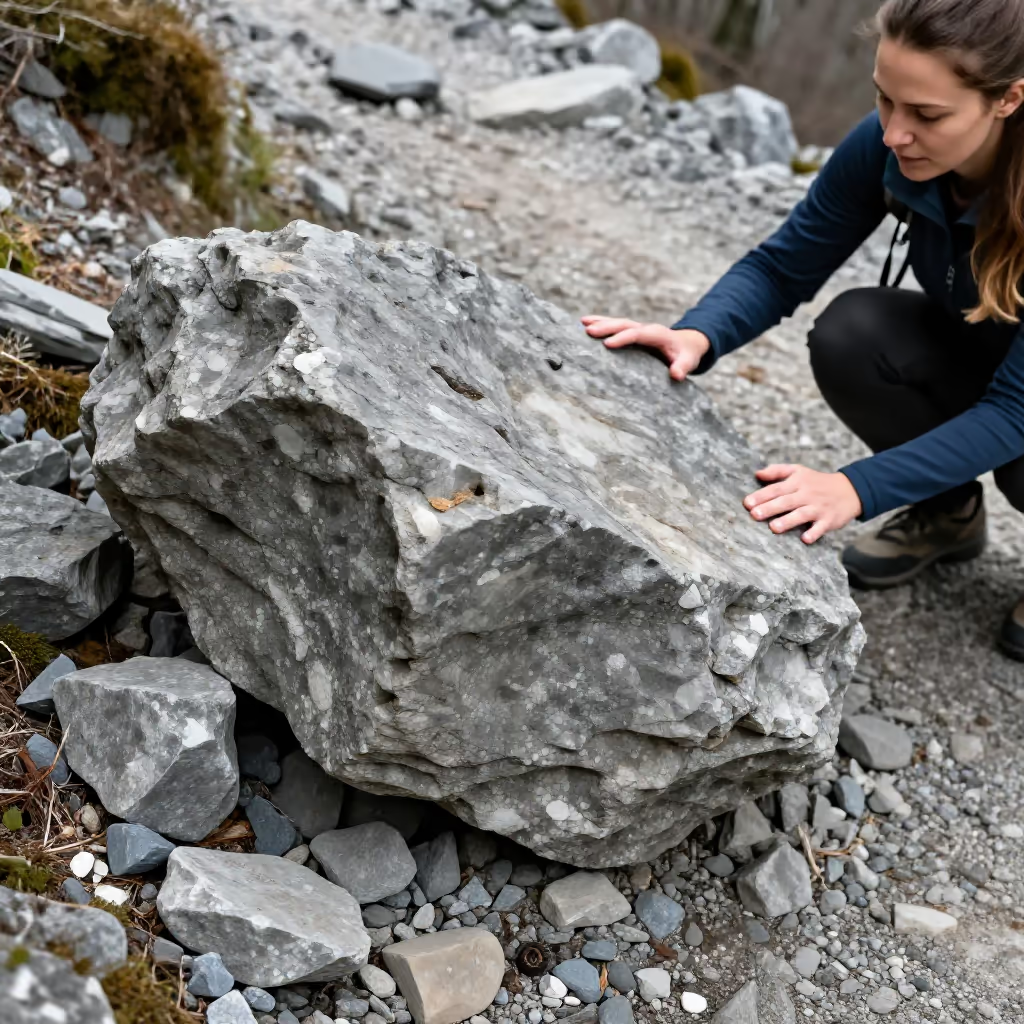
Der feuchte Ton wurde in der Hand zu einem großen Klumpen.
The moist clay was formed into a large lump in his hand.
Von der getrockneten Tonplatte brach ein großer Brocken ab.
A large chunk broke off the dried clay slab.