


der Batzen
wad
Colloquial term for a large, often unexpectedly high sum of money.
EXAMPLE
Das neue Auto hat einen ganzen Batzen Geld gekostet.
The new car cost a whole wad of money.
wad / lump
Loading your saved state.
wad
Colloquial term for a large, often unexpectedly high sum of money.
Das neue Auto hat einen ganzen Batzen Geld gekostet.
The new car cost a whole wad of money.

lump
A large, irregularly shaped lump or chunk of a soft or moldable substance.
Er nahm einen großen Batzen Lehm und formte daraus eine Figur.
He took a large lump of clay and shaped it into a figure.
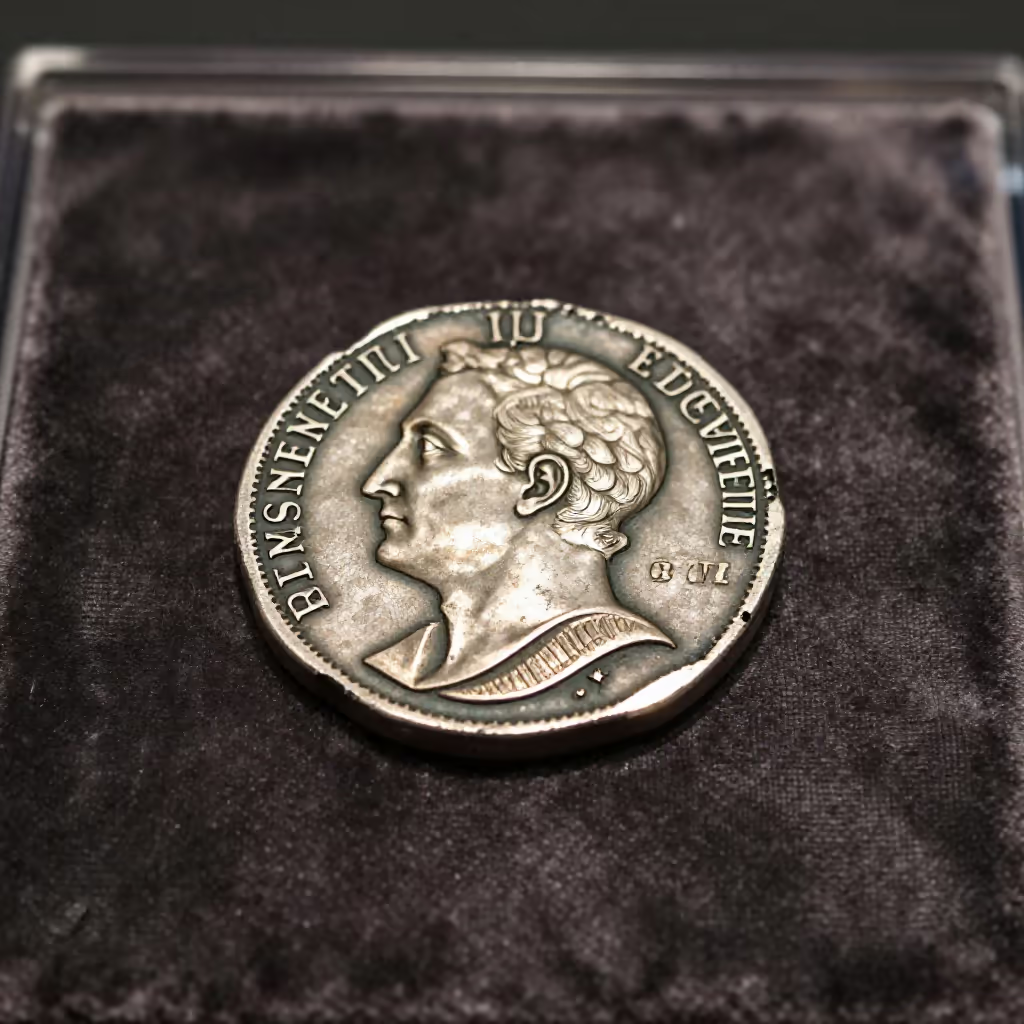
Batzen coin
A historical term for an old coin that was common especially in southern Germany and Switzerland.
Im Museum sahen wir eine Sammlung alter Münzen, darunter auch einen Batzen aus dem 16. Jahrhundert.
In the museum, we saw a collection of old coins, including a Batzen coin from the 16th century.
You can tell from the context whether 'Batzen' means money or a lump of material. If it is about costs, prices, or finances, money is meant. In connection with moldable materials such as dough or clay, it means a lump.
Für die Reparatur musste ich einen Batzen Geld bezahlen.
I had to pay a wad of money for the repair.
The use of 'Batzen' for a large sum of money is colloquial. In formal texts or conversations, people are less likely to use the word.
Wow, die neue Kamera kostet ja einen ganz schönen Batzen!
Wow, that new camera costs quite a wad!
The fixed phrase 'ein Batzen Geld' (a wad of money) is very common. You can also say that something 'einen Batzen kostet' (costs a wad) or is 'ein ordentlicher Batzen' (quite a sum).
Sein Lottogewinn war ein ordentlicher Batzen Geld.
His lottery win was quite a wad of money.
In this meaning, 'Batzen' often appears together with the name of a material. Typical phrases are 'ein Batzen Lehm' (a lump of loam/clay), 'ein Batzen Ton' (a lump of clay), or 'ein Batzen Teig' (a lump of dough).
Die Kinder warfen große Batzen Schnee gegeneinander.
The children threw large lumps of snow at each other.
The meaning as a coin is purely historical. You will find this word in texts about the history of money or in museums, but not in modern payment transactions.
Der ausgestellte Batzen stammt aus dem alten Bern.
The displayed Batzen coin comes from old Bern.
pile / bunch
Haufen can colloquially refer to a large amount of money and focuses more on the accumulated amount. Batzen is used especially for a single, often unexpectedly large sum of money. Haufen works for money that has been saved, while Batzen works for a large single amount.

Für sein altes Auto bekam er einen Batzen Geld.
He got a wad of money for his old car.
Nach vielen Jahren hatte sie einen Haufen Geld gespart.
After many years, she had saved a lot of money.