

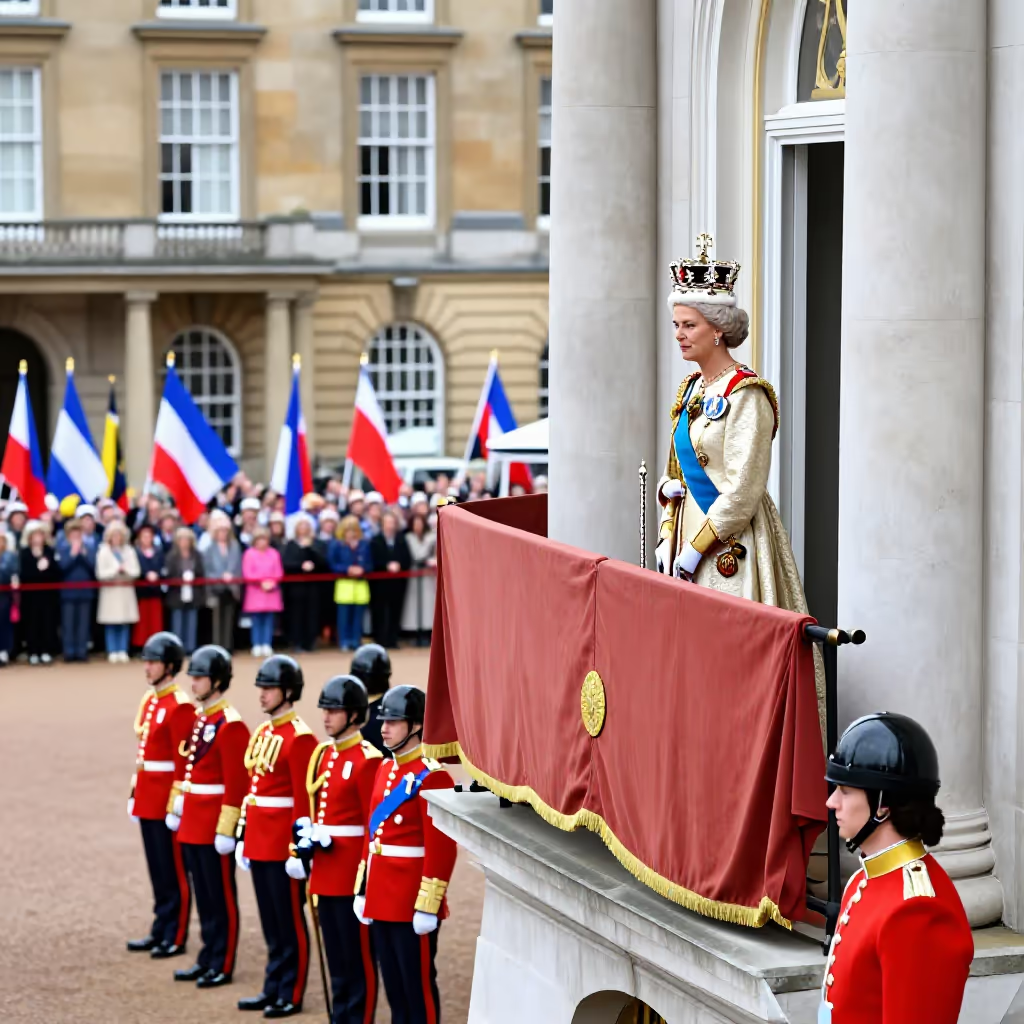
A state or country whose head of state is a king or queen. The form of government is a monarchy.
example
Das Vereinigte Königreich besteht aus England, Schottland, Wales und Nordirland.
The United Kingdom consists of England, Scotland, Wales, and Northern Ireland.

Usage tips
Compound word
The word is made up of 'König' (king) and 'Reich' (empire / realm). 'Das Reich' means 'empire' or 'realm'. A 'Königreich' (kingdom) is therefore literally the realm ruled by a king or queen.
EXAMPLE
In vielen Märchen geht es um Prinzen und Prinzessinnen in einem Königreich.
Many fairy tales are about princes and princesses in a kingdom.
Component '-reich'
The ending '-reich' refers to a territory under rule or to a state. You also find it in country names such as 'Frankreich' (France; literally the realm of the Franks) or 'Österreich' (Austria).
EXAMPLE
Das alte Königreich umfasste riesige Ländereien.
The old kingdom included vast lands.
Typical context
The word 'Königreich' (kingdom) is often used in historical texts, in news about monarchies, as well as in fairy tales and fantasy stories.
EXAMPLE
Der Archäologe entdeckte die Ruinen eines vergessenen Königreichs.
The archaeologist discovered the ruins of a forgotten kingdom.
Compare with
antonym · confusable
Königreich vs Republik
republic
'die Republik' and 'das Königreich' both refer to a form of government or a country, but they are opposites. In a republic, there is no king and no queen; the head of state is elected for a certain period of time. In a kingdom, a king or queen is the head of state. Learners may confuse the words because both talk about states. The simple difference is: a republic without a monarch, a kingdom with a monarch.
Königreich
Im Königreich Dänemark ist eine Königin oder ein König das Staatsoberhaupt.
In the Kingdom of Denmark, a queen or king is the head of state.
Republik
Frankreich ist eine Republik, weil es keinen König als Staatsoberhaupt hat.
France is a republic because it does not have a king as head of state.