

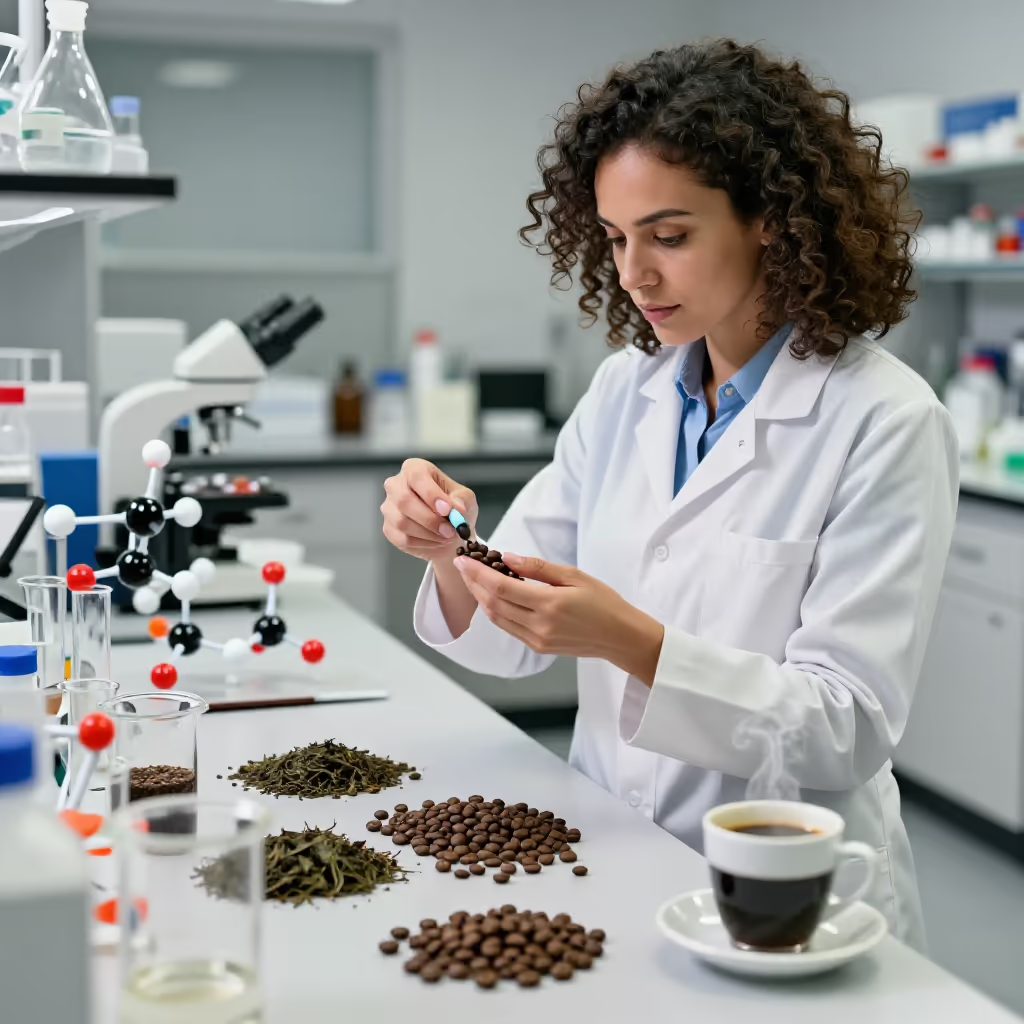
A chemical substance with a stimulating effect on the central nervous system that occurs naturally in coffee beans, tea leaves, cocoa beans, and kola nuts.
example
Ich trinke abends keinen Kaffee mehr, weil mich das Koffein vom Schlafen abhält.
I don't drink coffee in the evening anymore because the caffeine keeps me from sleeping.
Usage tips
Word structure
The word is derived from 'Kaffee' (coffee). The ending '-in' is often used in German for chemical substances and active ingredients, as in 'Aspirin' (aspirin) or 'Penicillin' (penicillin).
EXAMPLE
Koffein ist der anregende Wirkstoff im Kaffee.
Caffeine is the stimulating active ingredient in coffee.
Use as a substance name
'Koffein' (caffeine) is an uncountable noun (a substance name). Therefore, it is usually used without an article or with quantity words such as 'viel' (much / a lot of), 'wenig' (little), or 'kein' (no).
EXAMPLE
Dieser Tee enthält nur sehr wenig Koffein.
This tea contains only very little caffeine.
Important adjectives
In everyday life, the derived adjectives 'koffeinhaltig' (containing caffeine / caffeinated) and 'koffeinfrei' (without caffeine / decaffeinated) are very useful. You often find them on drink packaging.
EXAMPLE
Möchten Sie normalen oder koffeinfreien Kaffee?
Would you like regular or decaffeinated coffee?
Compare with
confusable
Koffein vs Nikotin
nicotine
'das Koffein' and 'das Nikotin' are both substances that affect the body. They are sometimes confused because both can have a stimulating effect and are connected with habits. 'Koffein' is found mainly in coffee, tea, cocoa, or cola, and it helps you stay awake. 'Nikotin' occurs mainly in tobacco products and is highly addictive; it is also poisonous. When talking about coffee or energy, 'Koffein' fits. When talking about smoking, tobacco, or cigarettes, 'Nikotin' fits.
Koffein
Wegen der Arbeit hat Lisa am Abend noch Kaffee mit Koffein getrunken.
Because of work, Lisa drank coffee with caffeine in the evening.
Nikotin
Viele Raucher finden es schwer, vom Nikotin loszukommen.