

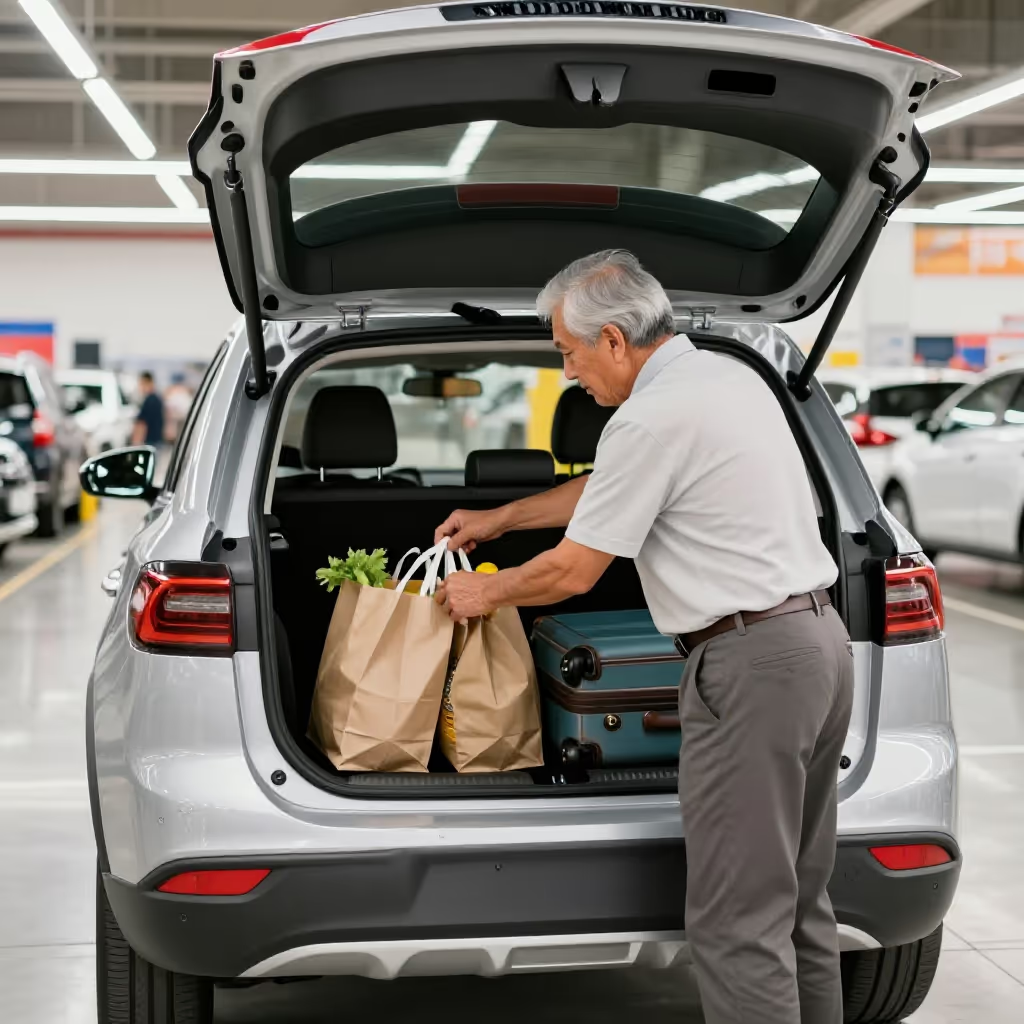
der Kofferraum
trunk
The storage space in a car, usually located at the rear, used for transporting luggage, groceries, and other items.
EXAMPLE
Wir haben alle Koffer im Kofferraum verstaut.
We stored all the suitcases in the trunk.
trunk
Loading your saved state.
trunk
The storage space in a car, usually located at the rear, used for transporting luggage, groceries, and other items.
Wir haben alle Koffer im Kofferraum verstaut.
We stored all the suitcases in the trunk.
'Kofferraum' (trunk) is made up of 'Koffer' (suitcase) and 'Raum' (space/room). So it is literally the 'space for suitcases' in a vehicle.
Der Kofferraum dieses Kleinwagens ist überraschend groß.
The trunk of this small car is surprisingly large.
Pay attention to the case with the preposition 'in': movement into the storage space is expressed with the accusative ('in den Kofferraum' - into the trunk), while a state/location inside it is described with the dative ('im Kofferraum' - in the trunk).
Bitte leg die Einkaufstüten in den Kofferraum.
Please put the grocery bags into the trunk.
Common verbs used with 'Kofferraum' (trunk) are 'öffnen' (to open), 'schließen' (to close), 'etwas hineinlegen' (to put something in), 'etwas herausnehmen' (to take something out), or 'beladen' (to load).
Kannst du bitte den Kofferraum öffnen?
Can you please open the trunk?
cargo hold
The Kofferraum is a car's storage space, usually at the rear, for luggage and groceries. Laderaum is more general and refers to the cargo area in various vehicles, ships, or airplanes. For an ordinary car, Kofferraum is usually the right word; for a transport vehicle, Laderaum is more appropriate.

Wir legen unsere Reisetaschen in den Kofferraum des Autos.
We put our travel bags in the trunk of the car.
Wir stellen die schweren Kisten in den Laderaum des Lieferwagens.
We put the heavy crates in the delivery van's cargo area.