


der Koks
coke
A colloquial term for the illegal drug cocaine.
EXAMPLE
Die Polizei fand bei der Razzia eine größere Menge Koks.
During the raid, the police found a larger quantity of coke.
coke / dough
Loading your saved state.
coke
A colloquial term for the illegal drug cocaine.
Die Polizei fand bei der Razzia eine größere Menge Koks.
During the raid, the police found a larger quantity of coke.
coke
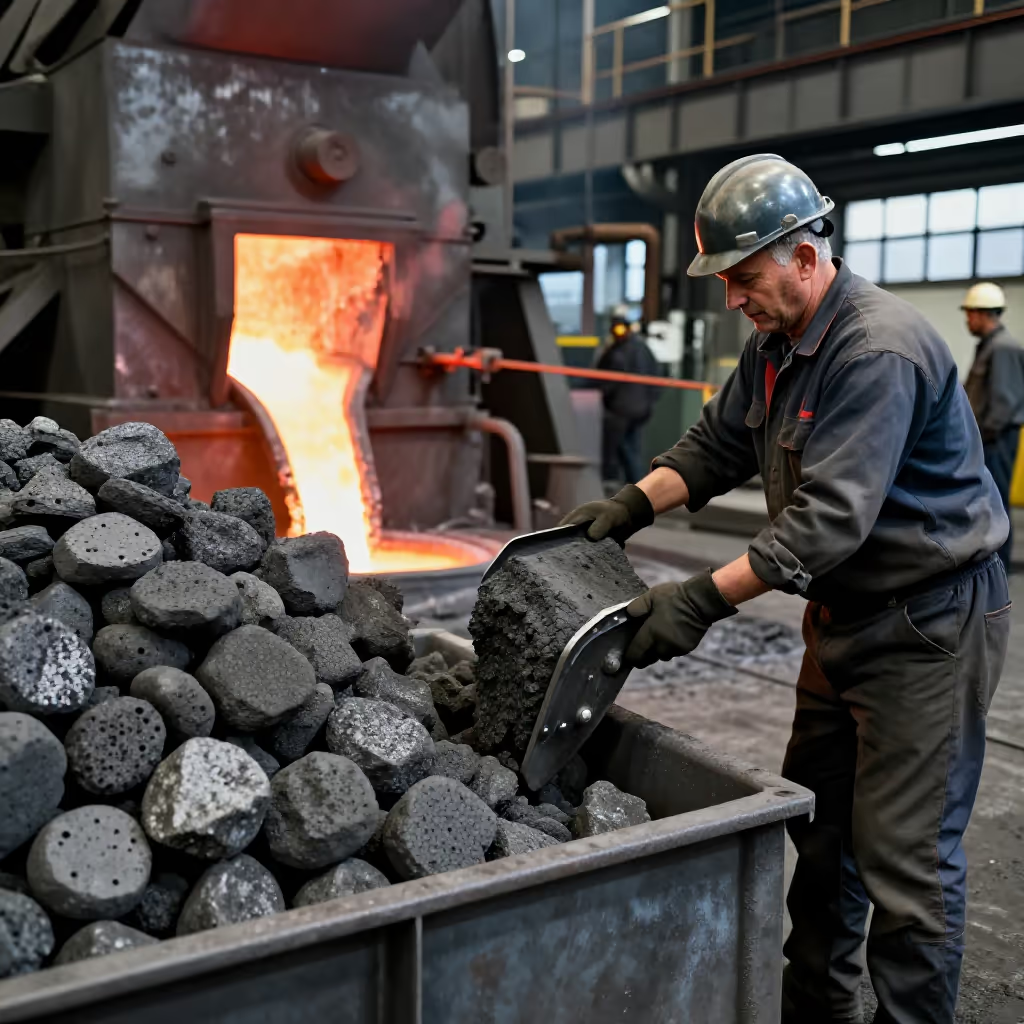
A solid, porous fuel with a high carbon content, produced by heating coal without air. It is used mainly in the iron and steel industry.
Für die Stahlerzeugung im Hochofen wird Koks als Reduktionsmittel benötigt.
For steel production in a blast furnace, coke is needed as a reducing agent.

dough
In thieves' cant and older colloquial language, a term for money.
Ohne den nötigen Koks kannst du dir das Auto nicht leisten.
Without the necessary dough, you can't afford the car.
'Koks' is not a soft drink. It refers either to the drug cocaine or to an industrial fuel. The drink is called 'die Cola' in German.
Ich hätte gern eine Cola mit Eis, bitte.
I'd like a cola with ice, please.
The context makes the meaning clear: in connection with industry, steel, or old stoves, the fuel is meant. In conversations about parties, drug-related crime, or addiction, cocaine is meant.
Früher wurde in vielen Häusern mit Koks geheizt.
In the past, many houses were heated with coke.
In all meanings, 'Koks' is an uncountable noun (mass noun). It is therefore used almost exclusively in the singular and without numerals.
Für die Produktion wird eine große Menge Koks benötigt.
A large amount of coke is needed for production.
When 'Koks' means the drug cocaine, it is a colloquial term. In official contexts such as police reports or medical texts, the term 'Kokain' (cocaine) is usually used.
In der Partyszene wird oft von Koks gesprochen.
In the party scene, people often talk about coke.
The meaning 'Brennstoff' (fuel) belongs to the technical language of heavy industry and mining. In everyday language, this term is rarer today because coke is hardly used anymore for heating private homes.
Ein Hochofen verbraucht täglich Tonnen von Eisenerz und Koks.
A blast furnace consumes tons of iron ore and coke every day.
The meaning 'Geld' (money) is very outdated and is hardly understood today. You might find it at most in old films or books set in a particular social milieu.
Der Gauner sagte: „Ohne den nötigen Koks läuft hier gar nichts.“
The crook said, 'Without the necessary dough, nothing happens here.'
coal
Kohle and Koks can both refer to money in colloquial language. Kohle is common in this sense today, while Koks has mainly an older or thieves’-cant flavor in this meaning. Use Kohle in normal conversation; Koks is more appropriate in a correspondingly marked historical or linguistic context.

Im alten Kriminalfilm nennt der Ganove das Geld Koks.
In the old crime film, the crook calls the money Koks.
Für die Reparatur meines Fahrrads fehlt mir noch etwas Kohle.
I still need some cash to repair my bicycle.