


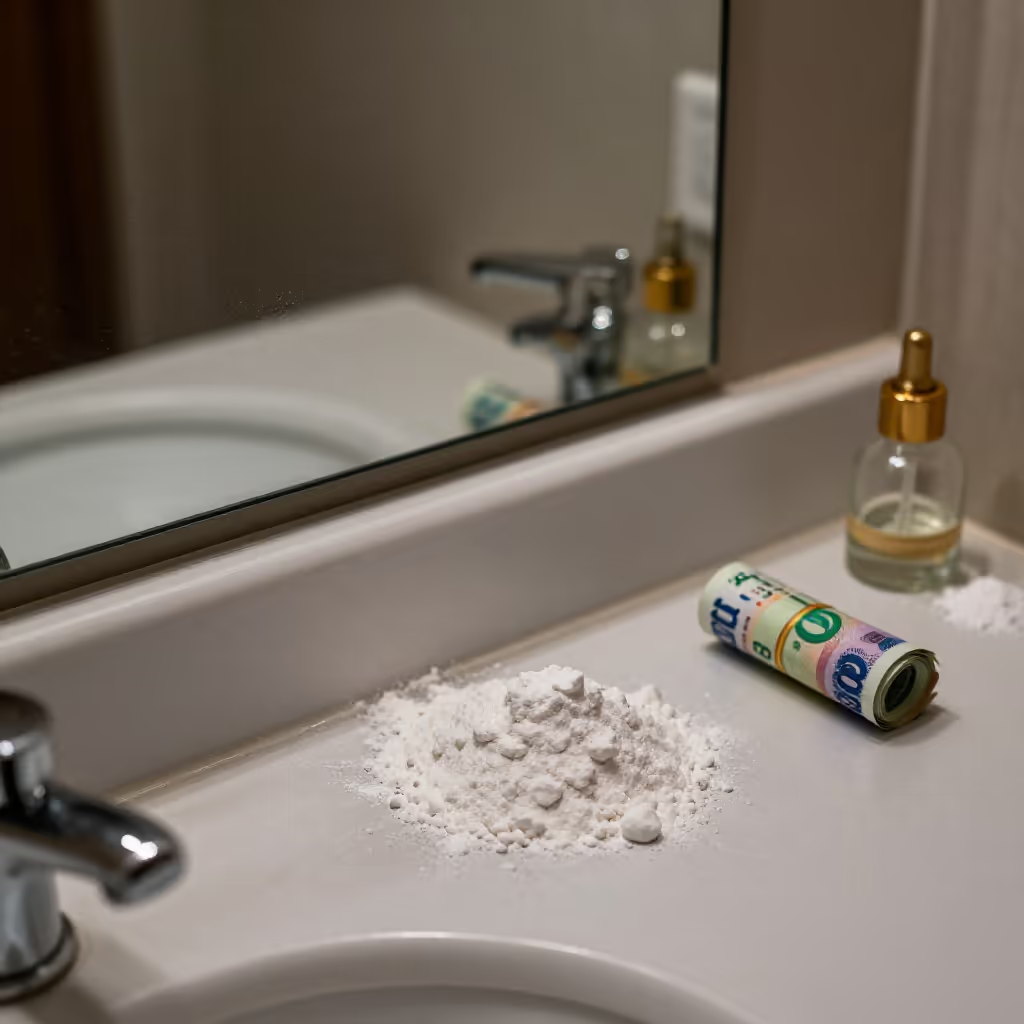
A powerful illegal drug obtained from the leaves of the coca plant and acting as a stimulant. Its use is associated with significant health and legal risks.
example
Der Besitz von Kokain ist in den meisten Ländern streng verboten.
Possession of cocaine is strictly prohibited in most countries.
Usage tips
Use without an article
As the name of a substance, 'Kokain' (cocaine) is usually used without an article when referring to the substance in general.
EXAMPLE
Bei der Kontrolle wurde Kokain in seinem Gepäck gefunden.
During the inspection, cocaine was found in his luggage.
Typical collocations
The word is often used with verbs that describe use, trafficking, or possession. Typical phrases are 'Kokain konsumieren' (to use cocaine), 'mit Kokain handeln' (to deal in cocaine), or 'Kokain schmuggeln' (to smuggle cocaine).
EXAMPLE
Die Bande wurde verhaftet, weil sie mit Kokain gehandelt hat.
The gang was arrested because it had been dealing in cocaine.
Special context
This word belongs to specialized vocabulary and is mainly used in contexts such as crime, law, news, or medicine.
EXAMPLE
In den Nachrichten wurde über einen großen Kokainfund am Hafen berichtet.
The news reported on a large cocaine seizure at the harbor.
Compare with
synonym
Kokain vs Schnee
snow
'Schnee' and 'Kokain' can mean the same thing in the context of drugs. 'Kokain' is the direct and factual term. 'Schnee' is a colloquial expression for it and is more suitable in informal language or in reports about drug slang. Context is important: without a drug-related topic, 'Schnee' is normally understood as white precipitation in winter. 'Kokain' is unambiguous and is used especially in serious, medical, or legal contexts.
Kokain
Die Polizei fand Kokain in der Wohnung.
The police found cocaine in the apartment.
Schnee
In dem Film spricht die Gruppe heimlich über Schnee.