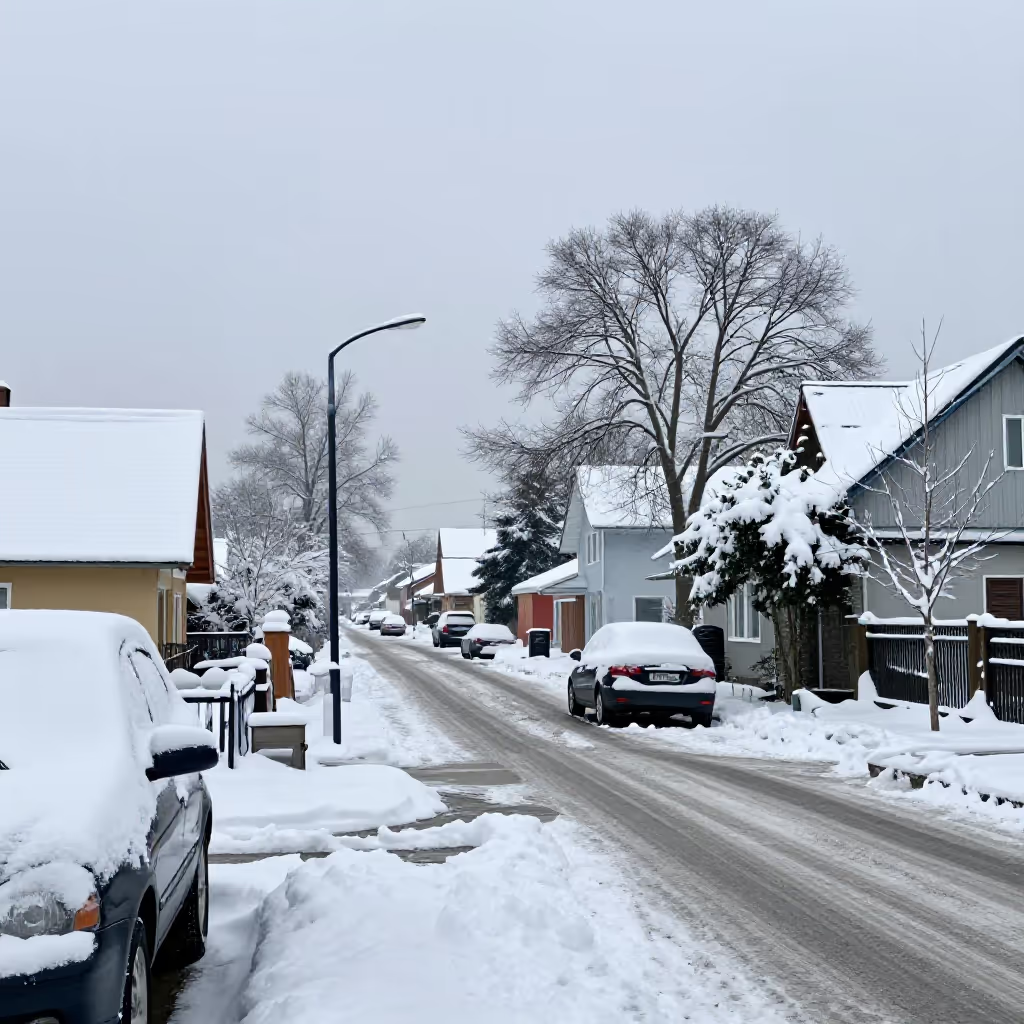
Precipitation in the form of ice crystals that falls from clouds at temperatures around or below 0°C and covers the landscape with a white layer.
example
Die Kinder freuten sich, weil über Nacht viel Schnee gefallen war.
The children were happy because a lot of snow had fallen overnight.

Usage tips
No plural
In its main meaning, 'Schnee' (snow) is an uncountable noun, like 'Wasser' (water) or 'Luft' (air). It is therefore almost always used in the singular. To describe large amounts, you say 'viel Schnee' (a lot of snow).
EXAMPLE
In den Bergen liegt immer noch sehr viel Schnee.
There is still a lot of snow in the mountains.
Typical verbs
'Schnee' (snow) is often combined with certain verbs that describe its movement or state. Typical phrases are: 'Schnee fällt' (snow falls), 'es schneit' (it is snowing), 'Schnee liegt' (snow lies/is on the ground), and 'Schnee schmilzt' (snow melts).
EXAMPLE
Als wir aufwachten, lag überall Schnee.
When we woke up, there was snow everywhere.
Context clues
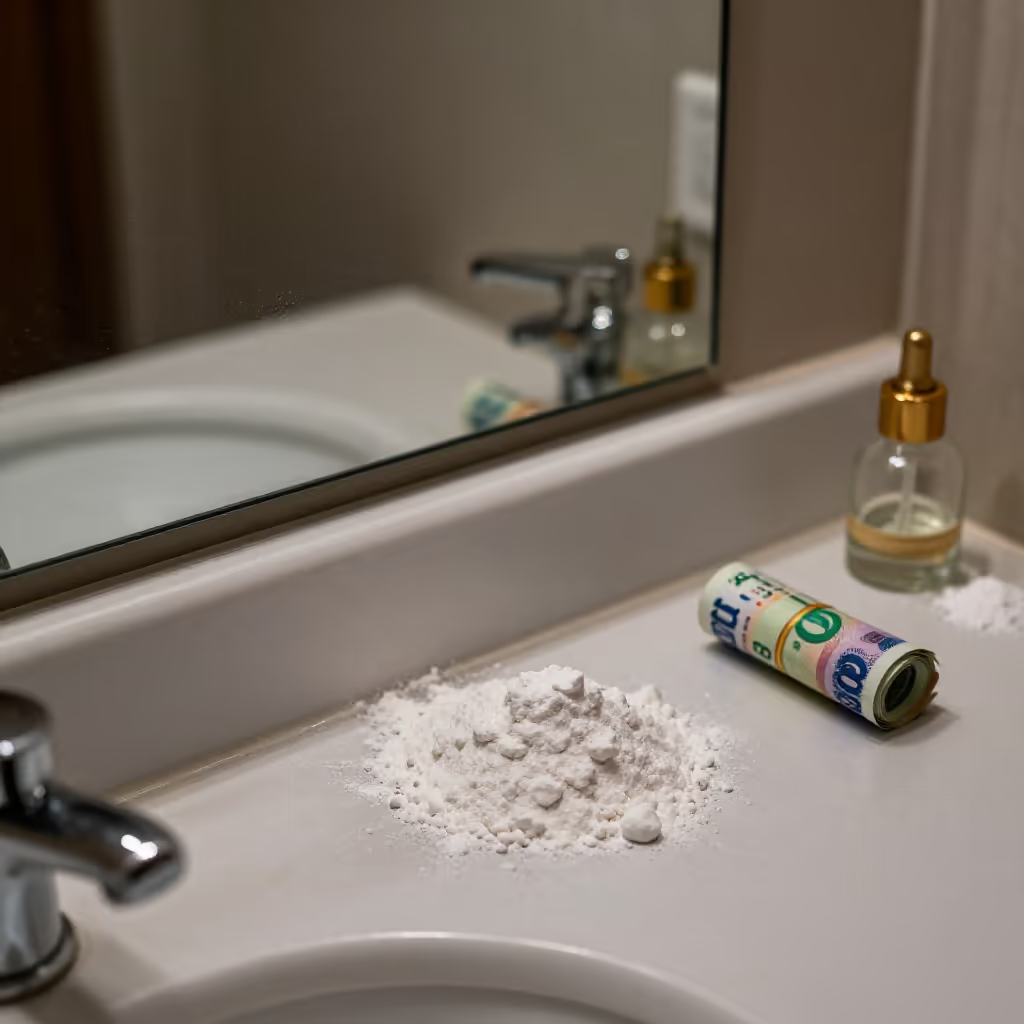
The meaning of 'Schnee' (snow) is usually clear. If the topic is weather, the literal meaning is intended. If people are talking about old televisions, it means static. In crime novels or warnings about drugs, it can mean cocaine.
EXAMPLE
Wegen des schlechten Signals war auf dem Bildschirm nur Schnee zu sehen.
Because of the poor signal, only snow could be seen on the screen.
Colloquial meaning
Careful: 'Schnee' (snow) is also a colloquial term for the drug cocaine. This meaning is limited to informal contexts or certain social environments.
EXAMPLE
Der Verdächtige wurde mit einem Kilo Schnee erwischt.
The suspect was caught with a kilo of snow.
Compare with
confusable
Schnee vs Eis
ice / ice cream
'das Eis' and 'der Schnee' both have to do with cold and frozen water. 'Eis' is solid frozen water, for example on a lake, on the road, or in a glass. 'Schnee' falls from the sky as white precipitation and often lies on the ground as a soft layer. Learners may confuse the words because snow consists of small ice crystals. A practical tip: on paths and lakes, you often find Eis; from the sky falls Schnee.
Schnee
Der Schnee bleibt heute auf den Dächern liegen.
The snow is staying on the roofs today.
Eis
Auf dem Gehweg ist Eis, deshalb geht Lisa sehr vorsichtig.
There is ice on the sidewalk, so Lisa is walking very carefully.