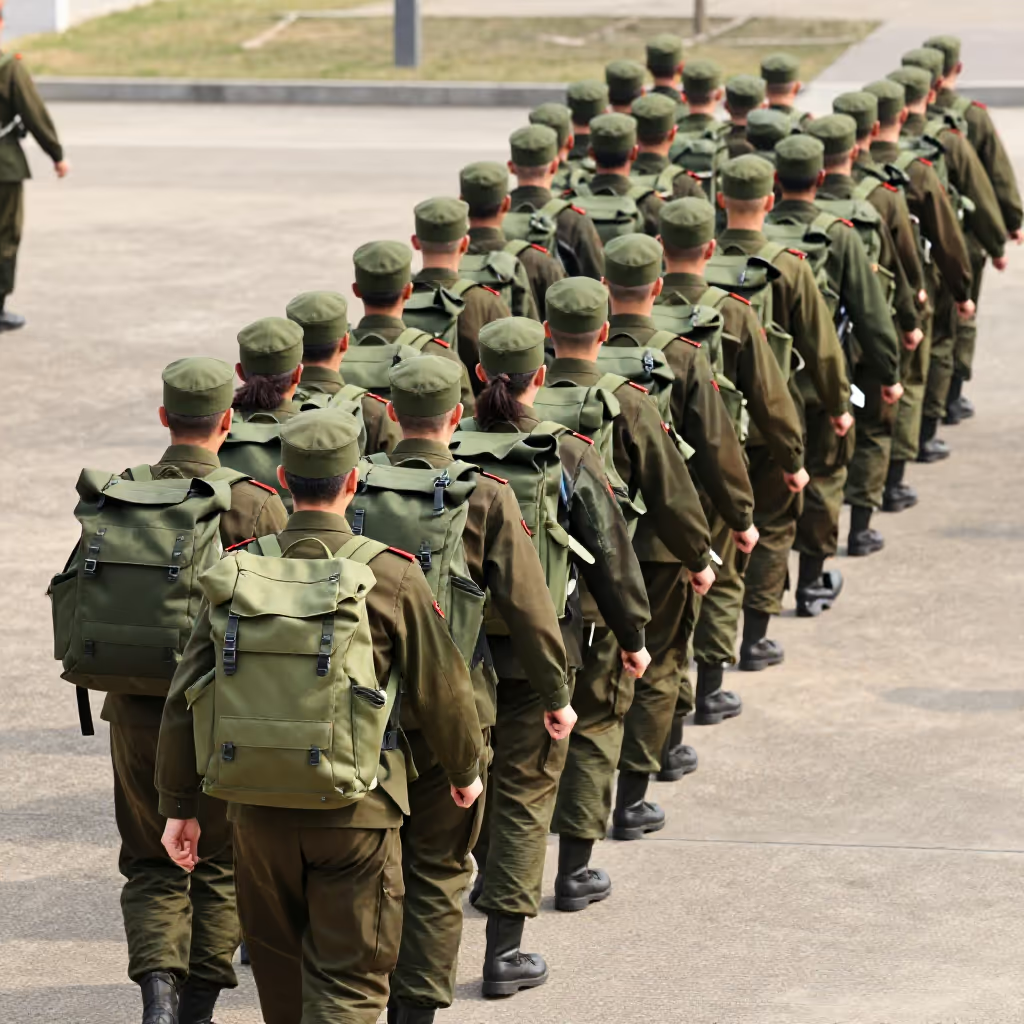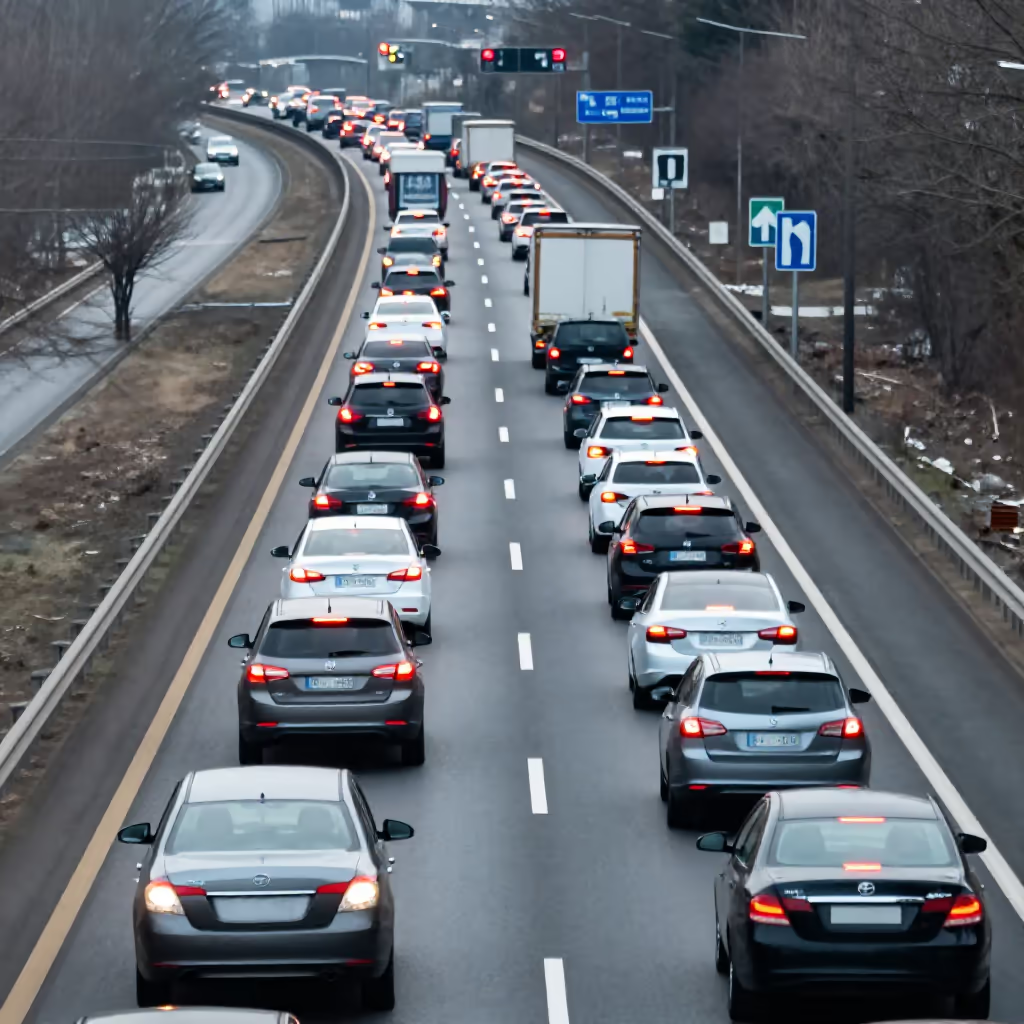
A long line of vehicles or people moving one behind another in an orderly way.
example
Wegen des Unfalls auf der Autobahn bildete sich eine kilometerlange Kolonne.
Because of the accident on the highway, a miles-long column of traffic formed.
Usage tips
Context clue
The meaning of 'Kolonne' depends strongly on the context. Pay attention to the accompanying words: with 'Autos' (cars) or 'Stau' (traffic jam), it is about traffic; with 'Arbeitern' (workers), it means a work crew; and with 'Tabellen' (tables), it means a column.
EXAMPLE
Die Kolonne bewegte sich nur sehr langsam vorwärts.
The column moved forward only very slowly.
Use in traffic
In connection with traffic, the phrase 'in einer Kolonne fahren' (to drive in a convoy/line) is often used. When such a line forms, you say 'eine Kolonne bildet sich' (a column/line forms).
EXAMPLE
Auf der Landstraße mussten wir lange hinter einem LKW in einer Kolonne fahren.
On the country road, we had to drive for a long time in a line behind a truck.
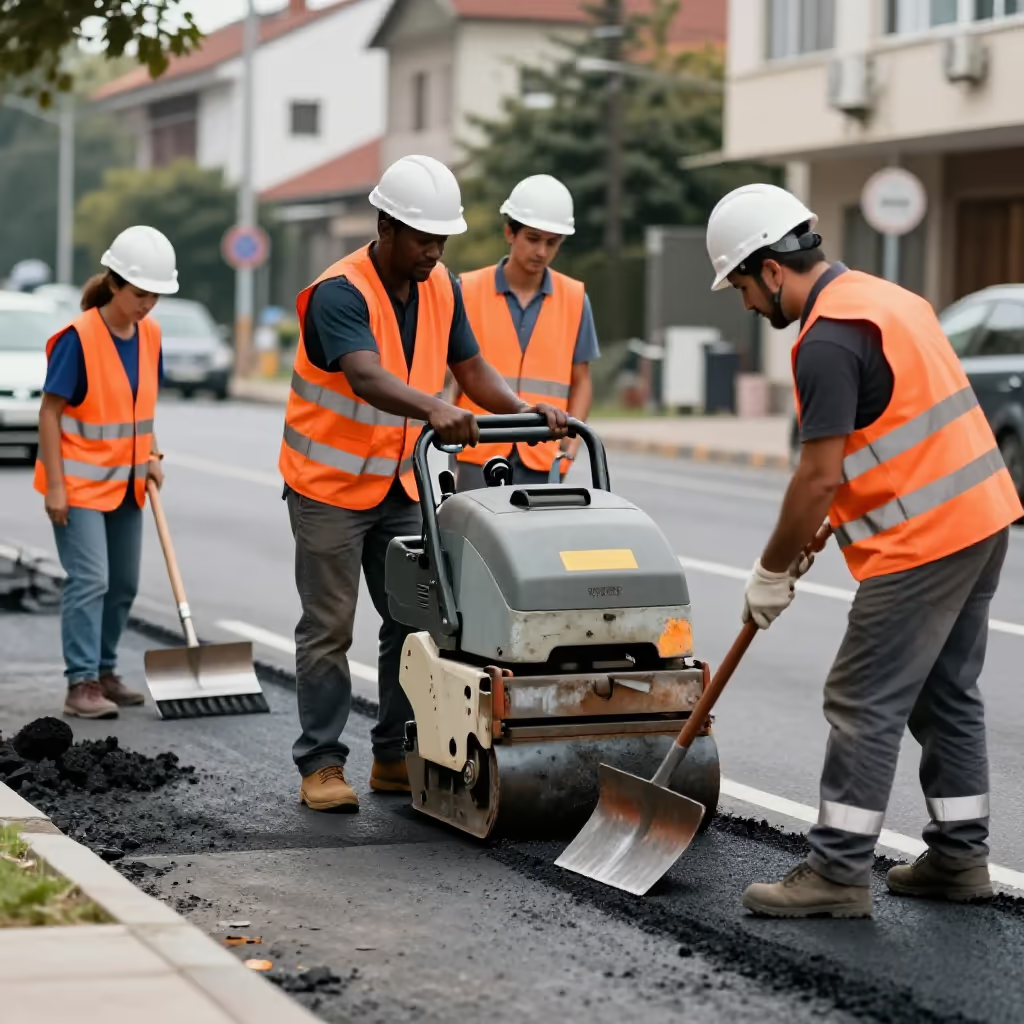
Use for work
When 'Kolonne' describes a group of workers, this is often expressed with the preposition 'von' (of) and the noun in the plural.
EXAMPLE
Eine Kolonne von Waldarbeitern pflanzte neue Bäume.
A crew of forestry workers planted new trees.
Use in tables
In offices or in data processing, 'Kolonne' refers to a vertical column in a table or list. It is often combined with adjectives such as 'linke' (left), 'rechte' (right), or 'nächste' (next).
EXAMPLE
Tragen Sie Ihren Namen bitte in die erste Kolonne ein.
Please enter your name in the first column.
Compare with
near_synonym · confusable
Kolonne vs Reihe
row / series
'die Reihe' and 'die Kolonne' both describe several people or things in an ordered line. 'die Reihe' is very general: people can stand in a row, and chairs can be arranged in a row. 'die Kolonne' is used more when vehicles or people are moving one behind another as a group. Learners may confuse the words because both look ordered. As a guide: if things are simply standing or sitting next to one another or one behind another, 'Reihe' often fits. If a long group is moving one behind another, 'Kolonne' is more likely to fit.
Kolonne
Auf der Landstraße fuhr eine Kolonne von Lastwagen langsam weiter.
A convoy of trucks continued slowly along the country road.
Reihe
Vor der Kasse steht eine lange Reihe von Kunden.
There is a long line of customers in front of the checkout.