

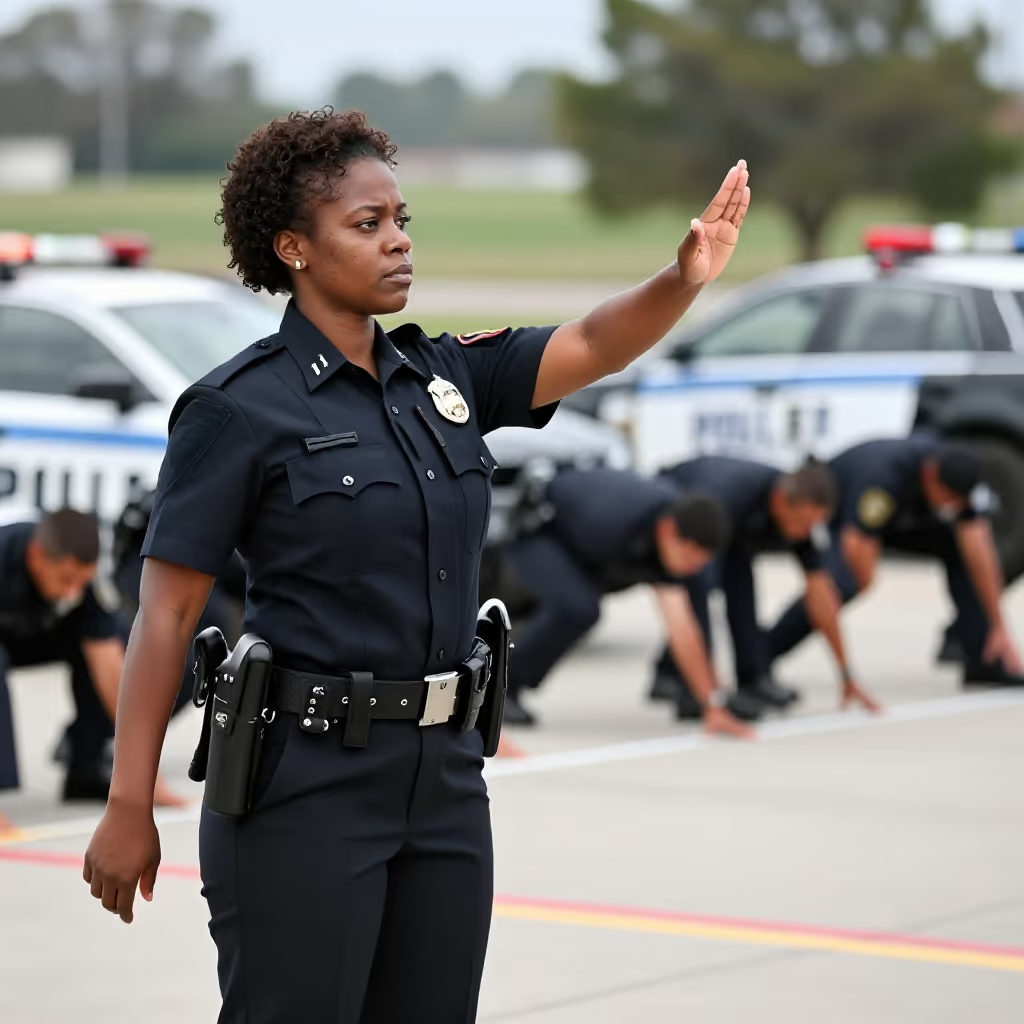
das Kommando
command
A short, clear order that must be carried out immediately, especially in a military or police context.
EXAMPLE
Die Soldaten warteten auf das Kommando zum Angriff.
The soldiers waited for the command to attack.
command / commando
Loading your saved state.
command
A short, clear order that must be carried out immediately, especially in a military or police context.
Die Soldaten warteten auf das Kommando zum Angriff.
The soldiers waited for the command to attack.
command
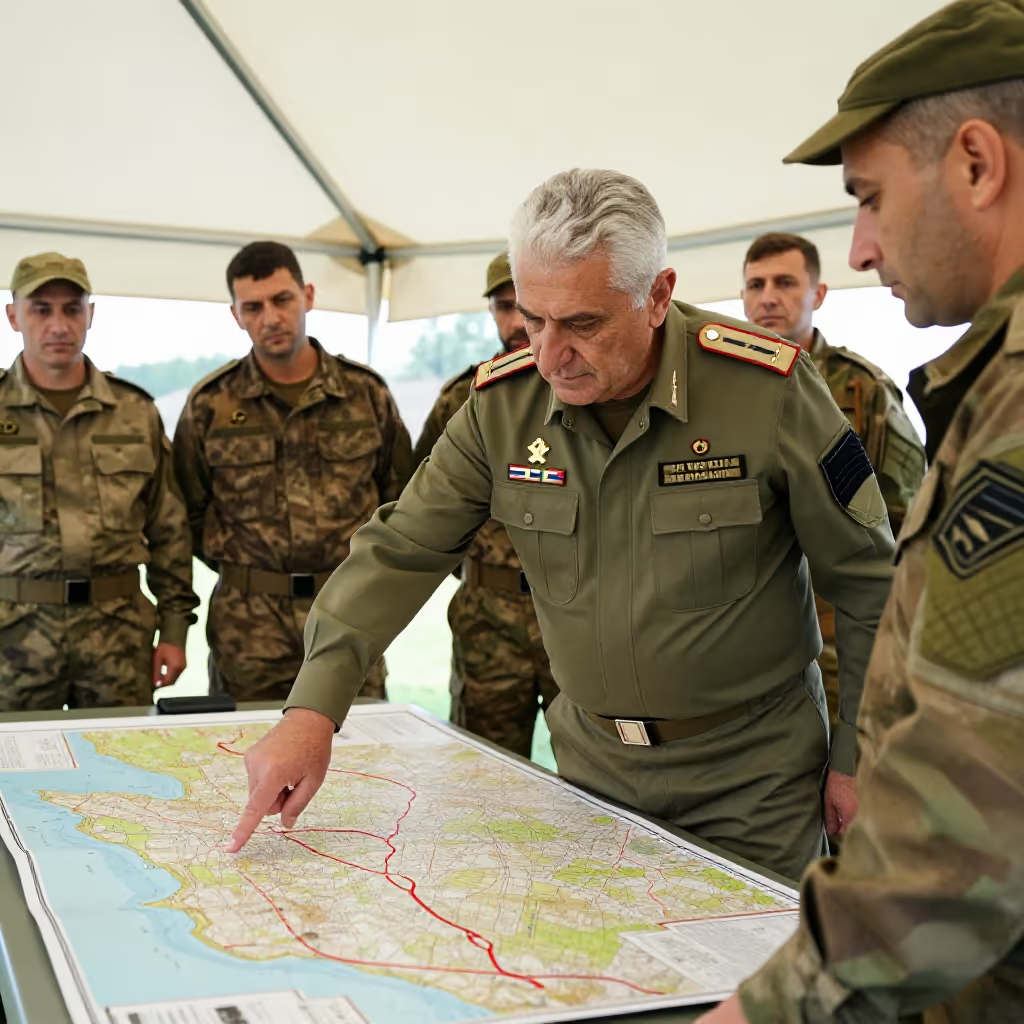
The authority to give orders or leadership over a group of people, especially over a military unit.
Der General hat das Kommando über die gesamte Division.
The general has command over the entire division.
commando unit
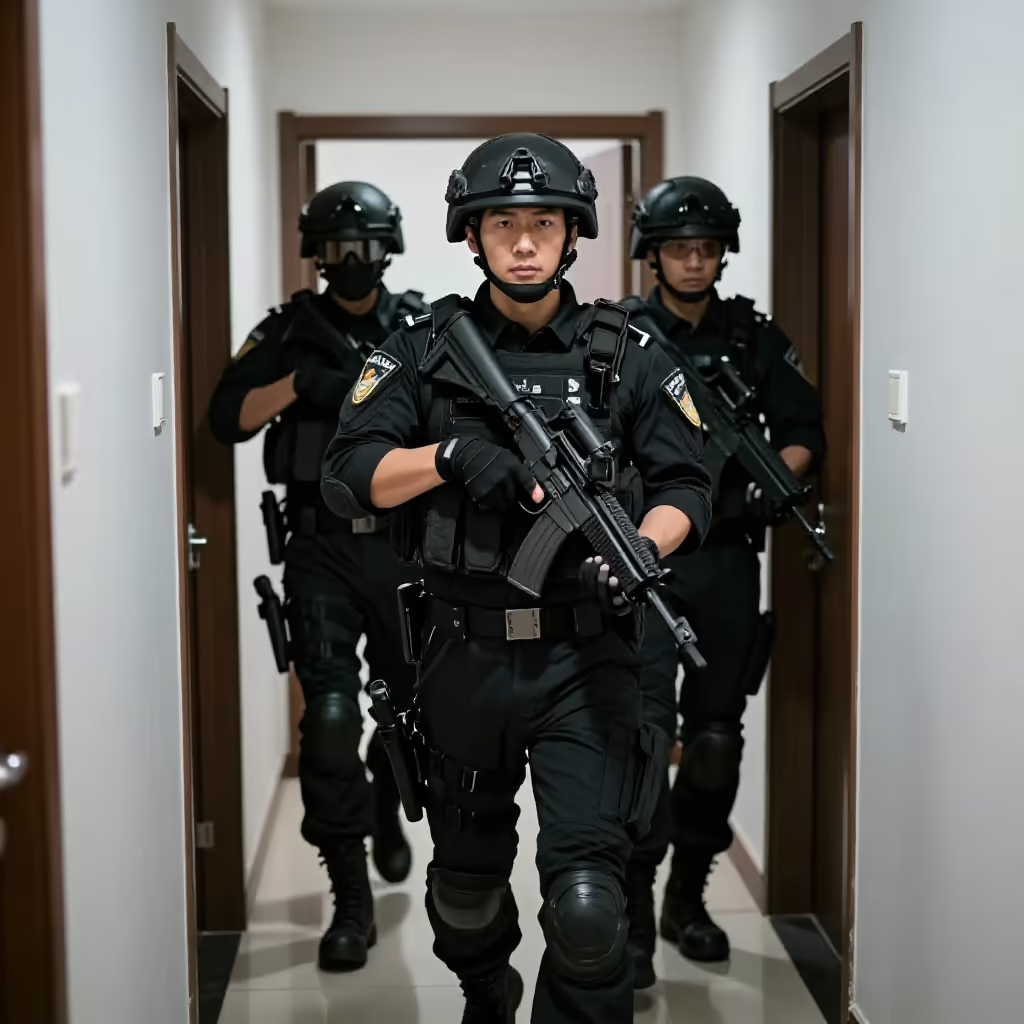
A special police or military unit trained for special tasks.
Ein Sondereinsatzkommando der Polizei stürmte das Gebäude.
A special police commando unit stormed the building.

command
In computer science, an instruction or command given to a computer program or operating system.
Mit dem Kommando „dir“ kannst du dir den Inhalt des Verzeichnisses anzeigen lassen.
With the command 'dir', you can display the contents of the directory.
In the meaning of 'Befehl' (order/command), 'Kommando' is often combined with verbs such as 'geben' (to give), 'erteilen' (to issue), 'erhalten' (to receive), 'ausführen' (to carry out), or 'befolgen' (to obey).
Der Hund wartet auf das Kommando seines Besitzers.
The dog waits for its owner's command.
When 'Kommando' means leadership or authority to give orders, typical verbs are 'haben' (to have), 'übernehmen' (to take over), 'führen' (to lead), or 'abgeben' (to hand over/give up).
Nach dem Rücktritt des Kapitäns übernahm der erste Offizier das Kommando.
After the captain's resignation, the first officer took command.
To express what someone has command over, the preposition 'über' (over) is used with the accusative. The structure is: 'das Kommando über jemanden/etwas haben' (to have command over someone/something).
Der Kapitän hat das Kommando über das gesamte Schiff.
The captain has command over the entire ship.
When 'Kommando' is used as a countable unit that can act, it means a special unit. A well-known example is the police 'Sondereinsatzkommando' (special operations commando, SEK).
Ein Kommando der Küstenwache enterte das verdächtige Schiff.
A coast guard commando unit boarded the suspicious ship.
In the field of computer science, 'Kommando' is the usual term for a command that you enter into a computer. Typical verbs here are 'eingeben' (to enter) or 'ausführen' (to execute).
Um die Datei zu löschen, musst du das richtige Kommando eingeben.
To delete the file, you have to enter the correct command.
leadership / tour / lead
Führung and Kommando can both refer to leading a military unit. Führung emphasizes the practical leadership and handling of the unit, while Kommando emphasizes formal authority to give orders. Führung is appropriate for the general leadership task, while Kommando is appropriate for official command authority.

Der Offizier erhielt das Kommando über die Einheit.
The officer was given command of the unit.
Die Führung der Einheit bereitete die Soldaten auf den Einsatz vor.
The unit's leadership prepared the soldiers for the mission.