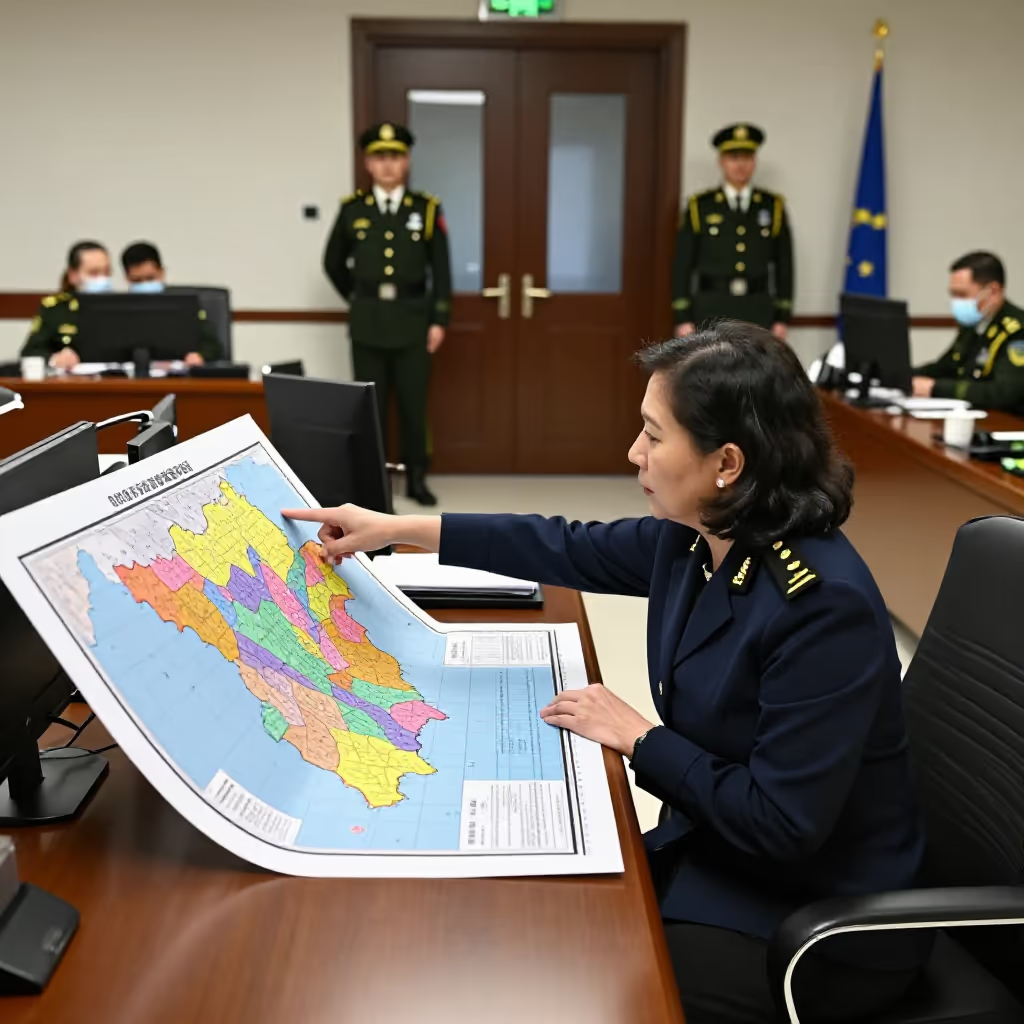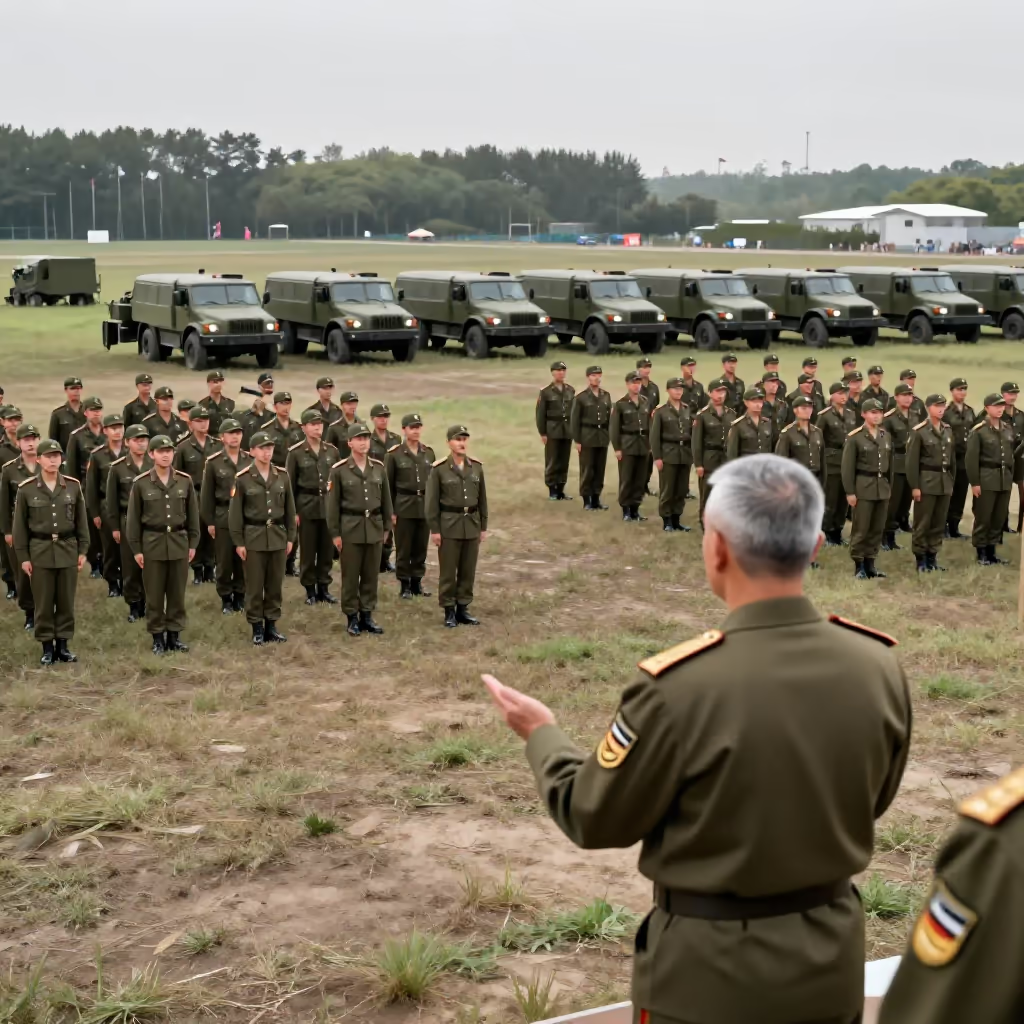
A military unit that usually consists of several battalions or companies and is commanded by a colonel.
example
Sein Urgroßvater diente im Ersten Weltkrieg in einem bayerischen Infanterie-Regiment.
His great-grandfather served in a Bavarian infantry regiment during the First World War.

Usage tips
Word origin
The word comes from the Latin 'regere' (to rule, to guide). This idea of leadership and control connects the military meaning (a commanded unit) with the figurative meaning (strict rule).
EXAMPLE
Der König regierte das Land mit starker Hand.
The king ruled the country with a firm hand.
Fixed expression
In the figurative sense, 'Regiment' (regiment/rule) is almost always used in the fixed expression 'ein strenges Regiment führen' (to run a strict regime). It means that someone sets and enforces very strict rules.
EXAMPLE
Der neue Trainer führt in der Mannschaft ein strenges Regiment.
The new coach runs a strict regime in the team.
Slightly negative meaning
The expression 'ein strenges Regiment führen' (to run a strict regime) often has a slightly negative or critical connotation. It describes a leadership style that is perceived as authoritarian or overly controlling.
EXAMPLE
Die Mitarbeiter sind unzufrieden, weil der Chef ein zu strenges Regiment führt.
The employees are dissatisfied because the boss runs too strict a regime.
Compare with
near_synonym
Regiment vs Kontrolle
control / check
'die Kontrolle' and 'das Regiment' can both mean that someone determines what happens. 'Kontrolle' is the normal and neutral word here. It can be about control, power, or keeping an overview. 'Regiment' sounds stronger and stricter. It is usually used figuratively when a person or group imposes order and makes decisions very harshly. In everyday situations, 'Kontrolle' usually fits better. 'Regiment' emphasizes strict rule.
Regiment
Seit die neue Chefin da ist, herrscht im Büro ein strenges Regiment.
Since the new boss arrived, a strict regime has prevailed in the office.
Kontrolle
Nach dem Streit wollte der Trainer wieder die Kontrolle über das Team haben.
After the argument, the coach wanted to have control over the team again.