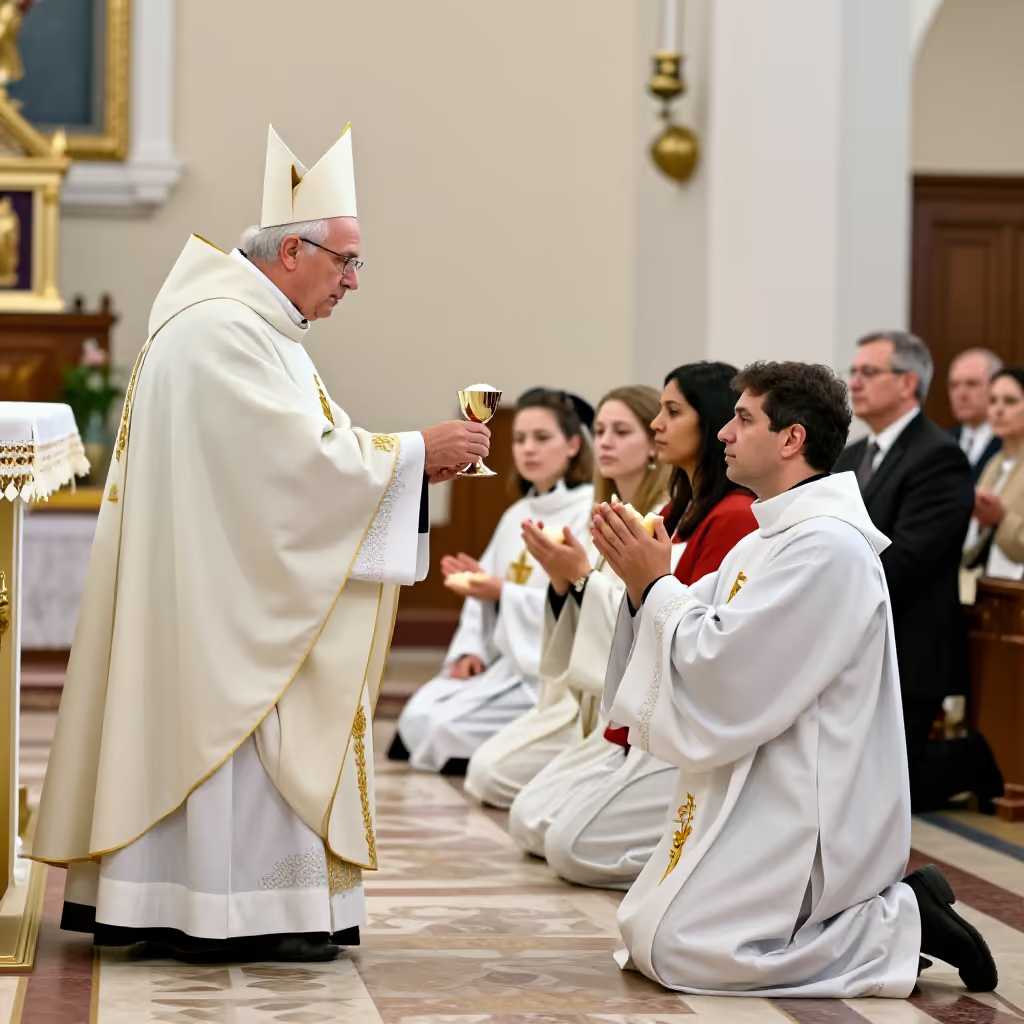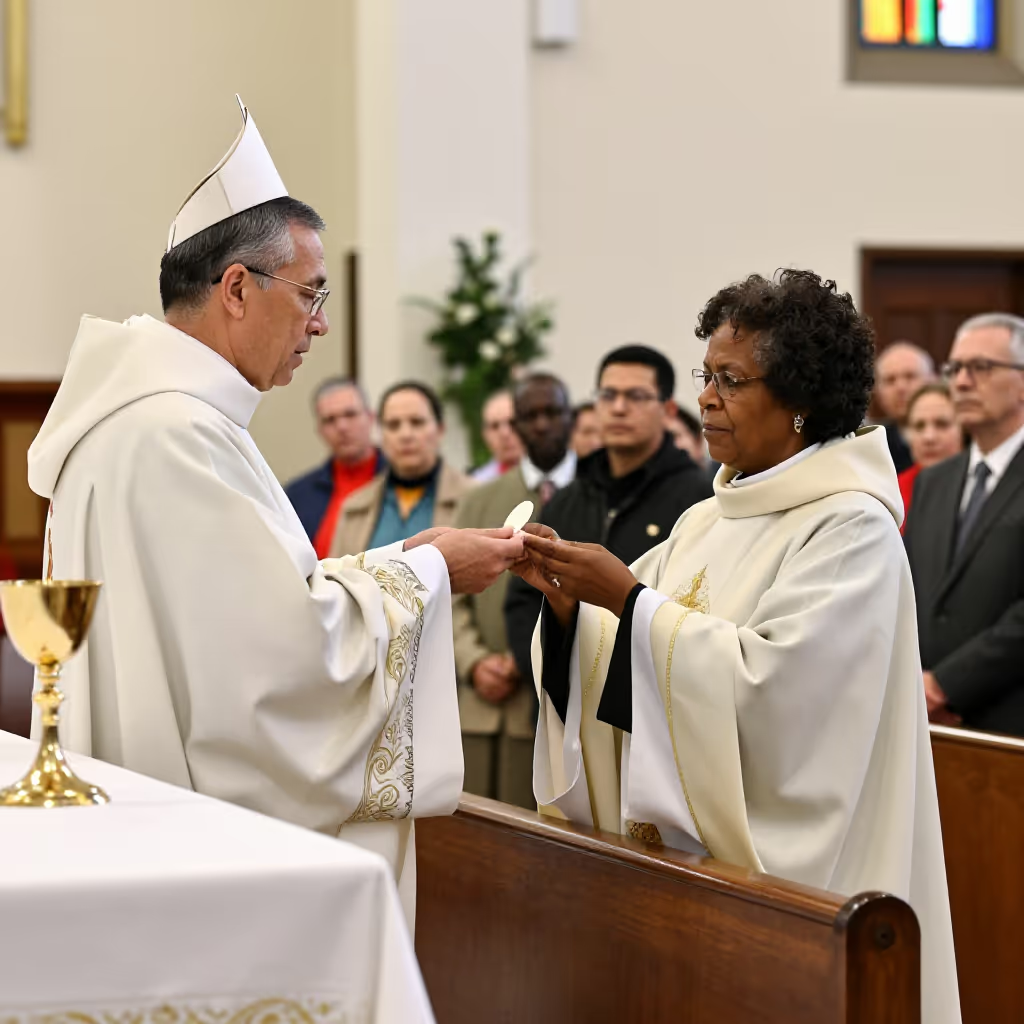
A sacrament in the Catholic Church and some other Christian churches in which believers receive the Eucharist (consecrated bread and wine). This symbolizes communion with Christ and the Church.
example
Während der Messe gingen die Gläubigen zur Kommunion.
During Mass, the believers went to communion.
Usage tips
Two main meanings
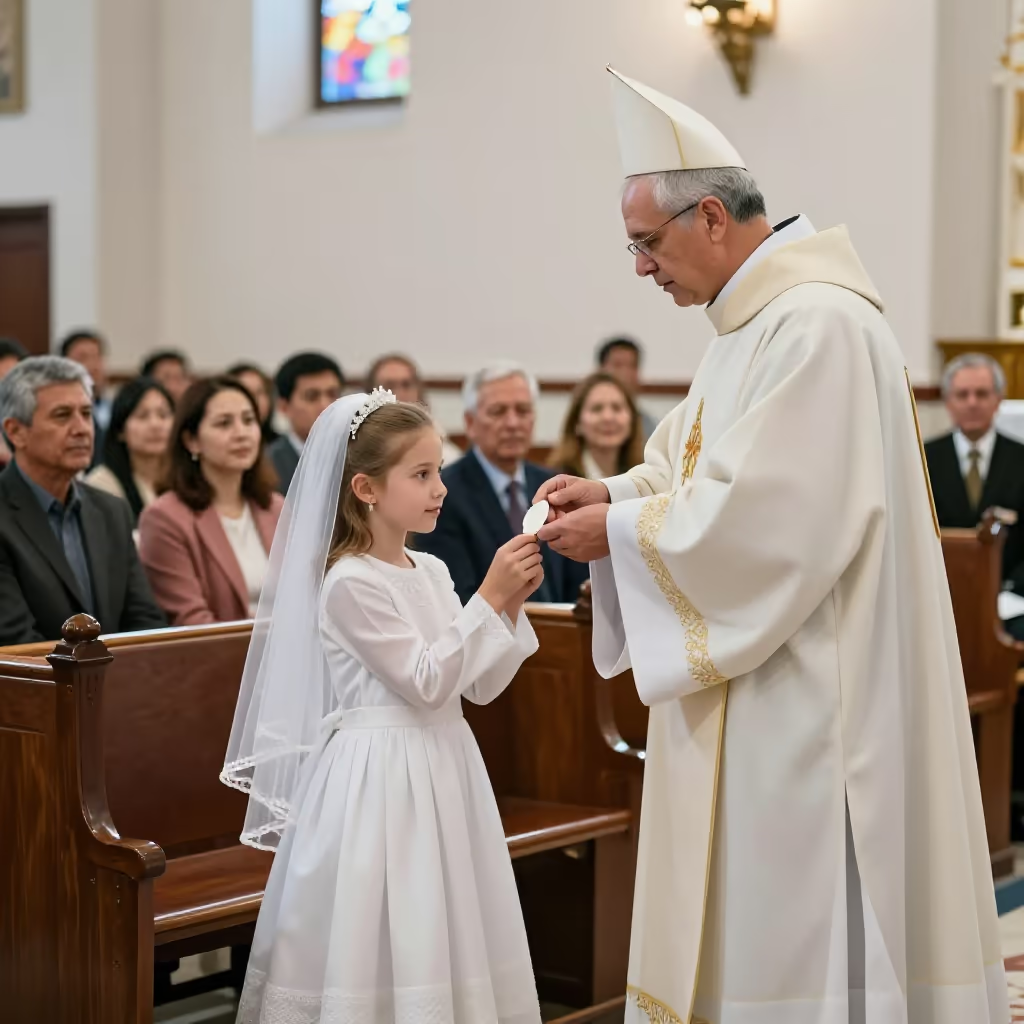
The word has two contexts: it can refer to the general rite in church or to the special celebration for children who take part for the first time (Erstkommunion, First Communion). The sentence usually makes clear what is meant.
EXAMPLE
In der Messe empfingen viele die Kommunion.
Many received communion during Mass.
Typical verbs
Different verbs are used depending on the meaning. You 'geht zur Kommunion' (go to communion) or 'empfängt die Kommunion' (receive communion) for the rite. The children's celebration is something you 'feiert' (celebrate).
EXAMPLE
Die Kinder bereiten sich darauf vor, die Kommunion zu empfangen.
The children are preparing to receive communion.
Word family
'Kommunion' comes from the Latin word 'communio', which means 'Gemeinschaft' (community/fellowship). It is related to words like 'Kommune' (commune/municipality) or 'kommunizieren' (to communicate) and emphasizes the idea of community with God and the Church.
EXAMPLE
Die Kommunion stärkt das Gefühl der Gemeinschaft unter den Gläubigen.
Communion strengthens the sense of community among believers.
Cultural context
The (First) Communion is a major family celebration in Catholic regions. Children often wear special white clothing and receive gifts, similar to a big birthday celebration.
EXAMPLE
Zur Kommunion hat sie ein Fahrrad und viel Geld bekommen.
For her First Communion, she got a bicycle and a lot of money.
Compare with
near_synonym · confusable
Kommunion vs Abendmahl
Communion / supper
'Abendmahl' and 'Kommunion' both belong to Christian worship and have to do with bread and wine as religious symbols. 'Abendmahl' emphasizes the ceremony and the remembrance of Jesus's last meal, especially in Protestant churches. 'Kommunion' is often used when believers receive the Eucharist, especially in a Catholic context. In everyday language, 'Kommunion' also often means a child's First Communion. Learners may confuse the words because both describe very similar religious acts. A practical guide: for the Protestant celebration, people often say 'Abendmahl'; for Catholic reception of the sacrament or First Communion, 'Kommunion' is more likely.
Kommunion
Meine Nichte feiert im Mai ihre Kommunion.
My niece is celebrating her First Communion in May.
Abendmahl
Am Sonntag nimmt die Gemeinde im Gottesdienst am Abendmahl teil.
On Sunday, the congregation takes part in Communion during the church service.