

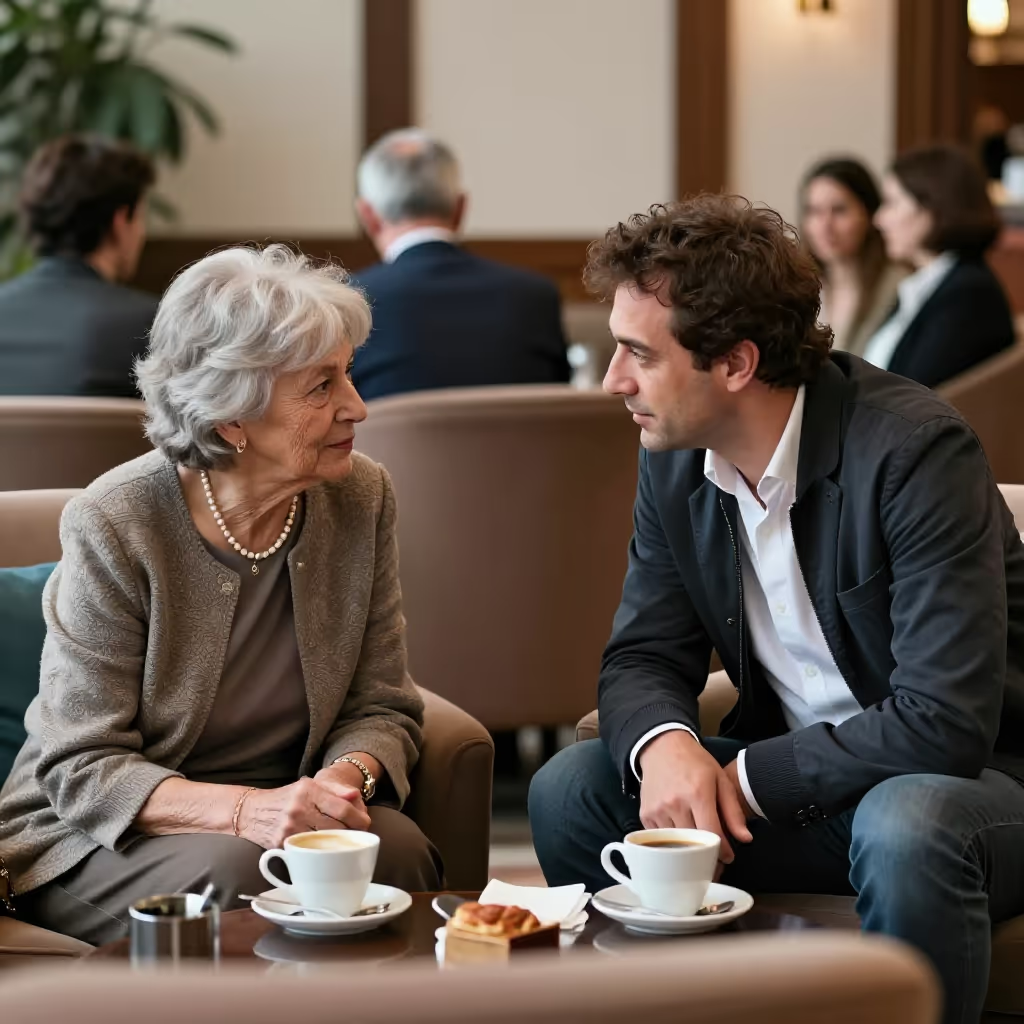
A conversation between two or more people, often with a focus on refined or witty exchange. The term is often used for a somewhat more formal or sophisticated dialogue than an everyday conversation.
example
Beim Abendessen entwickelte sich eine angeregte Konversation über politische Themen.
At dinner, a lively conversation about political topics developed.

Usage tips
Word family
The noun 'die Konversation' belongs to the verb 'konversieren' (to converse). This verb means to have a conversation and is likewise used in a rather elevated style.
EXAMPLE
Die Gäste konversierten angeregt bei einem Glas Wein.
The guests conversed animatedly over a glass of wine.
Elevated style
'Konversation' is often used for a more sophisticated or formal conversation. It sounds more refined than the everyday word 'Gespräch' (conversation/talk).
EXAMPLE
Beim diplomatischen Empfang waren nur höfliche Konversationen zu hören.
At the diplomatic reception, only polite conversations could be heard.
Typical verbs
Common verbs used with 'Konversation' are 'eine Konversation führen' (to have a conversation), 'eine Konversation beginnen' (to start a conversation), or 'eine Konversation beenden' (to end a conversation).
EXAMPLE
Es ist nicht immer einfach, mit Fremden eine Konversation zu beginnen.
It is not always easy to start a conversation with strangers.
Fixed expression
A typical fixed expression is 'eine Konversation am Laufen halten' (to keep a conversation going). This means making sure that a conversation does not break off or become boring.
EXAMPLE
Er ist sehr gut darin, eine Konversation am Laufen zu halten.
He is very good at keeping a conversation going.
Compare with
near_synonym
Konversation vs Gespräch
conversation
'das Gespräch' and 'die Konversation' both mean that people are speaking with each other. 'Gespräch' is the normal word and fits almost anywhere: in private, at work, in serious situations, or in casual ones. 'Konversation' sounds a little more elevated and is more often used when the exchange feels refined, polite, or consciously focused on language. In everyday life, 'Gespräch' is usually more natural. 'Konversation' fits well when you want to emphasize the style of speaking, for example in a language course or at a formal occasion.
Konversation
Im Sprachkurs üben wir höfliche Konversation für berufliche Termine.
In the language course, we practice polite conversation for professional appointments.
Gespräch
Amira führt auf dem Amt ein kurzes Gespräch über ihre Reiseunterlagen.
At the government office, Amira has a short conversation about her travel documents.