

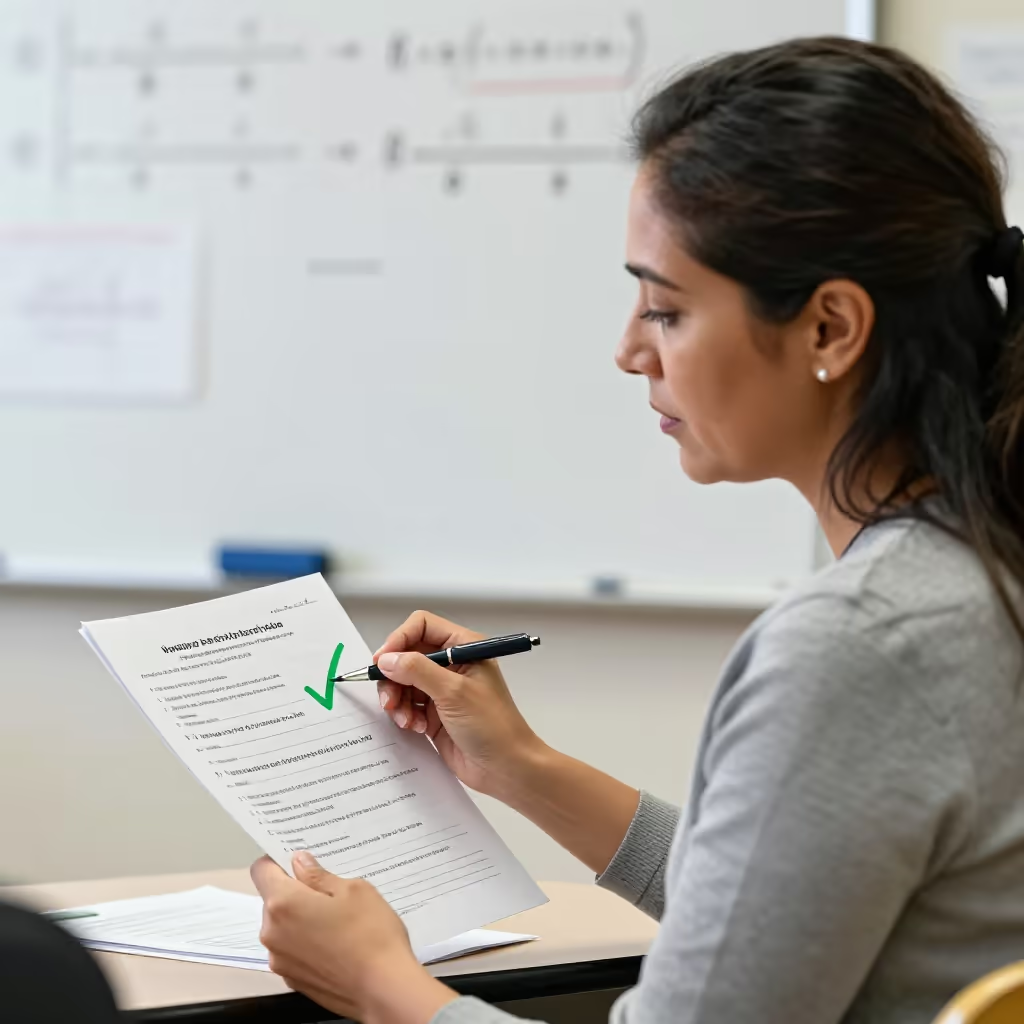
korrekt
correct
In accordance with the facts or rules; right and without mistakes.
EXAMPLE
Deine Berechnung des Ergebnisses ist vollkommen korrekt.
Your calculation of the result is completely correct.
correct
Loading your saved state.
correct
In accordance with the facts or rules; right and without mistakes.
Deine Berechnung des Ergebnisses ist vollkommen korrekt.
Your calculation of the result is completely correct.
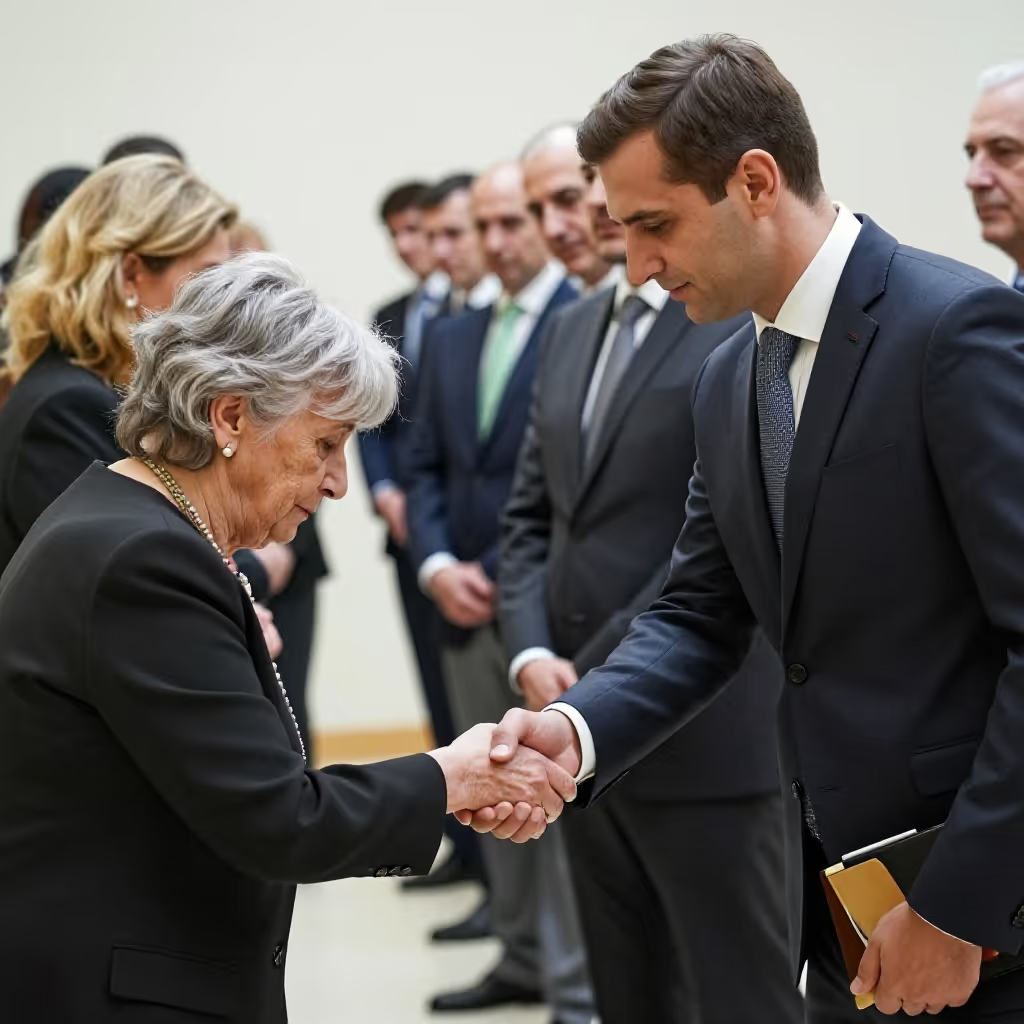
proper
In accordance with social norms and manners; impeccable and decent in behavior.
Er blieb auch während der hitzigen Diskussion stets höflich und korrekt.
Even during the heated discussion, he always remained polite and proper.
The meaning of 'korrekt' depends on the context. If it refers to facts, rules, or information, it means 'correct'. If it refers to a person's behavior or clothing, it means 'decent' or 'appropriate'.
Die Adresse auf dem Brief ist korrekt.
The address on the letter is correct.
In the meaning of 'correct', 'korrekt' is often used in contexts like 'eine korrekte Antwort' (a correct answer), 'eine korrekte Aussprache' (correct pronunciation), or 'grammatikalisch korrekt' (grammatically correct).
Der Lehrer sagte, meine Lösung sei korrekt.
The teacher said my solution was correct.
When it comes to behavior, typical combinations are 'korrektes Benehmen' (proper behavior) or 'korrekte Kleidung' (appropriate clothing). A very common expression is also 'politisch korrekt' (politically correct).
Für das Vorstellungsgespräch ist korrekte Kleidung wichtig.
Appropriate clothing is important for the job interview.
When you describe a person as 'korrekt' (proper/correct), it can also have a slightly negative meaning. It can mean that the person seems very formal, distant, or even a little stiff.
Mein neuer Chef ist sehr korrekt, aber nicht besonders herzlich.
My new boss is very proper, but not especially warm.
exact / precise
Genau and korrekt can confirm an answer. Korrekt sounds more like an objective assessment: the answer is free of errors and corresponds to the facts. Genau emphasizes more strongly that the answer addresses the point meant. Korrekt fits a matter-of-fact check, while genau is often used for immediate agreement.

Korrekt, die Besprechung findet am Dienstag statt.
Correct, the meeting is on Tuesday.
Genau, die Besprechung findet am Dienstag statt.
Exactly, the meeting is on Tuesday.