

richtig
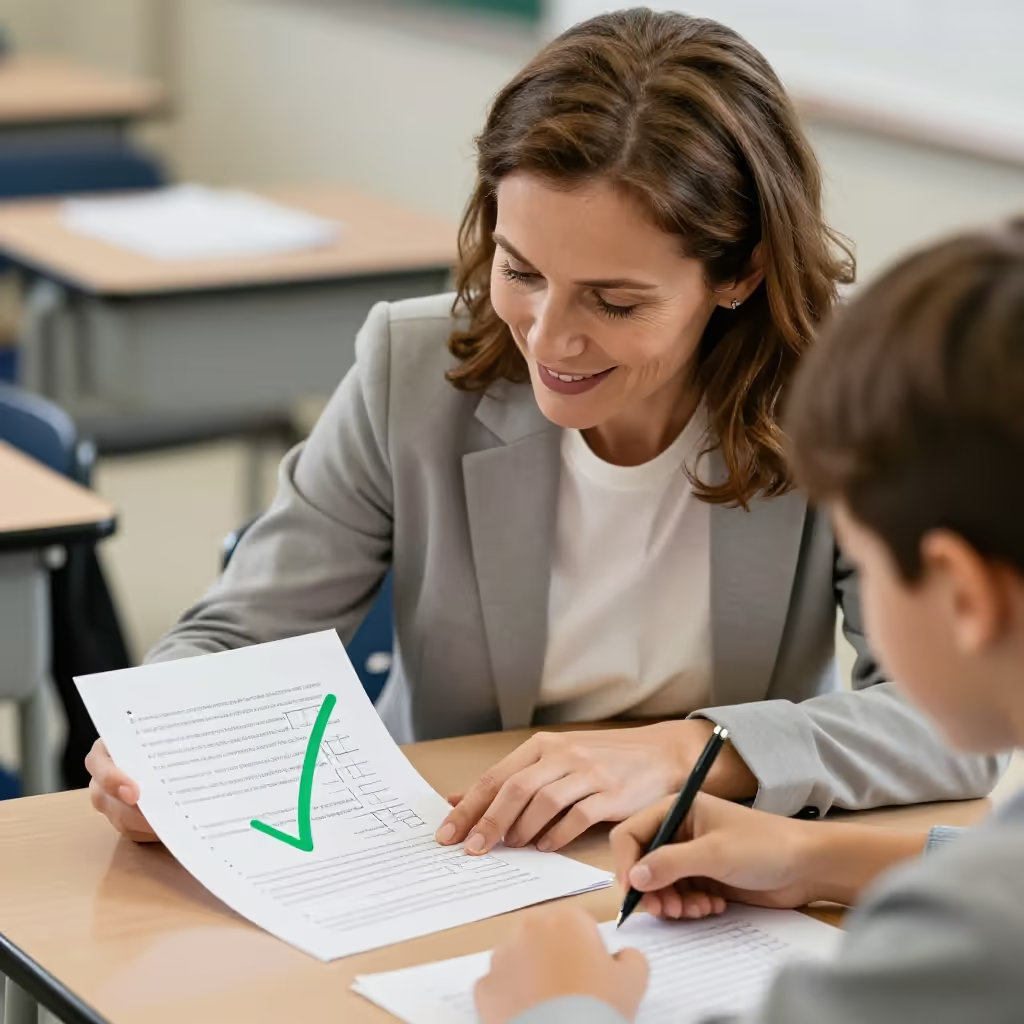
correct
Accurate, error-free, or corresponding to the truth.
EXAMPLE
Das ist die richtige Antwort.
That is the correct answer.
correct / right
Loading your saved state.
correct
Accurate, error-free, or corresponding to the truth.
Das ist die richtige Antwort.
That is the correct answer.

really
Used as an adverb for emphasis and then means 'very' or 'really'.
Das Essen war richtig lecker.
The food was really delicious.

right
Suitable or appropriate for a particular purpose or situation.
Er ist der richtige Mann für diesen Job.
He is the right man for this job.
proper
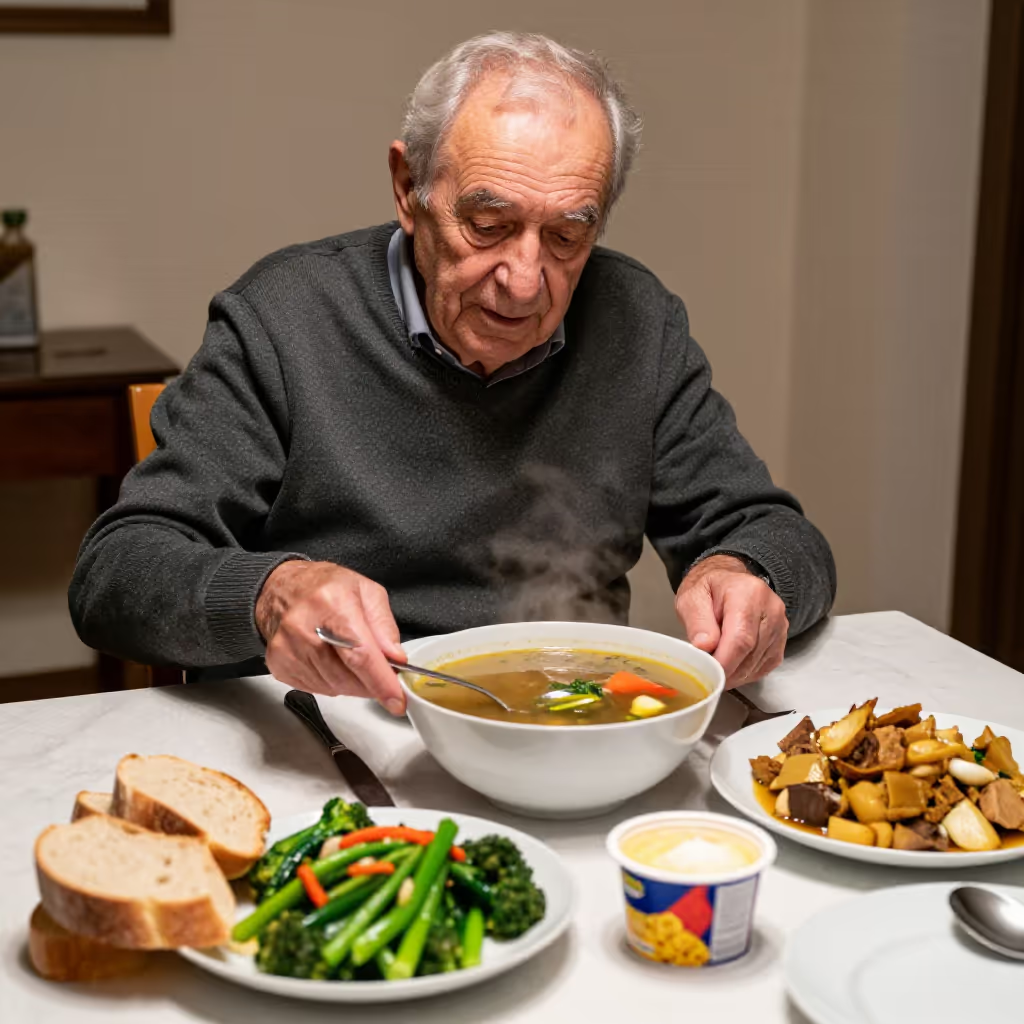
Describes something as real, proper, or full-fledged, in contrast to an imitation or something incomplete.
Nach dem Praktikum bekam sie eine richtige Anstellung.
After the internship, she got a proper position.
'Richtig' comes from 'richten' (to direct/set right) and 'Richtung' (direction). The basic idea is that something is aligned in the correct direction or made straight. This helps you understand the meanings 'correct' and 'suitable'.
Bitte zeig mir die richtige Richtung zum Bahnhof.
Please show me the right direction to the train station.
When 'richtig' comes before an adjective or adverb and is not declined, it means 'very' or 'really'. This use is more colloquial.
Der Film war richtig spannend.
The film was really exciting.
In the meaning 'suitable', 'richtig' is often used in reference to people, decisions, or moments: 'der richtige Partner' (the right partner), 'die richtige Wahl' (the right choice), 'zur richtigen Zeit' (at the right time).
Es ist wichtig, die richtige Entscheidung zu treffen.
It is important to make the right decision.
The meaning 'real' or 'full-fledged' is often used to create a contrast with something temporary, incomplete, or an imitation.
Nach der Ausbildung hat er endlich einen richtigen Job gefunden.
After his training, he finally found a proper job.
good
Gut and richtig can both evaluate an answer positively. Richtig means that its content is accurate and contains no factual error. Gut, by contrast, assesses its quality more generally, for example its clear wording. An answer can therefore be correct without being particularly well formulated.

Mias Antwort ist inhaltlich richtig und enthält keinen Fehler.
Mia’s answer is factually correct and contains no errors.
Mias Antwort ist gut formuliert und leicht verständlich.
Mia’s answer is well worded and easy to understand.