

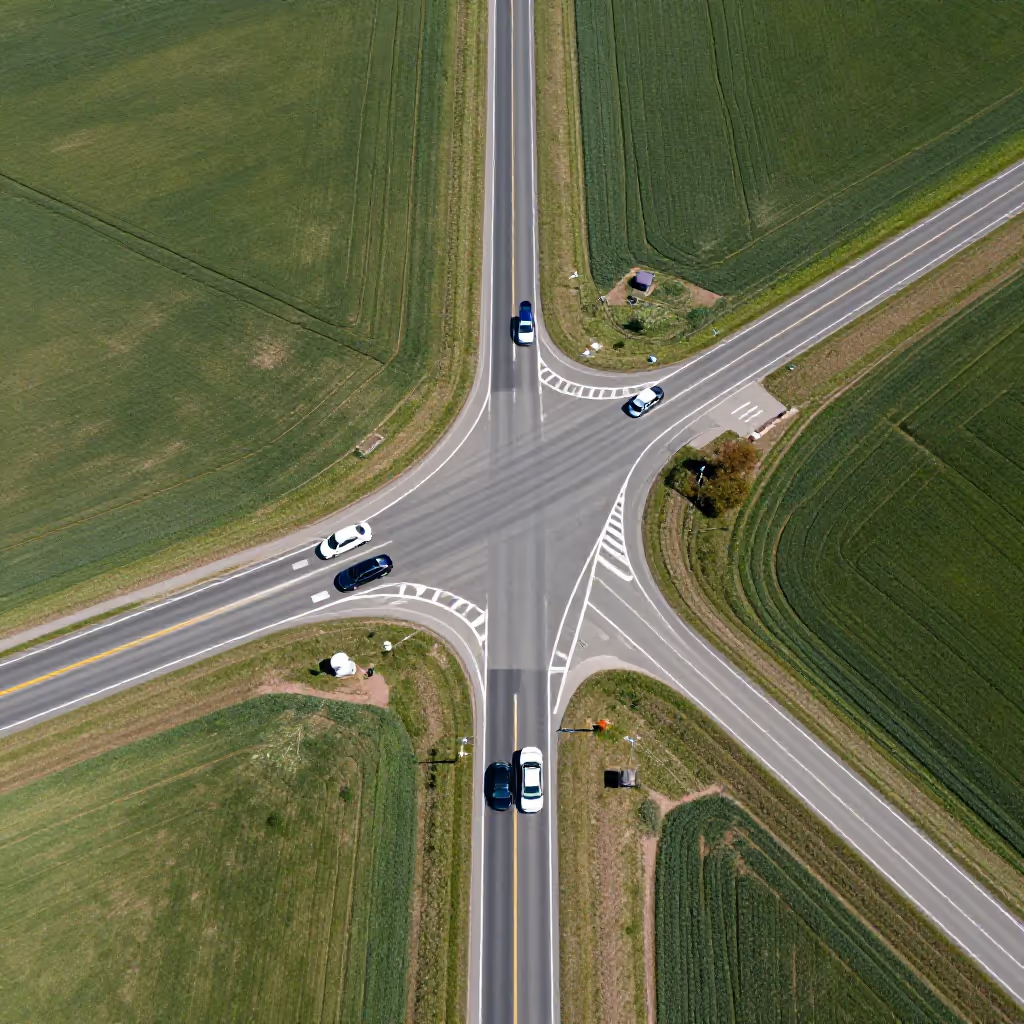
kreuzen
to cross
To intersect or cross, usually referring to lines, paths, or roads.
EXAMPLE
An der nächsten Ampel kreuzen sich eine Hauptstraße und eine Nebenstraße.
At the next traffic light, a main road and a side street cross.
to cross
Loading your saved state.
to cross
To intersect or cross, usually referring to lines, paths, or roads.
An der nächsten Ampel kreuzen sich eine Hauptstraße und eine Nebenstraße.
At the next traffic light, a main road and a side street cross.
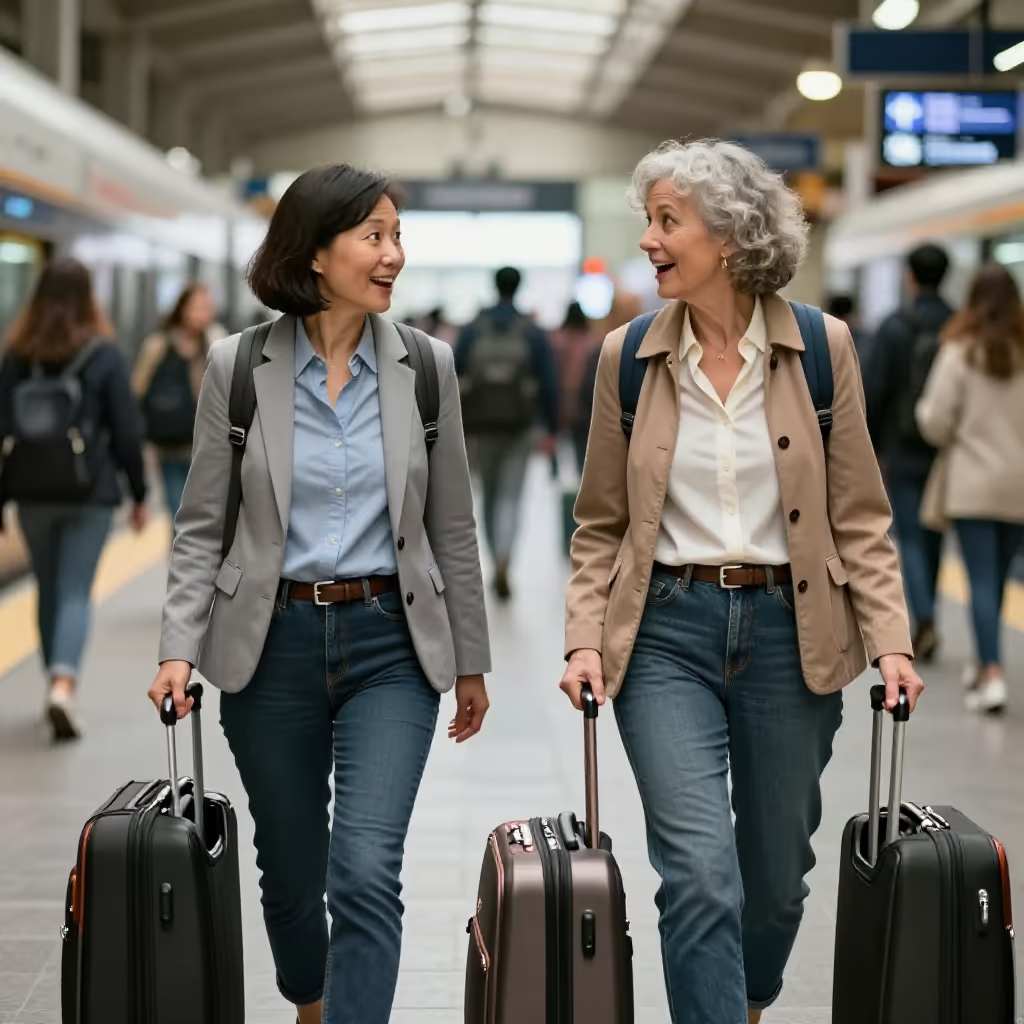
to cross paths
To happen to be or meet in the same place at the same time. Often used for people's paths in life.
Unsere Wege kreuzten sich nach vielen Jahren zufällig am Bahnhof wieder.
Our paths crossed again by chance at the train station after many years.

to cross
To place body parts such as arms or legs over each other.
Er lehnte sich mit vor der Brust gekreuzten Armen an die Wand.
He leaned against the wall with his arms crossed in front of his chest.

to crossbreed
In biology, to mate different species or breeds of plants or animals in order to produce offspring with new traits.
Der Gärtner hat erfolgreich zwei verschiedene Rosensorten gekreuzt.
The gardener successfully crossbred two different varieties of roses.
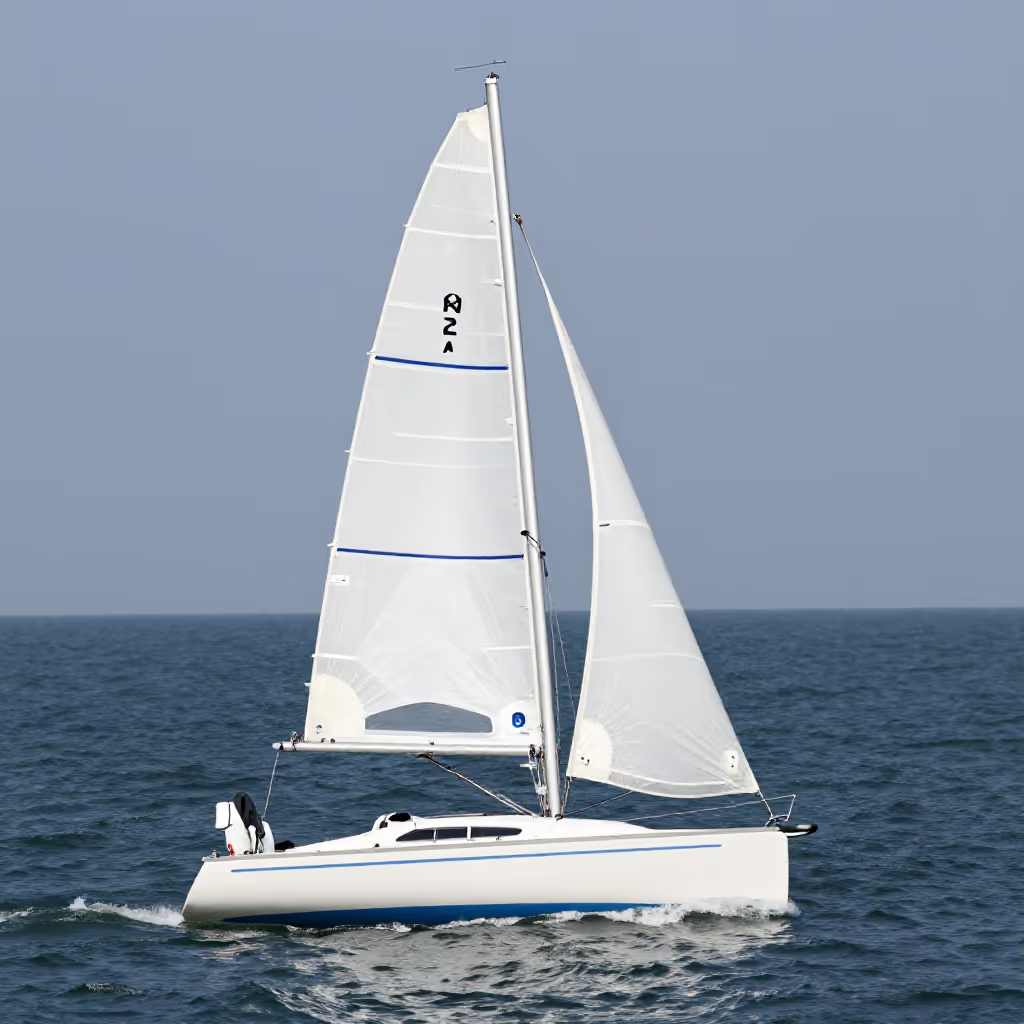
to tack
In sailing, to sail a sailboat in a zigzag course against the wind.
Das Segelboot kreuzte den ganzen Nachmittag vor der Küste.
The sailboat tacked off the coast all afternoon.
The verb 'kreuzen' (to cross) is derived from the noun 'das Kreuz' (the cross). Many meanings have to do with the shape of a cross (+), that is, with something that intersects or overlaps.
Zeichne ein Kreuz auf das Papier.
Draw a cross on the paper.
The verb is often used reflexively as 'sich kreuzen' (to cross / to intersect). This describes two or more things (e.g., roads, glances, paths) meeting or overlapping at one point.
Unsere Blicke kreuzten sich für einen kurzen Moment.
Our eyes met for a brief moment.
The expression 'jemandes Wege kreuzen sich' (someone's paths cross) is very common. It means that people meet by chance, often after a long time.
Ich hätte nie gedacht, dass sich unsere Wege noch einmal kreuzen würden.
I would never have thought that our paths would cross again.
To describe a body posture, the past participle 'gekreuzt' (crossed) is often used like an adjective. The most common phrases are 'mit gekreuzten Armen' (with crossed arms) or 'mit gekreuzten Beinen' (with crossed legs).
Er saß mit gekreuzten Beinen auf dem Boden und meditierte.
He sat on the floor with his legs crossed and meditated.
In the biological meaning of breeding, the verb follows the pattern 'A mit B kreuzen' (to cross A with B). Here, A is one species and B is the other.
Man versuchte, einen Apfel mit einer Birne zu kreuzen.
They tried to cross an apple with a pear.
In the meaning 'to sail against the wind', 'kreuzen' (to tack) is a technical term from sailing. In this context, it is usually used without an object.
Der Kapitän entschied, vor der Küste zu kreuzen, um auf besseren Wind zu warten.
The captain decided to tack off the coast to wait for better wind.
to cut
Schneiden and kreuzen can both describe lines meeting. In geometry, sich schneiden generally refers to having a common intersection point. Sich kreuzen places more emphasis on lines or paths crossing over each other and continuing in different directions.
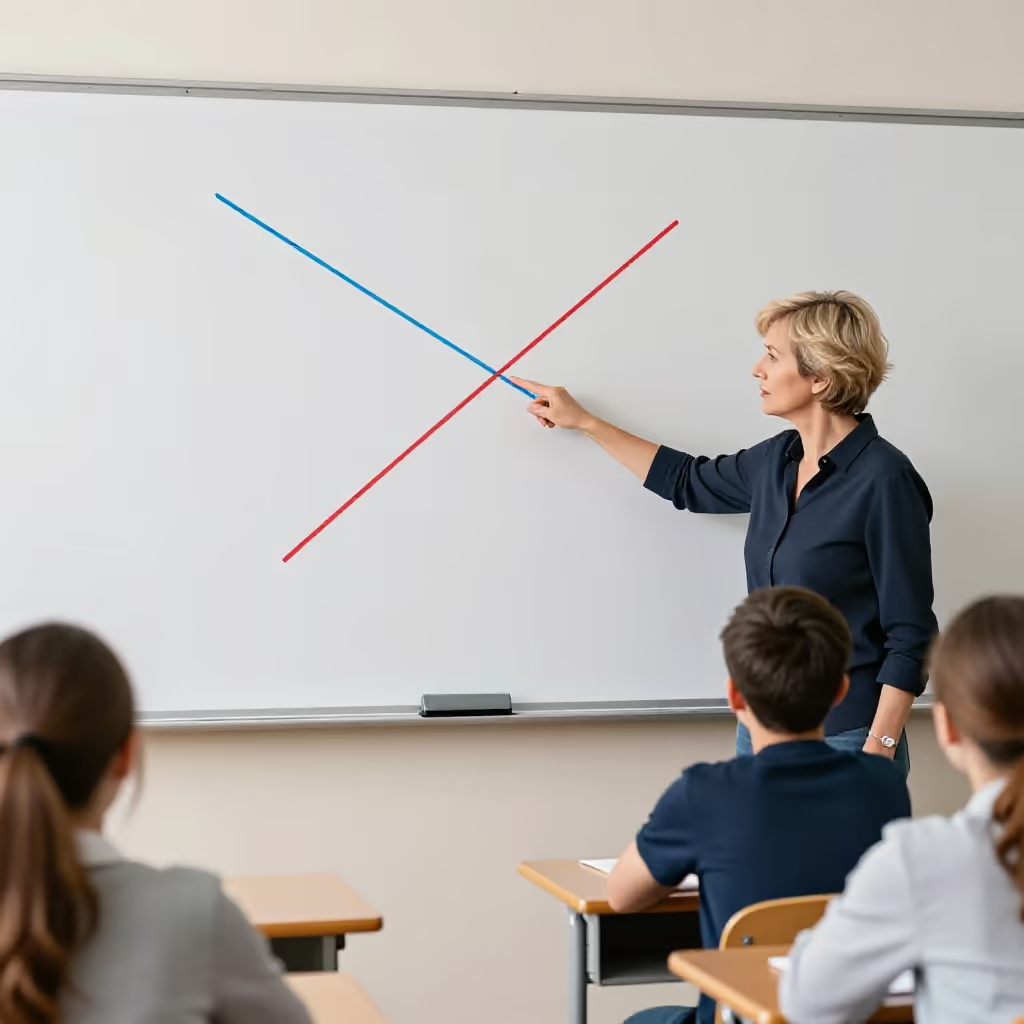
Die beiden Wege kreuzen sich und führen danach in verschiedene Richtungen weiter.
The two paths cross and then continue in different directions.
Die beiden Geraden schneiden sich genau in einem Punkt.
The two lines intersect at exactly one point.