

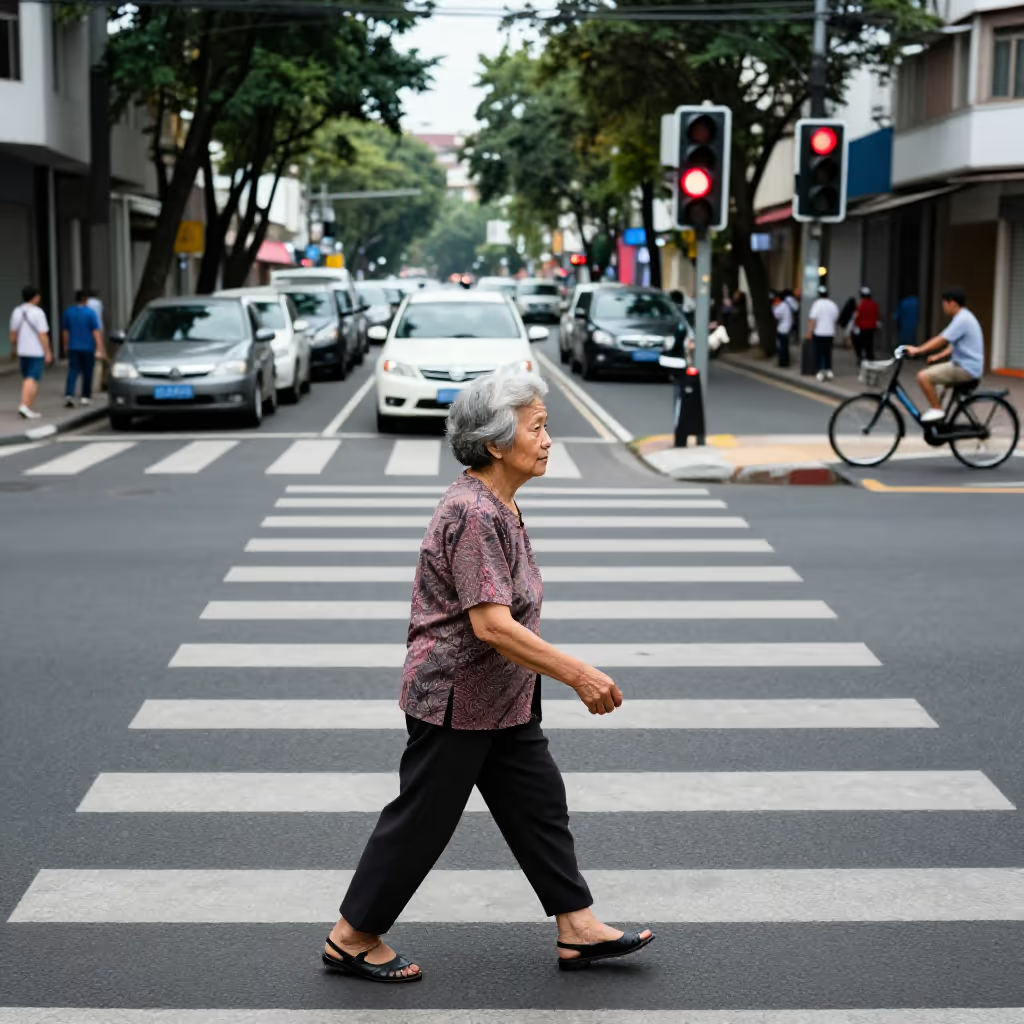
queren
to cross
To cross something from one side to the other, usually referring to a street, a square, or a body of water.
Wir müssen die Hauptstraße queren, um zum Supermarkt zu gelangen.
We have to cross the main road to get to the supermarket.

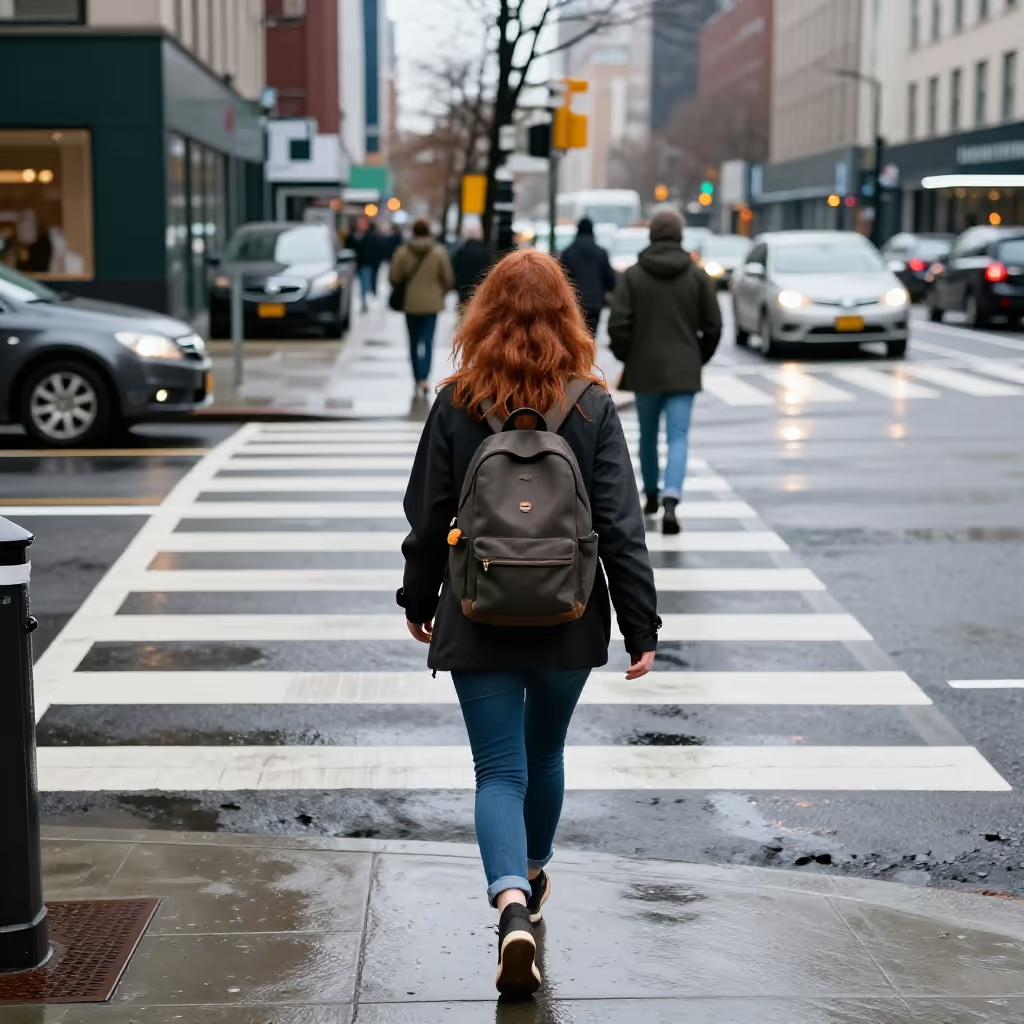
to cross / to run counter to
Loading your saved state.
to cross
To cross something from one side to the other, usually referring to a street, a square, or a body of water.
Wir müssen die Hauptstraße queren, um zum Supermarkt zu gelangen.
We have to cross the main road to get to the supermarket.

The verb “queren” (to cross) is derived directly from the adjective “quer” (crosswise/diagonal). “Quer” means “from one side to the other” or “diagonal,” which explains the meaning of the verb well.
Ein umgestürzter Baum lag quer über der Straße.
A fallen tree lay across the road.
“queren” (to cross) is a transitive verb and always requires an accusative object. You ask: Whom or what am I crossing?
Vorsichtig querte der Igel die befahrene Straße.
The hedgehog carefully crossed the busy road.
In its main meaning, “queren” (to cross) is often combined with places that have a clear boundary. Typical examples are: “eine Straße queren” (to cross a street), “einen Platz queren” (to cross a square), “einen Fluss queren” (to cross a river), or “eine Kreuzung queren” (to cross an intersection).
Die Wandergruppe musste einen kleinen Bach queren.
The hiking group had to cross a small stream.
You can recognize the rare, abstract meaning by the object. If the object is something concrete (street, square), the literal meaning is intended. If the object is abstract (plan, intention), it is about an opposing position.
Sein plötzlicher Einwand querte unsere gesamte Planung.
His sudden objection ran counter to our entire plan.
to happen / pass
'passieren' and 'queren' can both have to do with movement at a place. 'passieren' is used when you pass by a place or leave a border, checkpoint, or specific point behind you. 'queren' means more precisely that you cross something from one side to the other, for example a street, a square, or a river. They can be confused because both describe movement across or at a place. If the direction from one side to the other is important, 'queren' fits better.

Bitte quere die Straße erst, wenn die Ampel grün ist.
Please cross the street only when the traffic light is green.
Die Reisenden passieren die Grenze am frühen Morgen.
The travelers pass the border early in the morning.