

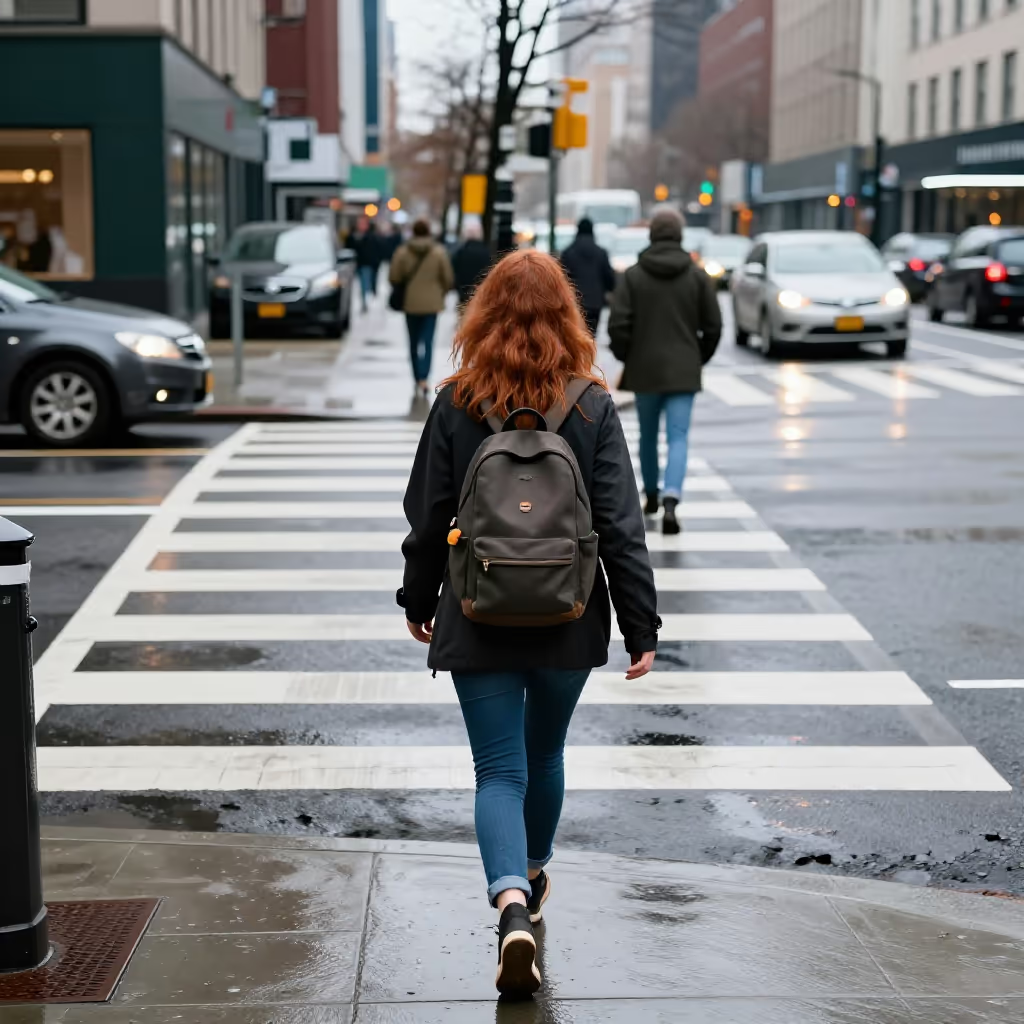
überqueren
to cross
To get from one side of a surface or obstacle (such as a street, river, or square) to the other side.
EXAMPLE
Schauen Sie nach links und rechts, bevor Sie die Straße überqueren.
Look left and right before you cross the street.
to cross
Loading your saved state.
to cross
To get from one side of a surface or obstacle (such as a street, river, or square) to the other side.
Schauen Sie nach links und rechts, bevor Sie die Straße überqueren.
Look left and right before you cross the street.
'Überqueren' (to cross) is an inseparable verb. The prefix 'über-' is not separated from the verb and always stays at the beginning of the word.
Wir überquerten den Fluss mit einer kleinen Fähre.
We crossed the river with a small ferry.
This verb is transitive and always needs an accusative object. You do not use an additional preposition like 'über' (over/across).
Die Kinder lernen, die Straße sicher zu überqueren.
The children are learning to cross the street safely.
You typically cross a surface or a line. Common objects are 'die Straße' (the street), 'der Platz' (the square), 'der Fluss' (the river), 'die Brücke' (the bridge), or 'die Grenze' (the border).
Tausende Menschen überqueren täglich diese Brücke.
Thousands of people cross this bridge every day.
to happen / pass
Passieren and überqueren can both express movement across a boundary or a crossing. Passieren tends to emphasize going through a particular point, while überqueren highlights getting from one side to the other. Passieren is usually appropriate for a checkpoint, while überqueren is more suitable for a surface or boundary.
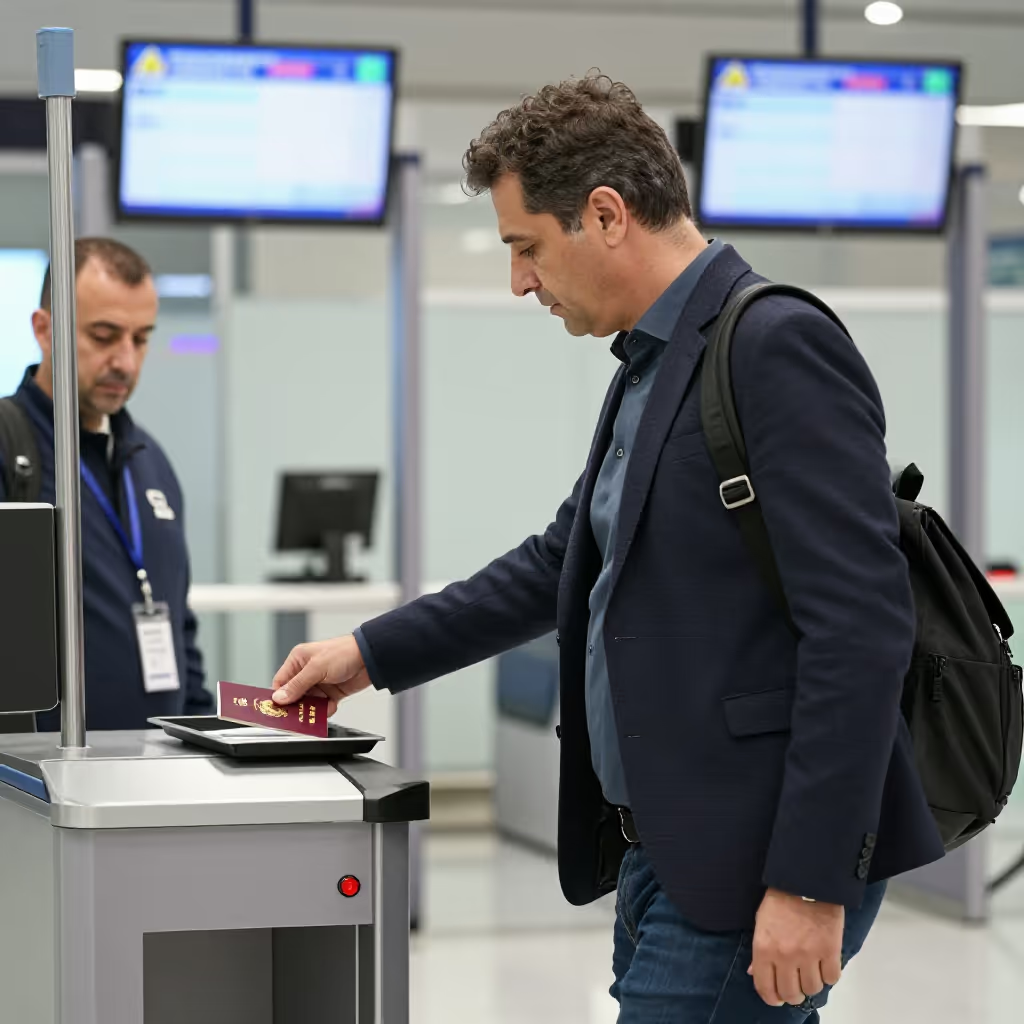
Nach der Kontrolle überquerte sie die Grenze und betrat das Nachbarland.
After the inspection, she crossed the border and entered the neighboring country.
Nach der Kontrolle passierte sie den Grenzübergang ohne lange zu warten.
After the inspection, she passed through the border crossing without having to wait long.