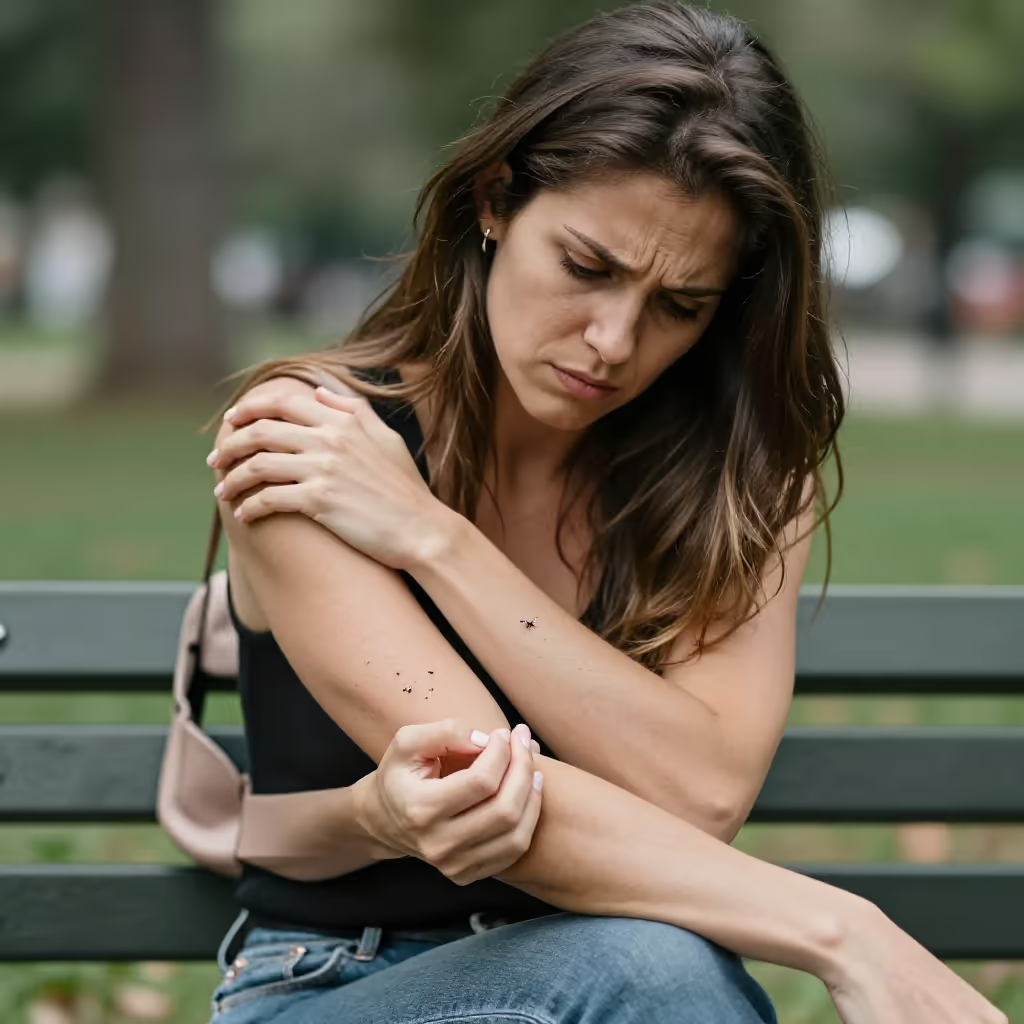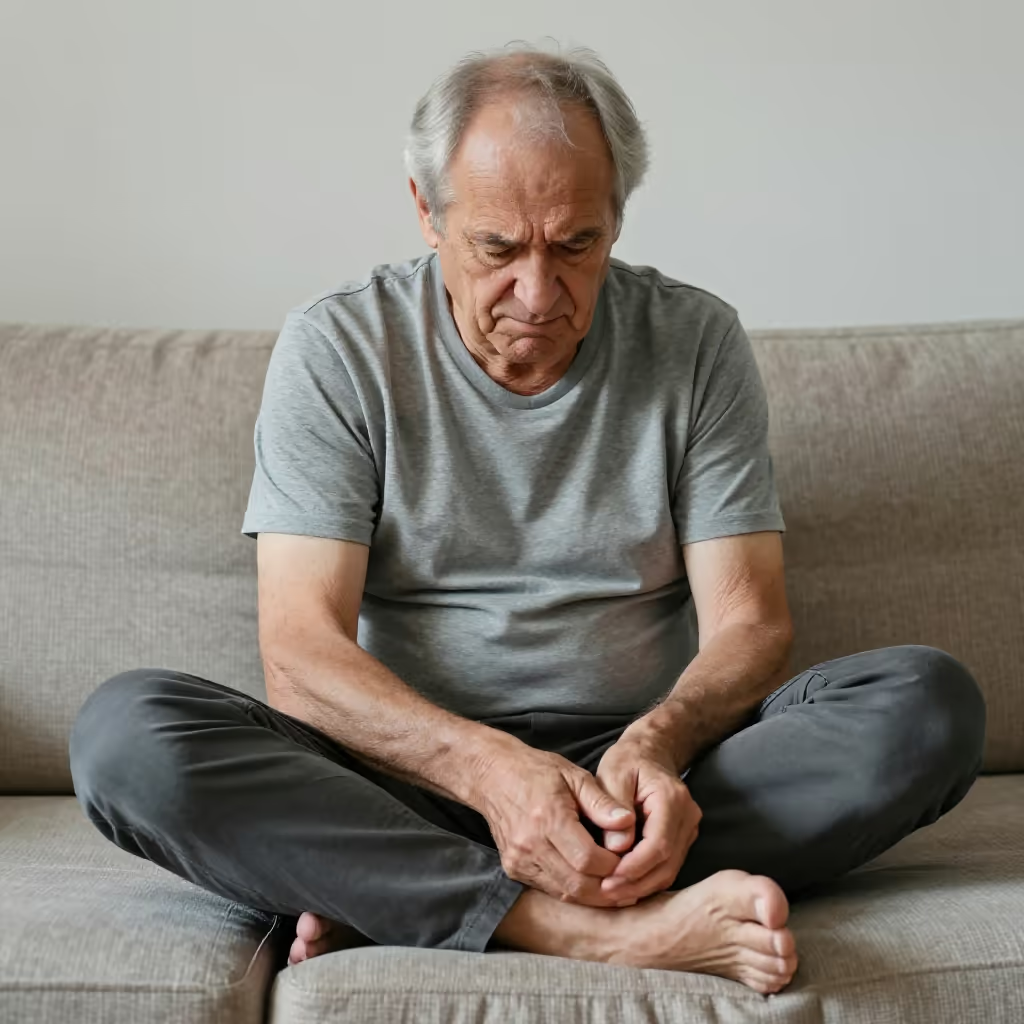
A feeling on the skin that resembles many fine, light pinpricks. It often occurs when a body part 'falls asleep' or blood circulation returns.
example
Mein Fuß kribbelt, weil ich so lange im Schneidersitz gesessen habe.
My foot is tingling because I sat cross-legged for so long.

Usage tips
Two sentence patterns
'Kribbeln' (to tingle) is often used in two patterns. Either the body part is the subject, or the impersonal form with 'es' is used. In the 'es' form, the person who has the feeling is in the dative.
EXAMPLE
Meine Hand kribbelt schon wieder.
My hand is tingling again.
Physical sensation
When 'kribbeln' (to tingle) describes a physical sensation, it is usually combined with a body part. Typical formulations are 'in den Füßen kribbeln' (to tingle in the feet) or 'in den Händen kribbeln' (to tingle in the hands).
EXAMPLE
Nach der langen Wanderung kribbelten meine Beine.
After the long hike, my legs were tingling.
Feeling of excitement
To express excitement or nervousness, 'kribbeln' (to tingle) is often connected with 'im Bauch' (in the stomach). The cause of the excitement is given with the preposition 'vor' plus the dative.
EXAMPLE
Vor seinem Auftritt kribbelte es ihm im Bauch vor Nervosität.
Before his performance, his stomach was tingling with nervousness.
Compare with
confusable
kribbeln vs brennen
to burn
'brennen' and 'kribbeln' can both describe a feeling in the body. 'brennen' means a hot, sharp, or stinging feeling, for example in the eyes, throat, or on the skin. 'kribbeln' feels more like many small, light pinpricks, often when an arm or leg has gone numb. Learners may confuse the words because both describe unpleasant physical sensations. A simple rule of thumb is: if it feels hot or sharp, 'brennen' fits. If it is fine and prickling, 'kribbeln' fits.