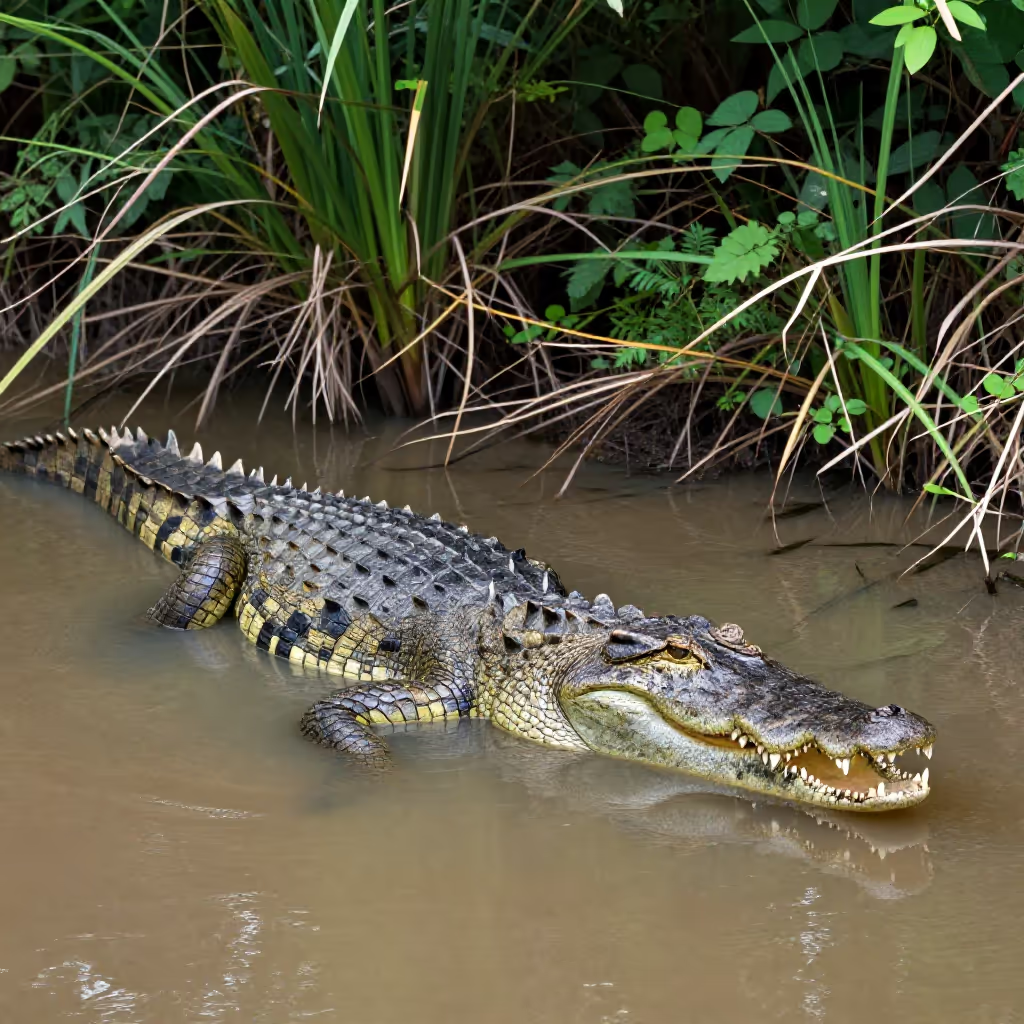
A large predator from the order of reptiles that lives in tropical waters, known for its powerful jaws and armored body.
example
Am Ufer des Nils sonnte sich ein riesiges Krokodil.
A huge crocodile was sunning itself on the bank of the Nile.

Usage tips
Word structure
The word element 'Krokodil-' (crocodile) is often used to form compound nouns. It then describes that something comes from a crocodile or has to do with crocodiles.
EXAMPLE
Die Handtasche ist aus Krokodilleder.
The handbag is made of crocodile leather.
Typical contexts
When the animal is meant, you often find the word in contexts describing its habitat. Typical phrases are 'im Fluss lauern' (to lurk in the river), 'am Ufer liegen' (to lie on the bank), or 'in tropischen Gewässern leben' (to live in tropical waters).
EXAMPLE
Vorsicht, in diesem Fluss lauern Krokodile.
Careful, there are crocodiles lurking in this river.
Fixed expression
The idiom 'Krokodilstränen weinen' (to cry crocodile tears) is a fixed expression. It means that someone is only feigning grief or sympathy, so they do not really feel it.
EXAMPLE
Er weinte Krokodilstränen, als sein Konkurrent die Beförderung nicht bekam.
He cried crocodile tears when his competitor didn't get the promotion.
Cultural context
The idiom comes from the old belief that crocodiles cry while eating their prey. The 'Tränen' (tears) are therefore not real, but a deception.
EXAMPLE
Glaub ihm nicht, das sind nur Krokodilstränen.
Don't believe him; those are just crocodile tears.
Context clue
When 'Krokodil' (crocodile) is meant as a material, it is often used with the preposition 'aus' (made of) and is uncountable. You say 'eine Tasche aus Krokodil' (a bag made of crocodile leather), but not 'aus einem Krokodil' (made from a crocodile).
EXAMPLE
Dieser Gürtel ist aus Krokodil und war sehr teuer.
This belt is made of crocodile leather and was very expensive.