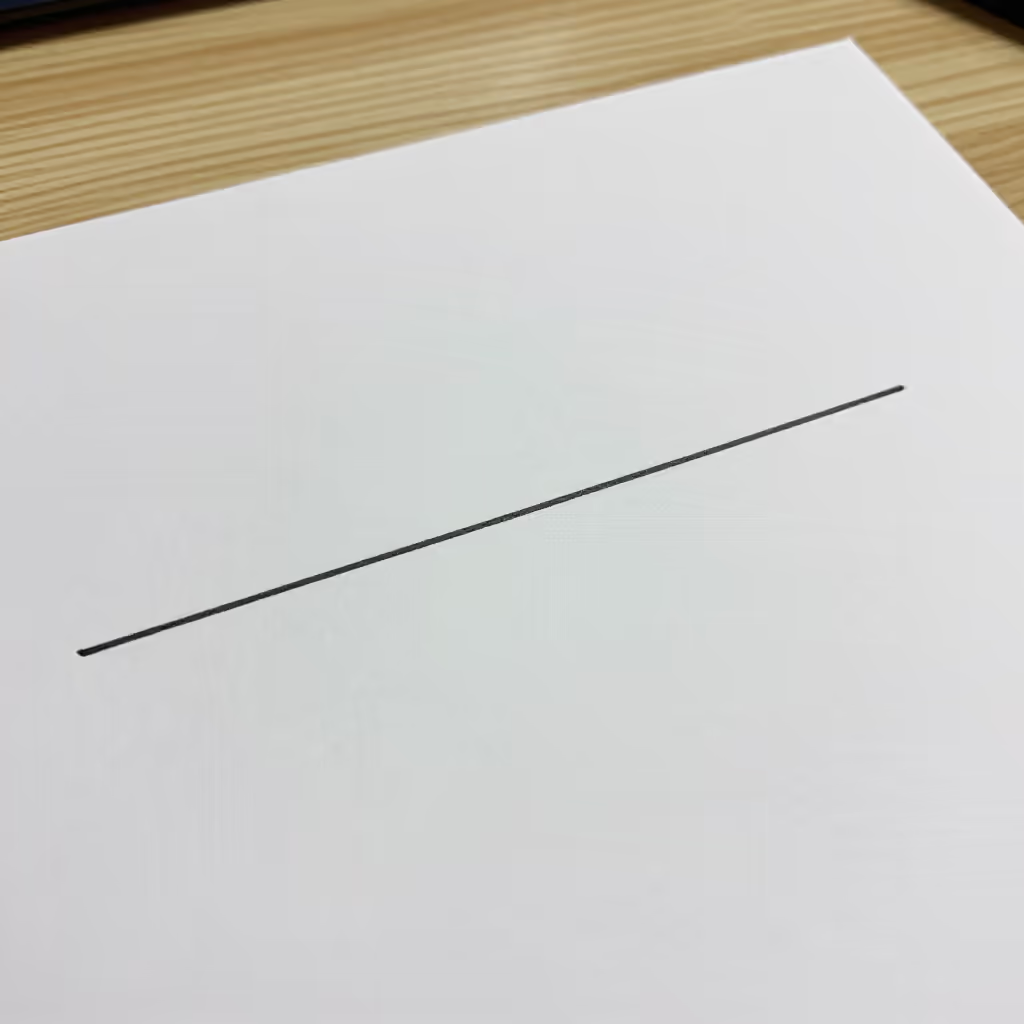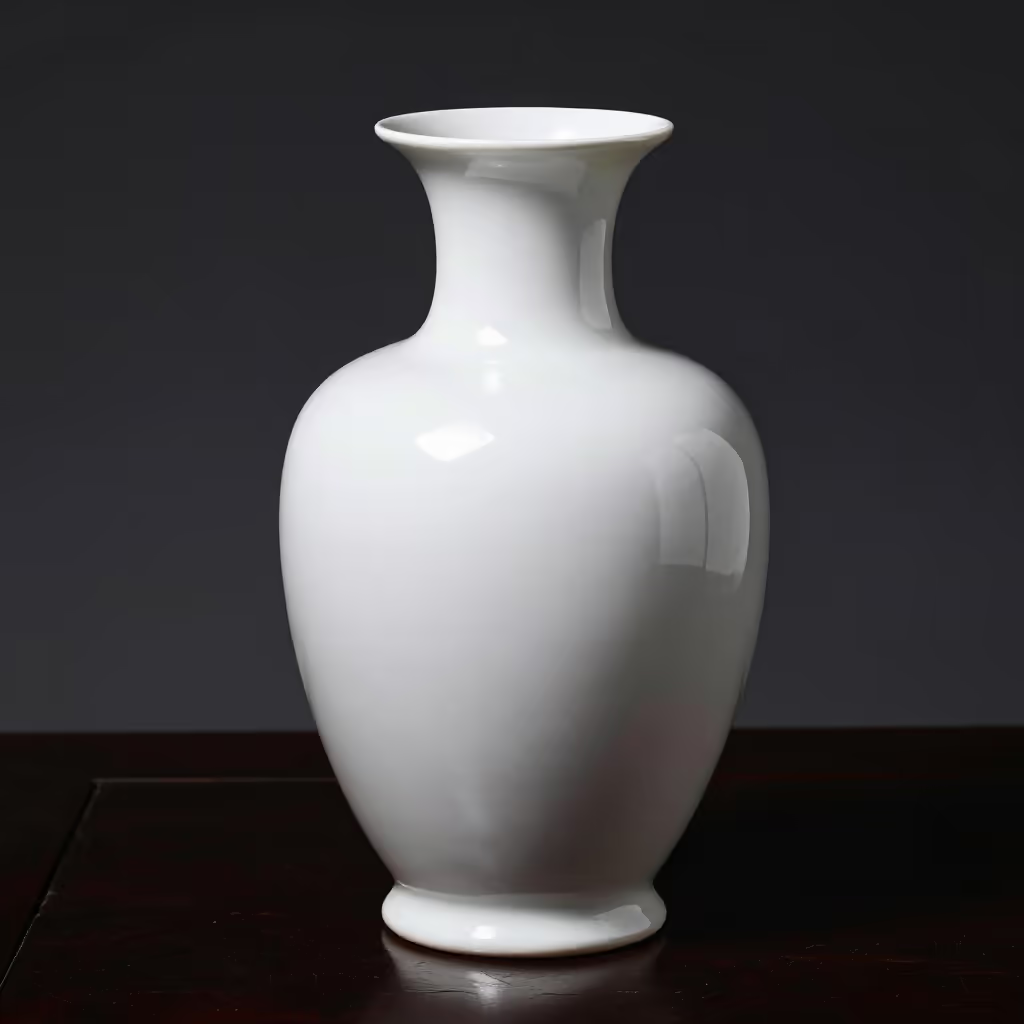
The outer outline of a figure, object, or surface. It defines the shape and sets it apart from the background.
example
Im dichten Nebel waren nur die schwachen Konturen der Bäume zu erkennen.
In the thick fog, only the faint contours of the trees could be made out.

Usage tips
Word family
The adjective 'konturlos' (without clear contours / vague) is derived from the noun 'Kontur' (contour). It describes something that has no clear profile or recognizable character.
EXAMPLE
Ohne eine klare Strategie bleibt der Plan der Firma konturlos.
Without a clear strategy, the company's plan remains vague.
Typical adjectives
When referring to the visibility of outlines, 'Kontur' (contour) is often combined with adjectives such as 'scharf' (sharp), 'deutlich' (distinct), or 'klar' (clear). The opposites are 'schwache' (faint), 'unscharfe' (blurred), or 'vage' (vague) contours.
EXAMPLE
Durch den Regen konnte man nur die unscharfen Konturen des Hauses sehen.
Because of the rain, you could only see the blurred contours of the house.
Context clue
You can recognize the figurative meaning from the context. If 'Kontur' (contour) refers to abstract things such as a plan, an idea, or a concept, the figurative meaning is intended.
EXAMPLE
Die Idee für das neue Buch hat noch keine feste Kontur.
The idea for the new book does not yet have a definite shape.
Fixed expressions
In the figurative meaning, 'Kontur' (contour) is often used in fixed expressions. Typical phrases are 'Kontur annehmen' (to take shape), 'Kontur gewinnen' (to gain definition), or 'etwas Kontur verleihen' (to give something definition).
EXAMPLE
Wir müssen dem Projekt mehr Kontur verleihen, damit es genehmigt wird.
We need to give the project more definition so that it will be approved.
Compare with
near_synonym · confusable
Kontur vs Form
form / shape
'die Form' and 'die Kontur' are closely connected because both concern the external appearance of something. 'die Form' means the whole shape of an object or surface. 'die Kontur' more specifically means the outer line, that is, the outline that separates something from the background. That is why you can often recognize the shape from the contour. The words can be confused because both can be used when drawing or describing pictures. If you mean the whole thing, use 'Form'. If you mean only the line at the edge, use 'Kontur'.
Kontur
Am Abend hat Daniel die Kontur des Hauses mit einem schwarzen Stift nachgezogen.
In the evening, Daniel traced the outline of the house with a black pen.
Form
Clara zeichnet im Garten die Form eines großen Blattes ab.
Clara traces the shape of a large leaf in the garden.