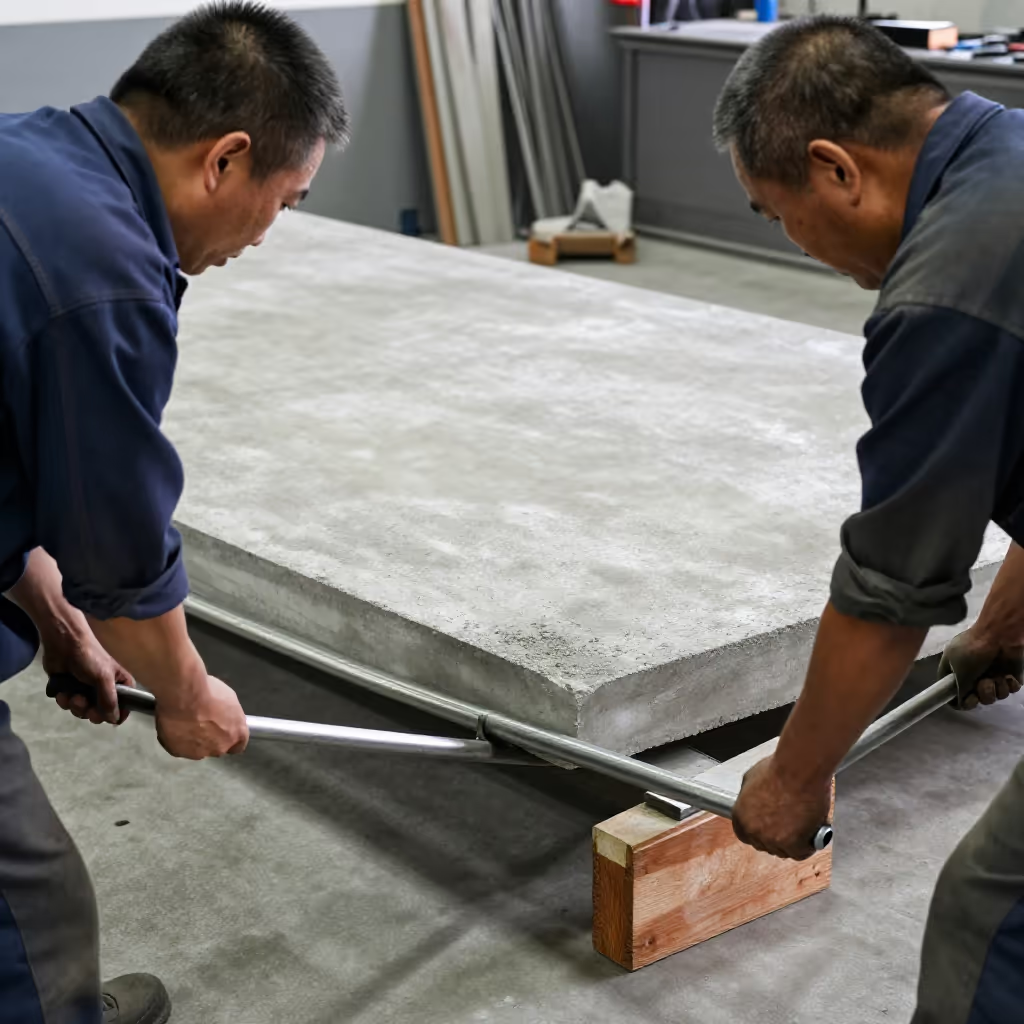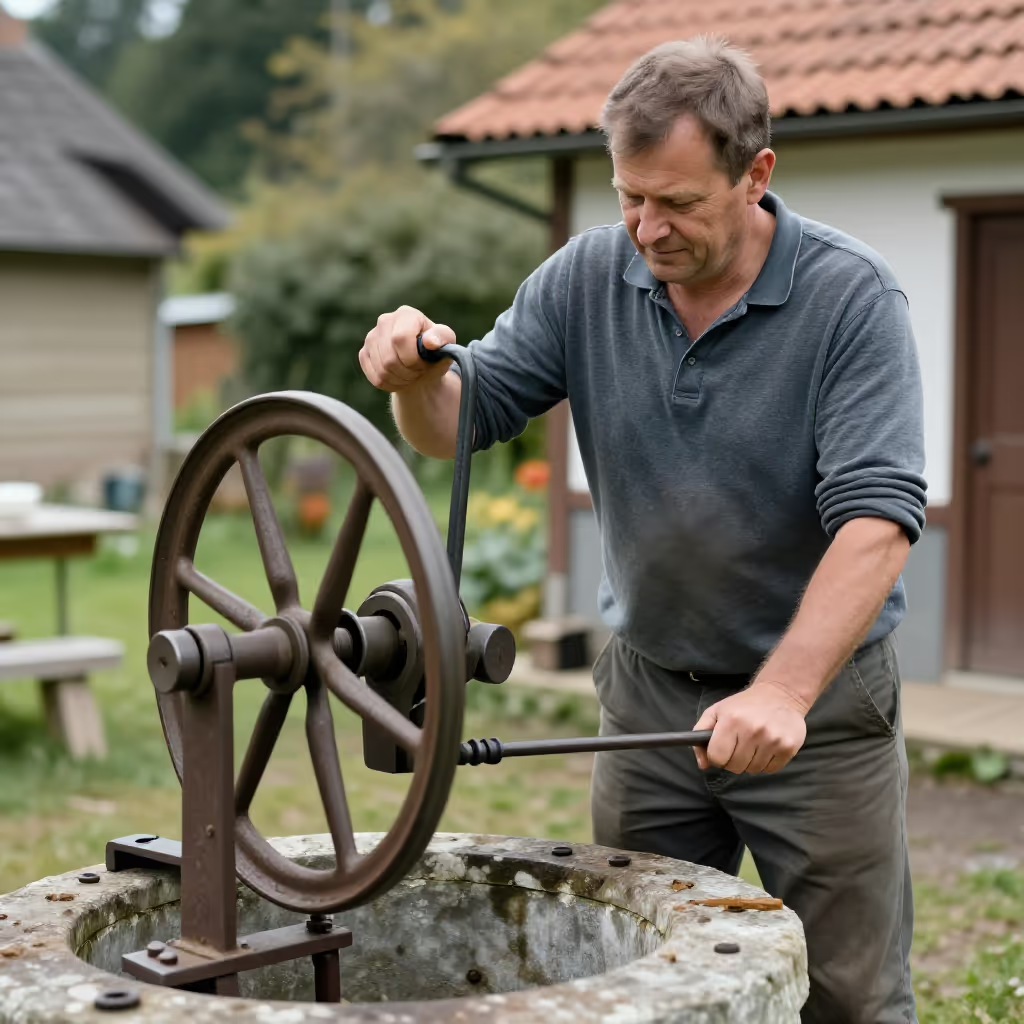
A technical component consisting of a handle and an arm that transfers force to a shaft through a rotating movement in order to drive or operate a machine.
example
Bei alten Autos musste man die Fenster noch mit einer Kurbel öffnen und schließen.
In old cars, you still had to open and close the windows with a crank.

Usage tips
Word family
The noun 'die Kurbel' (the crank) is closely related to the verb 'kurbeln' (to crank). This means to perform a rotating movement in order to drive or operate something.
EXAMPLE
Er musste kräftig kurbeln, um den alten Motor zu starten.
He had to crank hard to start the old engine.
Context clue
You can recognize the technical meaning from the fact that 'die Kurbel' (the crank) is used as a normal noun in the sentence. The idiomatic meaning occurs only in the fixed expression 'einen an der Kurbel haben' (to have a screw loose).
EXAMPLE
Die Kurbel an der Markise ist abgebrochen.
The crank on the awning has broken off.
Context: old technology
A crank is often associated with older, manually operated devices, for example old coffee grinders, window winders in cars, or mechanical toys.
EXAMPLE
Meine Oma mahlt ihren Kaffee noch mit einer alten Mühle mit Kurbel.
My grandma still grinds her coffee with an old grinder with a crank.
Fixed expression
The expression 'einen an der Kurbel haben' (to have a screw loose) is a fixed idiom. The structure is always the same: the person described as crazy is the subject of the verb 'haben' (to have).
EXAMPLE
Er will im Winter im See schwimmen? Der hat doch einen an der Kurbel!
He wants to swim in the lake in winter? He must have a screw loose!
Register and style
The idiom 'einen an der Kurbel haben' (to have a screw loose) is colloquial and is considered somewhat outdated today. Younger people use it less often, but most still understand it.
EXAMPLE
Mein Opa sagt manchmal über Politiker, sie hätten alle einen an der Kurbel.
My grandpa sometimes says about politicians that they all have a screw loose.
Compare with
confusable
Kurbel vs Griff
handle / grip
'der Griff' and 'die Kurbel' can both have to do with operating an object. 'der Griff' is generally the part that you hold. 'die Kurbel' is a technical part with a handle and an arm that you turn so that something moves or works. It is easy to mix up the words because a crank has a handle. But the handle by itself does not have to rotate. If a turning motion is important, you say 'Kurbel'. If it is only about grasping or holding something, you say 'Griff'.
Kurbel
Selma drehte die Kurbel am Fenster, bis es ganz offen war.
Selma turned the crank on the window until it was fully open.
Griff
Der Griff der alten Tür ist locker und muss repariert werden.
The handle of the old door is loose and needs to be repaired.