

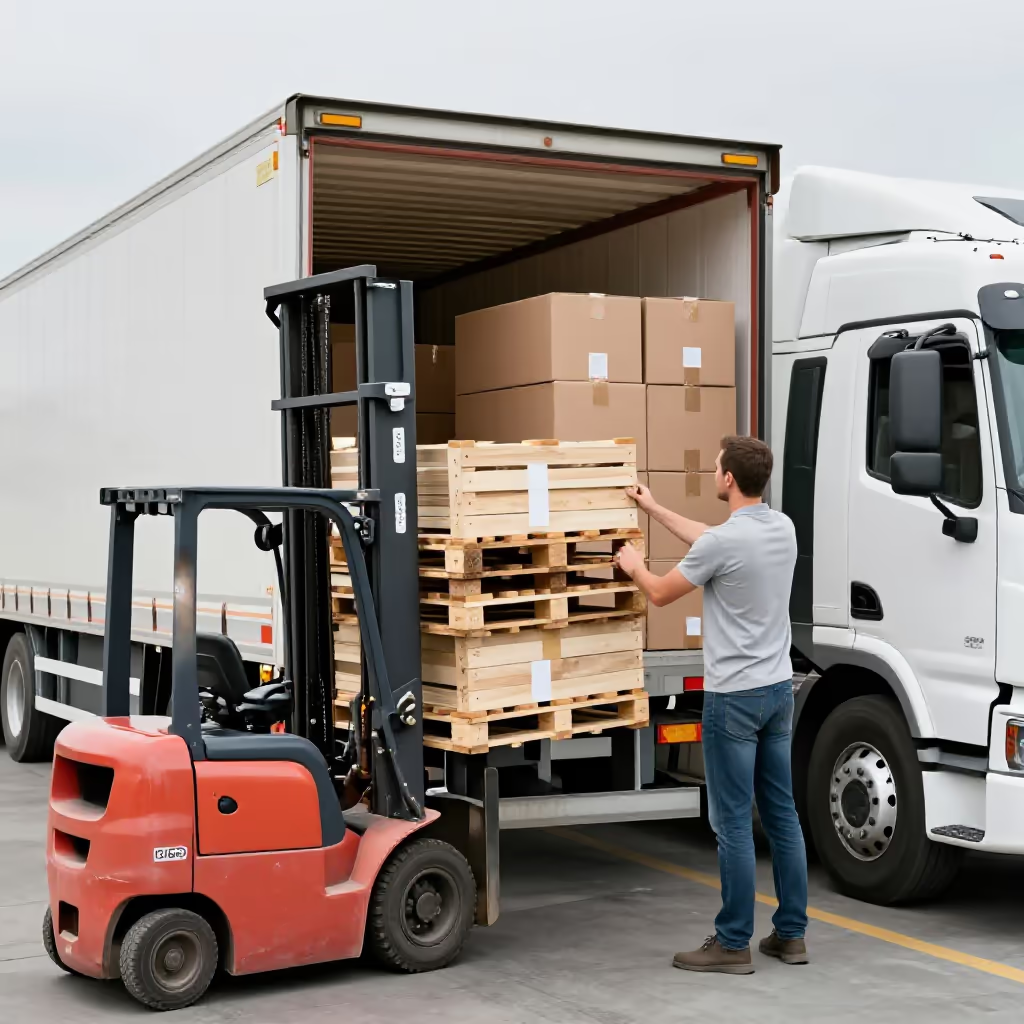
die Ladung
cargo
The total amount of goods or merchandise transported by a vehicle such as a truck, ship, or airplane.
EXAMPLE
Der LKW verlor auf der Autobahn einen Teil seiner Ladung.
The truck lost part of its cargo on the highway.
cargo / charge / summons
Loading your saved state.
cargo
The total amount of goods or merchandise transported by a vehicle such as a truck, ship, or airplane.
Der LKW verlor auf der Autobahn einen Teil seiner Ladung.
The truck lost part of its cargo on the highway.

charge
The amount of electrical energy stored in an object, for example a battery or a capacitor.
Die Ladung des Akkus reicht nur noch für zehn Minuten.
The battery's charge is only enough for ten more minutes.

summons
An official written request to appear in court or before an authority.
Er erhielt eine Ladung als Zeuge für den kommenden Prozess.
He received a summons as a witness for the upcoming trial.
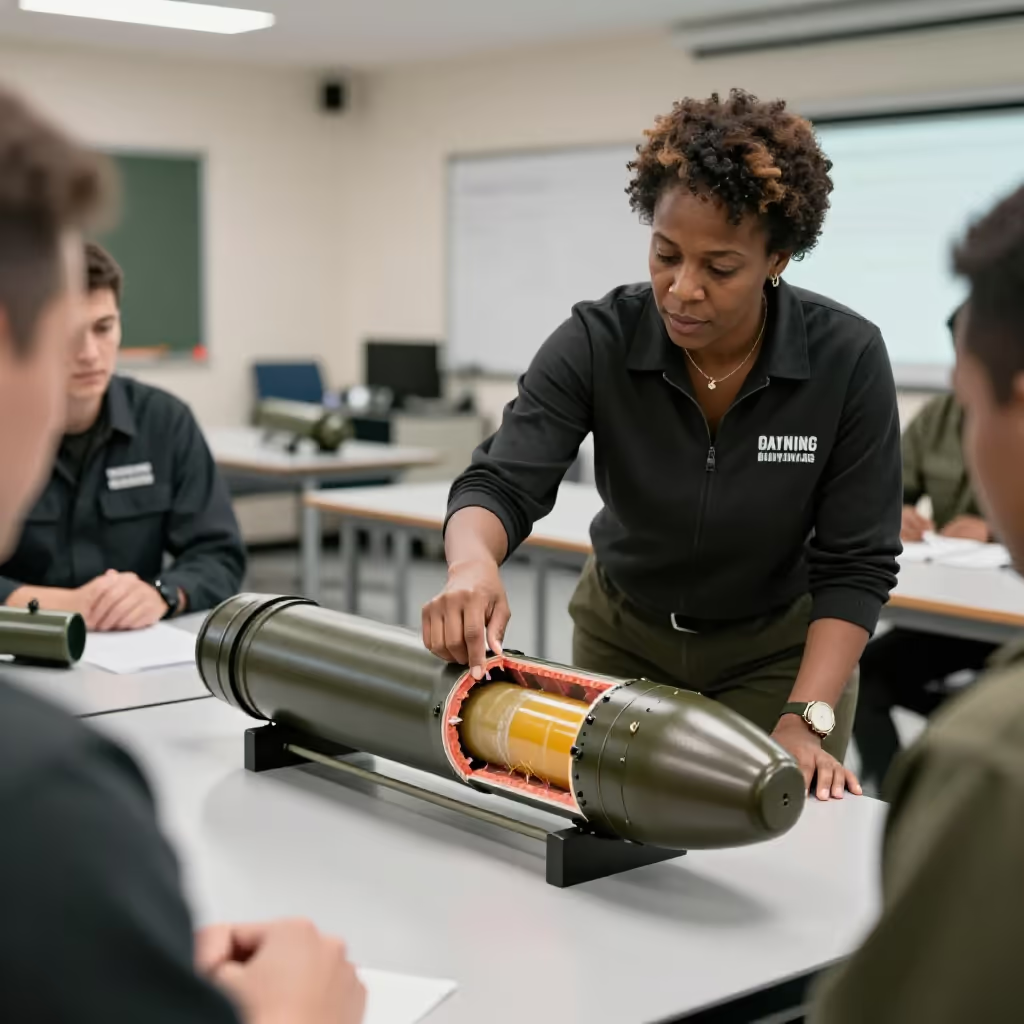
charge
The explosive material in a cartridge, grenade, or bomb.
Die Patrone enthält eine Treibladung aus Schwarzpulver.
The cartridge contains a propellant charge made of black powder.

load
Colloquial term for a very large amount of something.
Am Wochenende wartet eine ganze Ladung Hausarbeit auf mich.
A whole load of housework is waiting for me this weekend.
The noun 'die Ladung' (cargo/charge/summons) is derived from the verb 'laden' (to load/charge). The ending '-ung' turns the verb into a feminine noun that describes the result or process of loading or charging.
Das Laden des LKW dauert eine Stunde; die Ladung ist sehr schwer.
Loading the truck takes an hour; the cargo is very heavy.
The meaning of 'Ladung' (cargo/charge/summons) can almost always be understood from the surrounding words. In transport contexts (truck, ship), it refers to goods; in technology (rechargeable battery, battery), it refers to electricity; and in law (court, witness), it refers to a summons.
Der Kapitän überwachte das Löschen der Ladung im Hafen.
The captain supervised the unloading of the cargo in the harbor.
In transportation, 'Ladung' (cargo) is often combined with verbs such as 'sichern' (to secure), 'löschen' (to unload), 'transportieren' (to transport), or 'verlieren' (to lose).
Der Fahrer muss die Ladung vor der Abfahrt gut sichern.
The driver must secure the cargo well before departure.
In a legal context, you receive a 'Ladung' (summons). Typical phrases are 'eine Ladung erhalten/bekommen' (to receive a summons) or 'einer Ladung Folge leisten' (to comply with a summons).
Als Zeugin erhielt sie eine Ladung vor Gericht.
As a witness, she received a summons to appear in court.
In colloquial language, 'eine Ladung' (a load) can also simply mean 'eine große Menge' (a large amount), often of something unpleasant. Typical phrases are 'eine Ladung Arbeit' (a load of work) or 'eine Ladung Probleme' (a load of problems).
Nach dem Urlaub wartete eine ganze Ladung E-Mails auf mich.
After the vacation, a whole load of emails was waiting for me.
amount / crowd
Menge refers neutrally to quantity. Ladung can also colloquially mean a very large amount, but expresses it more vividly as a whole load. Menge is appropriate for a factual statement; in a casual, emphatic statement, Ladung may be a better fit.
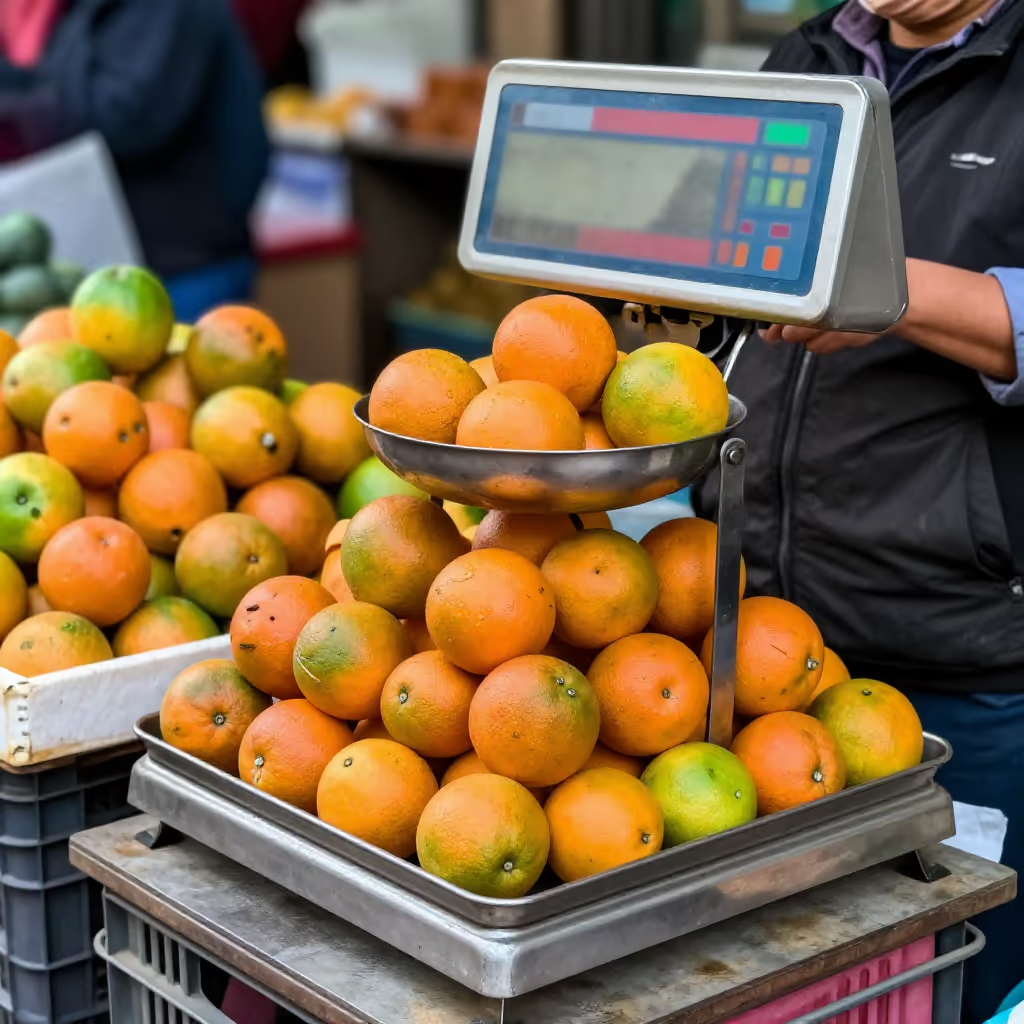
Für den Umzug brauchen wir eine ganze Ladung Kartons.
For the move, we need a whole load of boxes.
Für den Umzug brauchen wir eine große Menge Kartons.
For the move, we need a large number of boxes.