

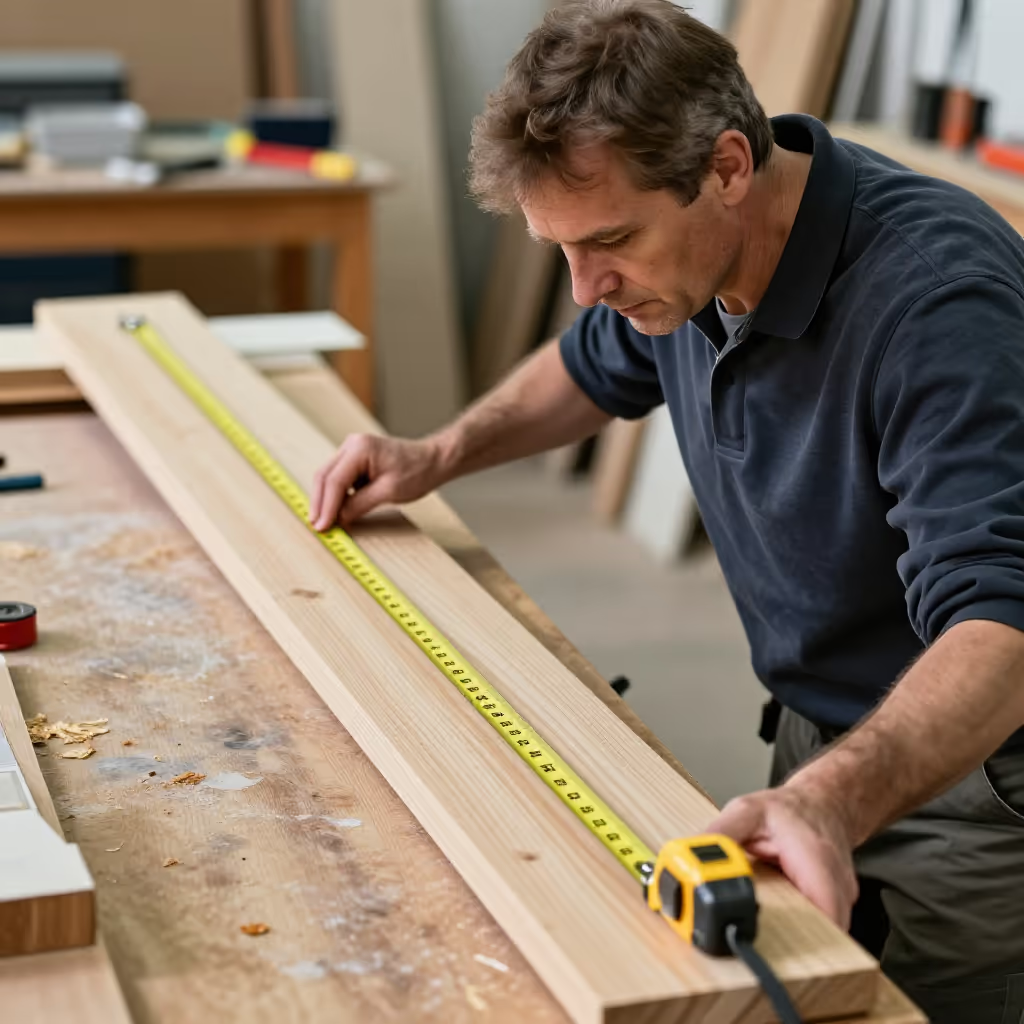
die Länge
length
The spatial extent of an object from one end to the other.
EXAMPLE
Die Länge des Tisches beträgt genau zwei Meter.
The length of the table is exactly two meters.
length
Loading your saved state.
length
The spatial extent of an object from one end to the other.
Die Länge des Tisches beträgt genau zwei Meter.
The length of the table is exactly two meters.

length
The duration in time of an event, process, or work.
Die Länge des Films war mit über drei Stunden eine echte Herausforderung.
The length of the film, at over three hours, was a real challenge.

to drag something out
To intentionally or unintentionally make a process last longer than necessary.
Er hat die Besprechung mit unnötigen Details in die Länge gezogen.
He dragged out the meeting with unnecessary details.
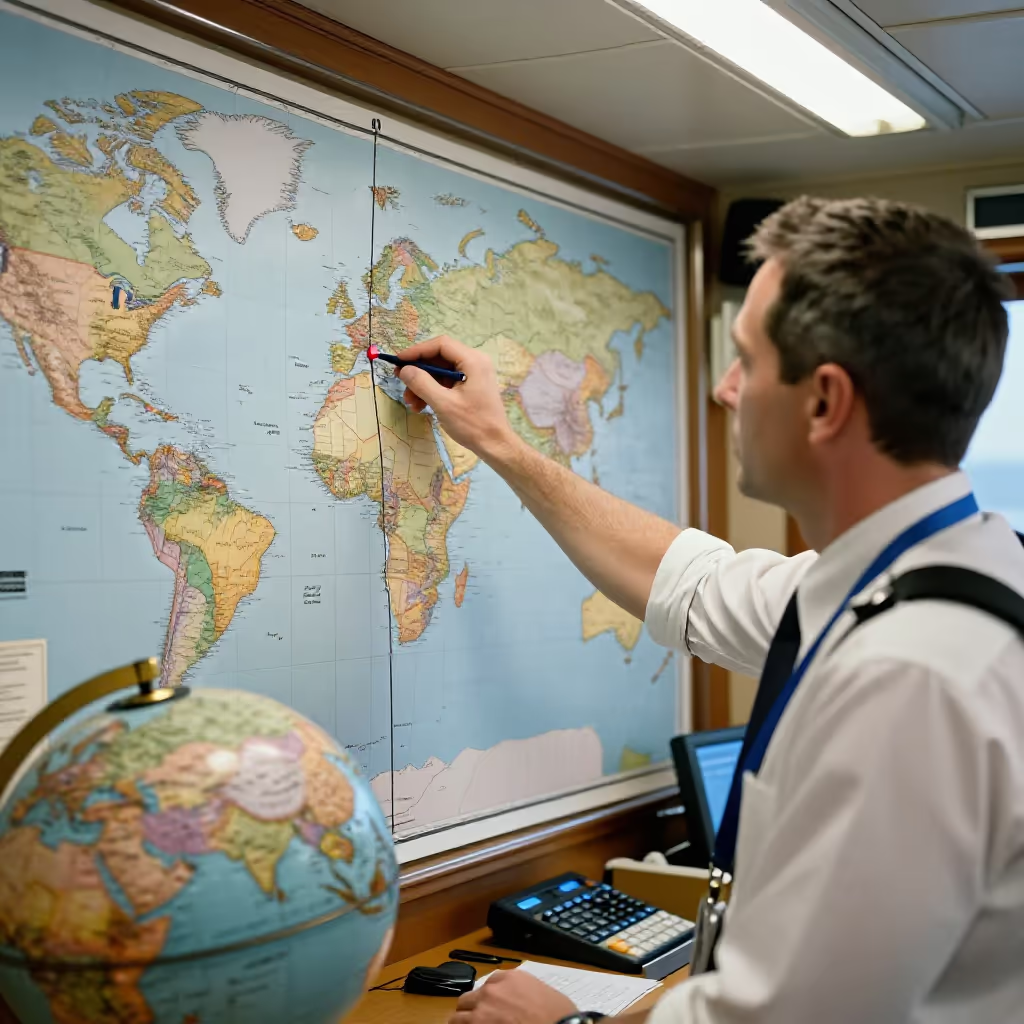
longitude
The geographic coordinate that indicates the east-west position of a point on the Earth’s surface.
Der Nullmeridian definiert den Längengrad 0.
The prime meridian defines longitude 0.

slow passages
A boring or drawn-out passage in a book, film, or lecture. Often used in the plural.
Der Roman hatte einige Längen, war aber insgesamt spannend.
The novel had a few slow passages, but overall it was exciting.
'Die Länge' (length) is the noun related to the adjective 'lang' (long). It describes the property or measurement of how long something is. If you know 'lang' (long), you can easily work out 'Länge' (length).
Wie lang ist der Tisch? – Die Länge des Tisches ist zwei Meter.
How long is the table? – The length of the table is two meters.
The meaning of 'Länge' (length) becomes clear from context. In connection with units of measurement such as 'Meter' (meters) or 'Kilometer' (kilometers), it refers to spatial extent. With time expressions such as 'Stunden' (hours), or in the context of films and lectures, it refers to duration.
Die Länge der Brücke ist beeindruckend.
The length of the bridge is impressive.
To state the exact length or duration of something, the preposition 'von' (of) is often used. The typical structure is 'eine Länge von + [Zahl und Einheit] haben' (to have a length of + [number and unit]).
Das Seil hat eine Länge von zehn Metern.
The rope has a length of ten meters.
In the fixed expression 'etwas in die Länge ziehen' (to drag something out), 'etwas' (something) is always the accusative object. It names the thing that is intentionally or unintentionally being prolonged.
Er versucht, das Gespräch künstlich in die Länge zu ziehen.
He is trying to artificially drag out the conversation.
In a geographic context, 'Länge' (longitude) or 'Längengrad' (degree of longitude) almost always appears together with its counterpart 'Breite' (latitude) or 'Breitengrad' (degree of latitude). The two words form a fixed pair for determining positions on Earth.
Der Navigator berechnete die genaue Länge und Breite ihrer Position.
The navigator calculated the exact longitude and latitude of their position.
In the meaning 'langweiliger Abschnitt' (boring section/slow passage), the word is almost always used in the plural: 'Längen' (slow passages). For example, people speak of a film or book that 'Längen hat' (has slow passages).
Das Buch ist spannend, hat aber leider einige Längen im Mittelteil.
The book is exciting, but unfortunately it has a few slow passages in the middle section.
route / distance
Both words can indicate how far something extends spatially. „Die Strecke“ usually refers to a distance or route traveled between two points, while „die Länge“ measures the extent of an object from one end to the other. Use „Strecke“ for routes and „Länge“ for objects.

Die Länge des Tisches von einem Ende zum anderen beträgt zwei Meter.
The length of the table from one end to the other is two meters.
Die Strecke von unserem Dorf bis zum Bahnhof fahren wir jeden Morgen mit dem Bus.
Every morning, we travel the distance from our village to the train station by bus.