

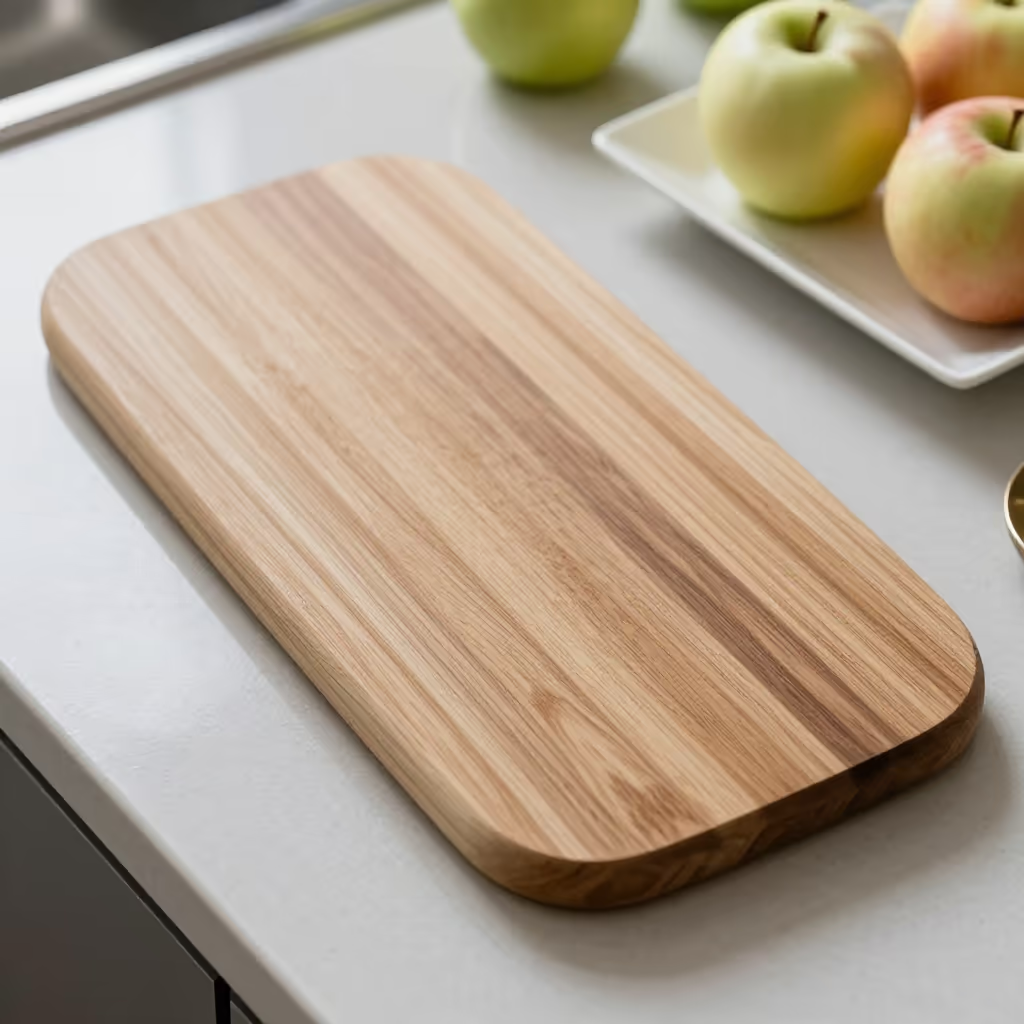
Describes a shape that is significantly longer in one direction than in the other; of a stretched, oval, or rectangular shape.
example
Der Tisch hat eine längliche Form und bietet Platz für acht Personen.
The table has an elongated shape and seats eight people.
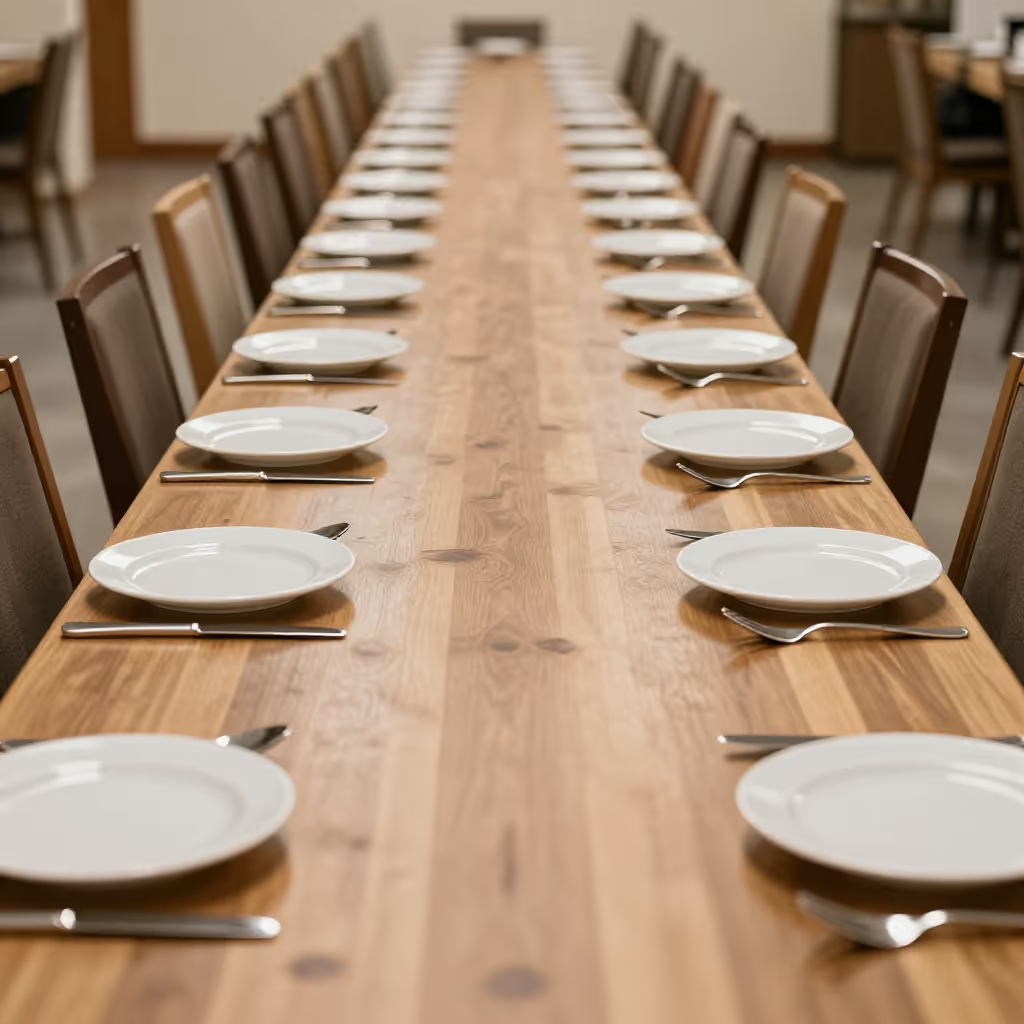
Usage tips
Word structure
The word is derived from 'lang' (long) with the ending '-lich'. This ending often softens the meaning or describes a quality. 'Länglich' (elongated) therefore means 'rather long than wide' and describes a shape.
EXAMPLE
Die Gurke hat eine längliche Form.
The cucumber has an elongated shape.
Usage
'Länglich' (elongated) is used almost exclusively to describe the shape of an object. It emphasizes that length is the most noticeable dimension in relation to width.
EXAMPLE
Für das Rezept benötigst du eine längliche Backform.
For the recipe, you need an elongated baking pan.
Typical collocations
It is often used to describe the shape of everyday objects, body parts, or geometric figures. Common combinations are: 'ein länglicher Tisch' (an elongated table), 'ein längliches Gesicht' (an elongated face), or 'ein länglicher Raum' (an elongated room).
EXAMPLE
Er hat ein schmales, längliches Gesicht.
He has a narrow, elongated face.
Compare with
near_synonym · confusable
länglich vs lang
long
'lang' and 'länglich' both describe a shape with more length than width. 'lang' directly says that something has great length, for example 'ein langer Tisch' (a long table) or 'ein langer Weg' (a long way). 'länglich' describes the shape more: something is stretched out, often oval or rectangular, but not necessarily very large. Learners may confuse the words because both talk about length. If the actual length is important, use 'lang'. If the shape is meant, 'länglich' fits better.
länglich
Auf dem Markt kaufe ich längliche Tomaten für den Salat.
At the market, I buy elongated tomatoes for the salad.