

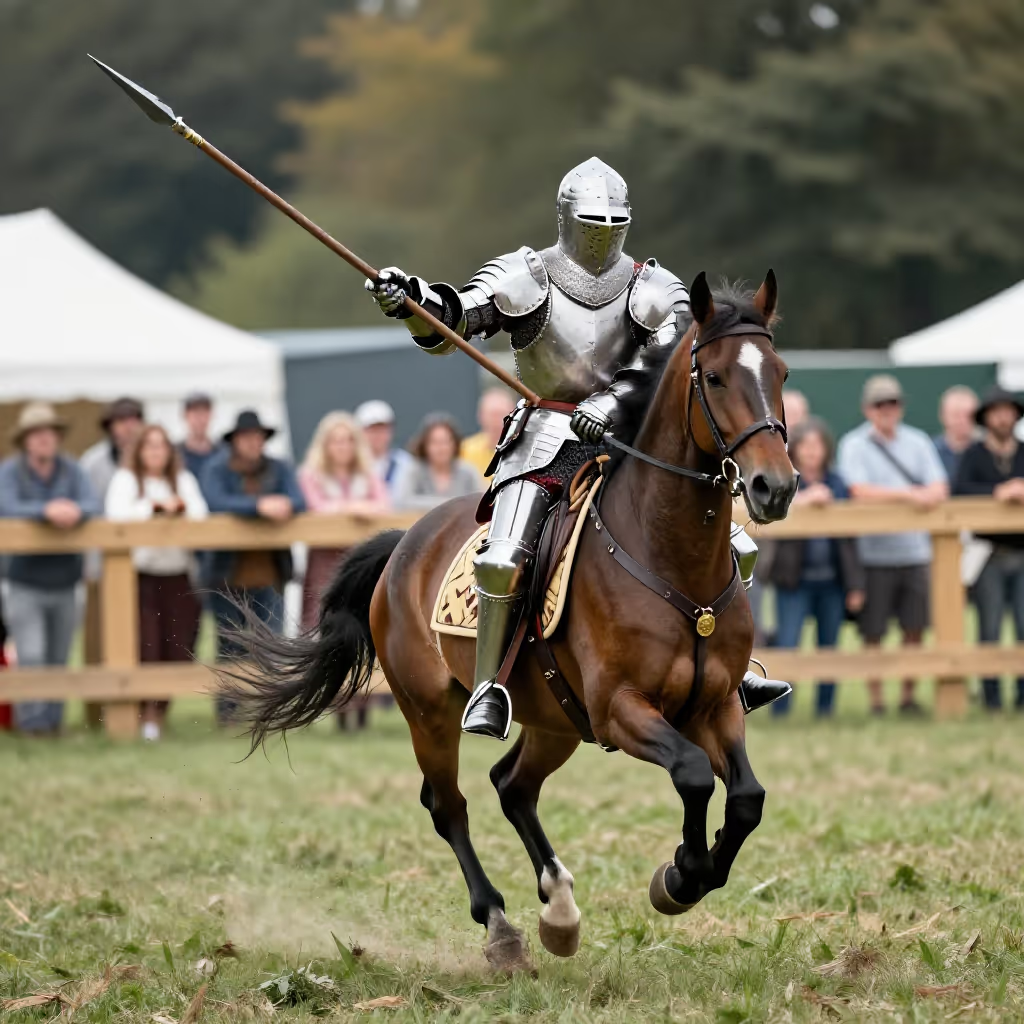
die Lanze
lance
A historical thrusting weapon with a long shaft and a metal tip, used mainly by riders in battle or at tournaments.
Im Mittelalter kämpften die Ritter mit Schild und Lanze.
In the Middle Ages, knights fought with shield and lance.


lance
Loading your saved state.
lance
A historical thrusting weapon with a long shaft and a metal tip, used mainly by riders in battle or at tournaments.
Im Mittelalter kämpften die Ritter mit Schild und Lanze.
In the Middle Ages, knights fought with shield and lance.
You can recognize the meaning of 'Lanze' (lance) from the context. If the sentence is about knights or history, it refers to the weapon. In technical contexts (e.g. with 'Hochdruckreiniger' (pressure washer)), it is the spraying device. The fixed expression 'eine Lanze brechen' means to defend someone.
Der Ritter senkte seine Lanze.
The knight lowered his lance.
This meaning is used almost exclusively in historical contexts, when talking about the Middle Ages, knights, tournaments, or old battles.
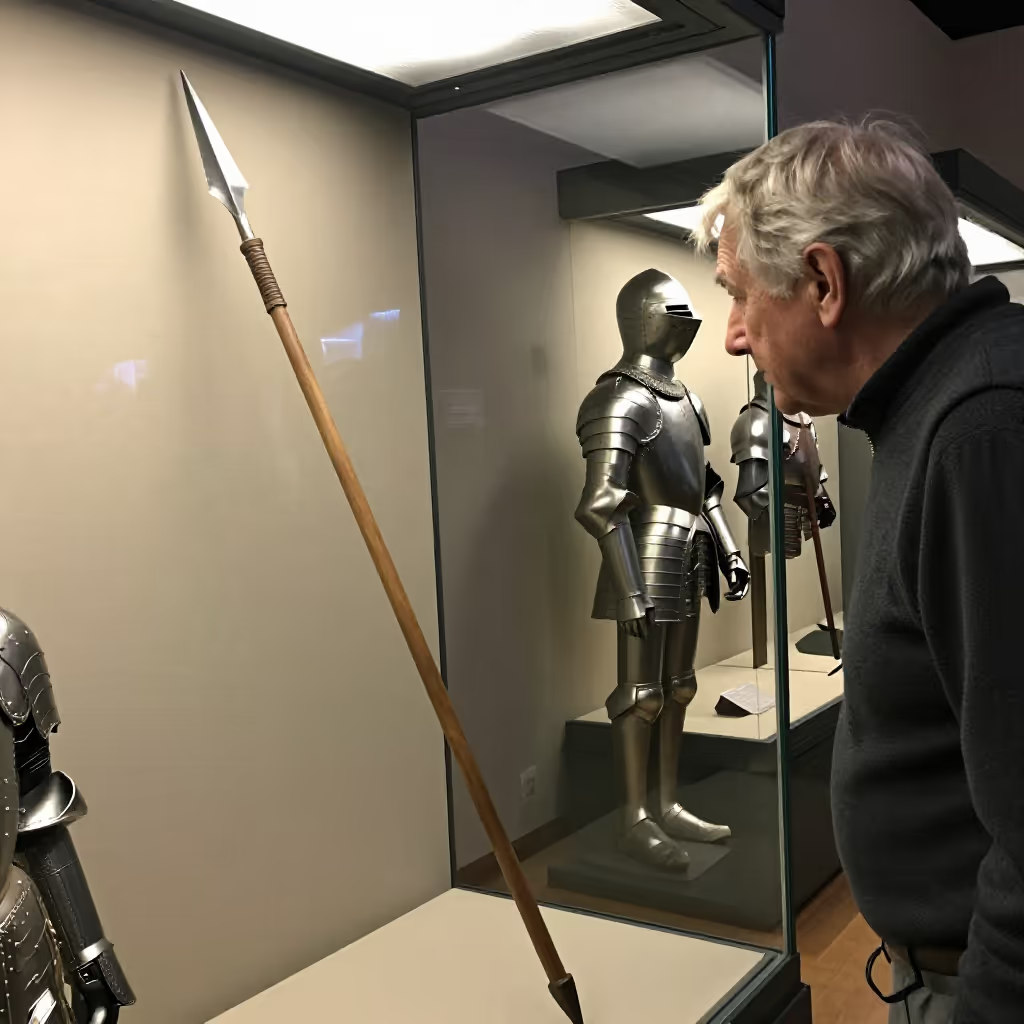
Im Museum war eine echte Lanze aus dem 14. Jahrhundert ausgestellt.
A real lance from the 14th century was on display in the museum.
The idiom 'eine Lanze für jemanden/etwas brechen' (to speak up for someone/something) is a fixed unit. The verb is always 'brechen' (to break), and the person or thing one is supporting is in the accusative.
Er hat auf der Konferenz eine Lanze für unser Projekt gebrochen.
He spoke up for our project at the conference.
In the technical context, 'Lanze' (lance) is often combined with devices such as 'Hochdruckreiniger' (pressure washer) or 'Dampfstrahler' (steam cleaner). Typical verbs are 'reinigen' (to clean), 'säubern' (to clean), or 'abspritzen' (to hose/spray down).
Mit der Lanze des Dampfstrahlers lässt sich alter Schmutz leicht entfernen.
With the lance of the steam cleaner, old dirt can be removed easily.
skewer / spear
'Spieß' and 'Lanze' can both be historical weapons with a long shaft and a point. The difference lies mainly in the typical image they evoke. A 'Lanze' is especially associated with riders, knights, and tournaments. A 'Spieß' is more generally a long thrusting weapon and can also bring foot soldiers to mind. Learners may confuse the words because both look similar. When talking about knights on horseback, 'Lanze' sounds more natural. When you simply mean a long thrusting weapon, 'Spieß' can fit.

Beim Ritterturnier trug der Reiter eine lange Lanze.
At the jousting tournament, the rider carried a long lance.
Der Soldat hielt den Spieß fest vor sich.
The soldier held the spear firmly in front of him.