

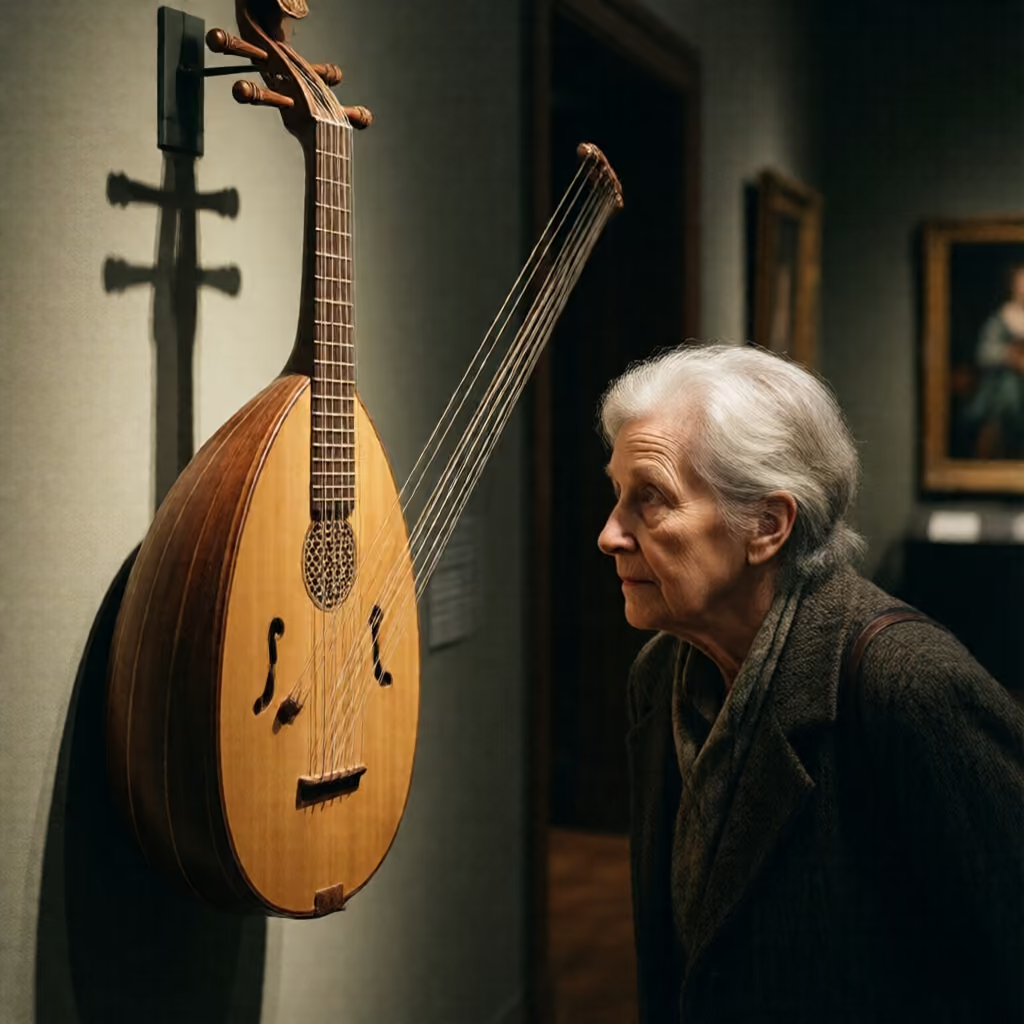
die Laute
lute
A stringed instrument with a rounded, vaulted body, a neck, and strings.
EXAMPLE
Im Museum hängt eine wertvolle Laute aus dem 16. Jahrhundert.
A valuable lute from the 16th century hangs in the museum.
lute
die Laute, die Lauten
Loading your saved state.
lute
A stringed instrument with a rounded, vaulted body, a neck, and strings.
Im Museum hängt eine wertvolle Laute aus dem 16. Jahrhundert.
A valuable lute from the 16th century hangs in the museum.
| gender | feminine die |
|---|---|
| plural | die Lauten |
| genitive | der Laute |
| singular | plural | |
|---|---|---|
| nominative | die Laute | die Lauten |
| accusative | die Laute | die Lauten |
| dative | der Laute | den Lauten |
| genitive | der Laute | der Lauten |
The article changes with the case; it is shown in colour.
When playing this instrument, the preposition „auf“ (on) is often used with the dative: „auf der Laute spielen“ (to play the lute). You also say „jemanden auf der Laute begleiten“ (to accompany someone on the lute).
Die Musikerin spielt auf der Laute eine alte Melodie.
The musician plays an old melody on the lute.
Common collocations include „Laute spielen“ (to play the lute), „eine Laute bauen“ (to build a lute), and „eine Laute stimmen“ (to tune a lute). Descriptions also often include information about its strings and sound box.
Vor dem Konzert stimmt der Musiker seine Laute.
Before the concert, the musician tunes his lute.
„Laute“ (lute) occurs particularly often in texts about historical music, the Renaissance and Baroque periods, and museums. In everyday life today, the word therefore often appears in cultural or musicological contexts.
Bei dem Konzert mit Alter Musik erklang eine Laute aus der Barockzeit.
At the early music concert, a Baroque lute was played.