


lebend
alive
Being alive; not dead.
EXAMPLE
Die Rettungskräfte konnten den vermissten Wanderer lebend bergen.
The rescue workers were able to recover the missing hiker alive.
living / alive
Loading your saved state.
alive
Being alive; not dead.
Die Rettungskräfte konnten den vermissten Wanderer lebend bergen.
The rescue workers were able to recover the missing hiker alive.
living
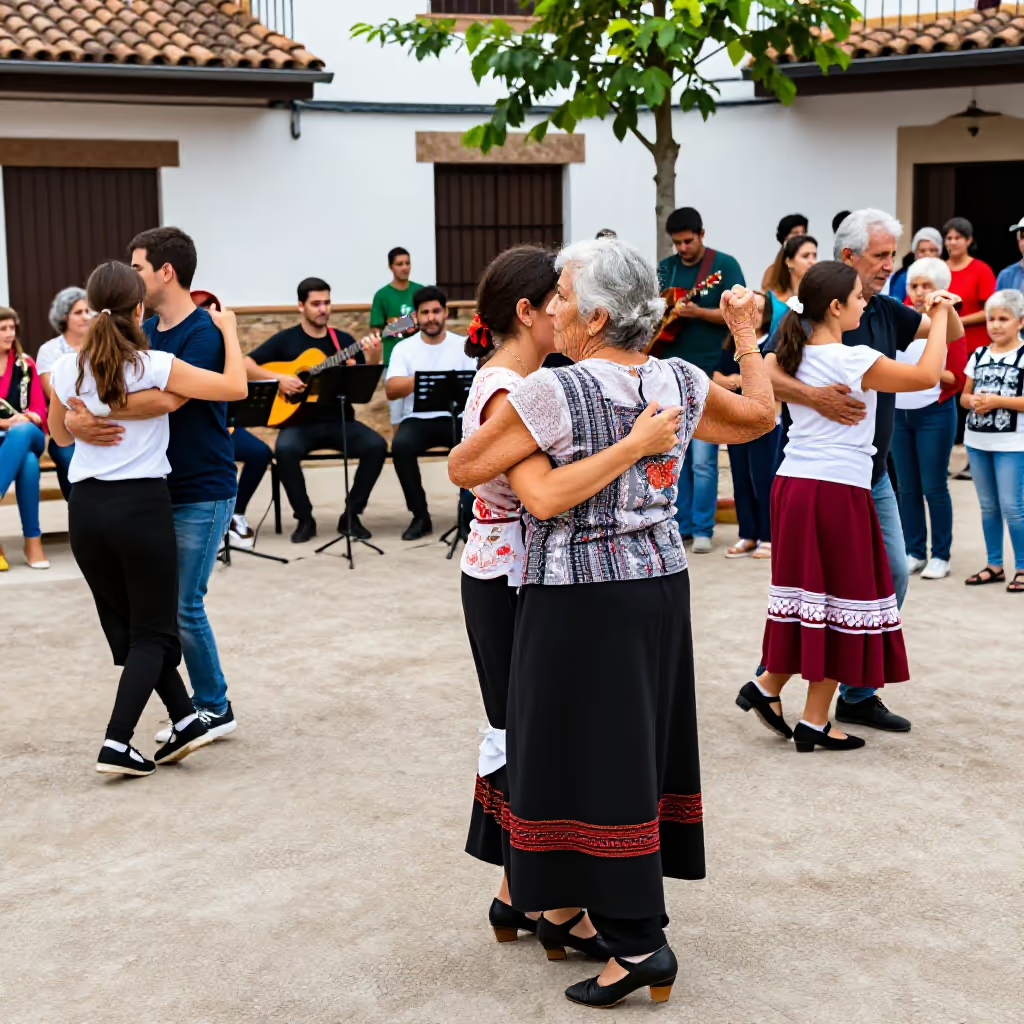
In a figurative sense, dynamic, active, and in use or development, e.g. with languages or traditions.
Englisch ist eine lebende Sprache, die sich ständig weiterentwickelt.
English is a living language that is constantly evolving.

while still alive
A fixed expression that emphasizes that something terrible is happening to someone while that person is still alive.
Die Vorstellung, bei lebendigem Leibe begraben zu werden, ist furchtbar.
The idea of being buried while still alive is horrifying.
'Lebend' (living/alive) is the present participle of the verb 'leben' (to live). It functions like an adjective and literally means 'being in the state of life'. Before a noun, it is declined like a normal adjective.
Der Fischer warf den zu kleinen Fisch lebend ins Wasser zurück.
The fisherman threw the too-small fish back into the water alive.
In the meaning 'am Leben' (alive), 'lebend' (alive) often stands unchanged after the noun it refers to. This is especially common with verbs like 'finden' (to find), 'fangen' (to catch), or 'bergen' (to recover/rescue).
Die Polizei konnte den Täter lebend fassen.
The police were able to catch the perpetrator alive.
In the figurative, dynamic meaning, 'lebend' (living) is often combined with abstract nouns. Common examples are 'eine lebende Sprache' (a living language), 'eine lebende Legende' (a living legend), or 'eine lebende Tradition' (a living tradition).
Latein ist keine lebende Sprache mehr.
Latin is no longer a living language.
The expression 'bei lebendigem Leibe' (while still alive) is a fixed unit used to emphasize a terrible experience. The adjective 'lebendig' (alive) is strongly declined here and stands in the dative.
Die Hexe wurde der Legende nach bei lebendigem Leibe verbrannt.
According to legend, the witch was burned while still alive.
alive / lively
Lebend and lebendig can both express that someone or something is not dead. Lebend usually describes the state neutrally, while lebendig can additionally emphasize vitality or visible signs of life. Use lebend in a factual context and lebendig when the person or animal seems active and full of life.

Im Aquarium sahen wir einen lebenden Fisch.
We saw a live fish in the aquarium.
Trotz der langen Reise war der Fisch noch lebendig.
Despite the long journey, the fish was still alive.