

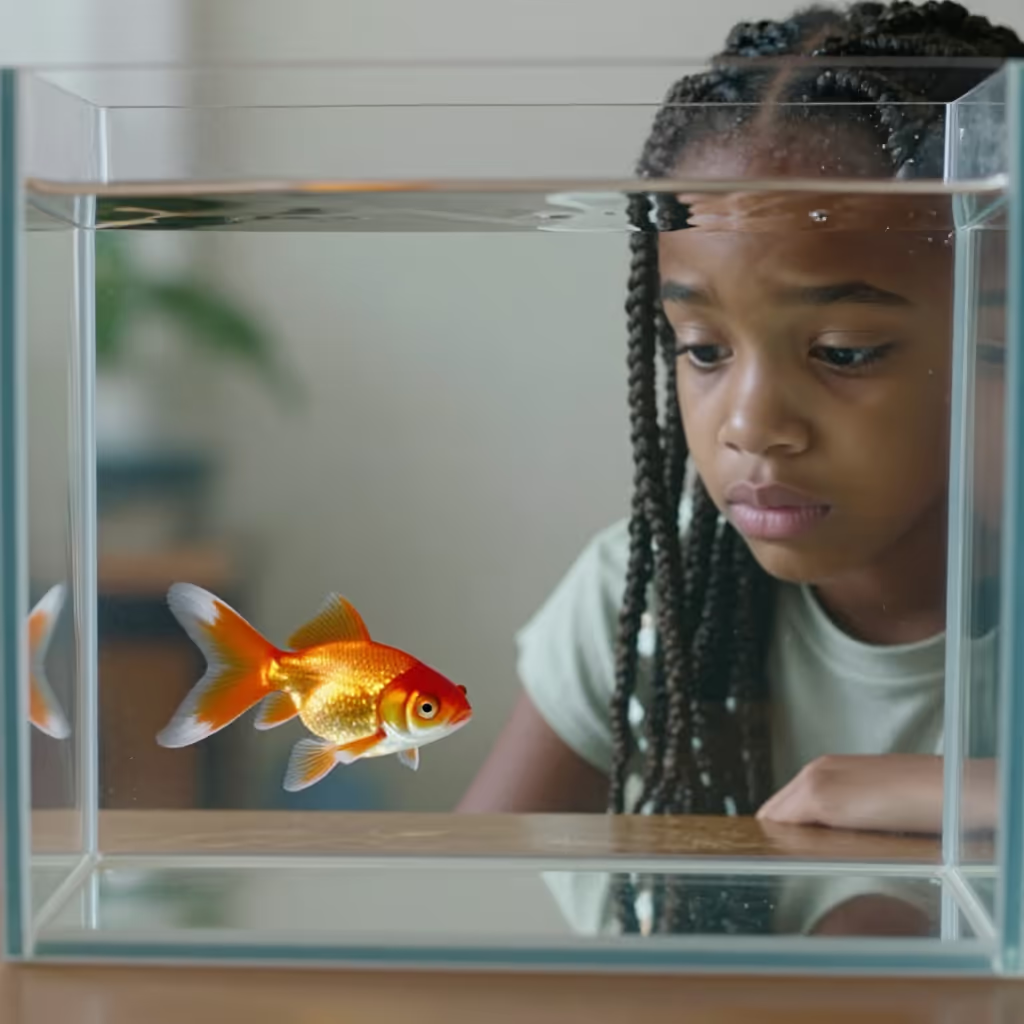
leblos
lifeless
Without life; dead. Describes a state in which an organism no longer shows any signs of life.
EXAMPLE
Der Vogel lag leblos auf dem Boden.
The bird lay lifeless on the ground.
lifeless
Loading your saved state.
lifeless
Without life; dead. Describes a state in which an organism no longer shows any signs of life.
Der Vogel lag leblos auf dem Boden.
The bird lay lifeless on the ground.

lifeless
Without liveliness, energy, or expression. Used to describe a person, an atmosphere, or a performance as dull, stiff, or emotionless.
Seine Stimme klang müde und leblos.
His voice sounded tired and lifeless.
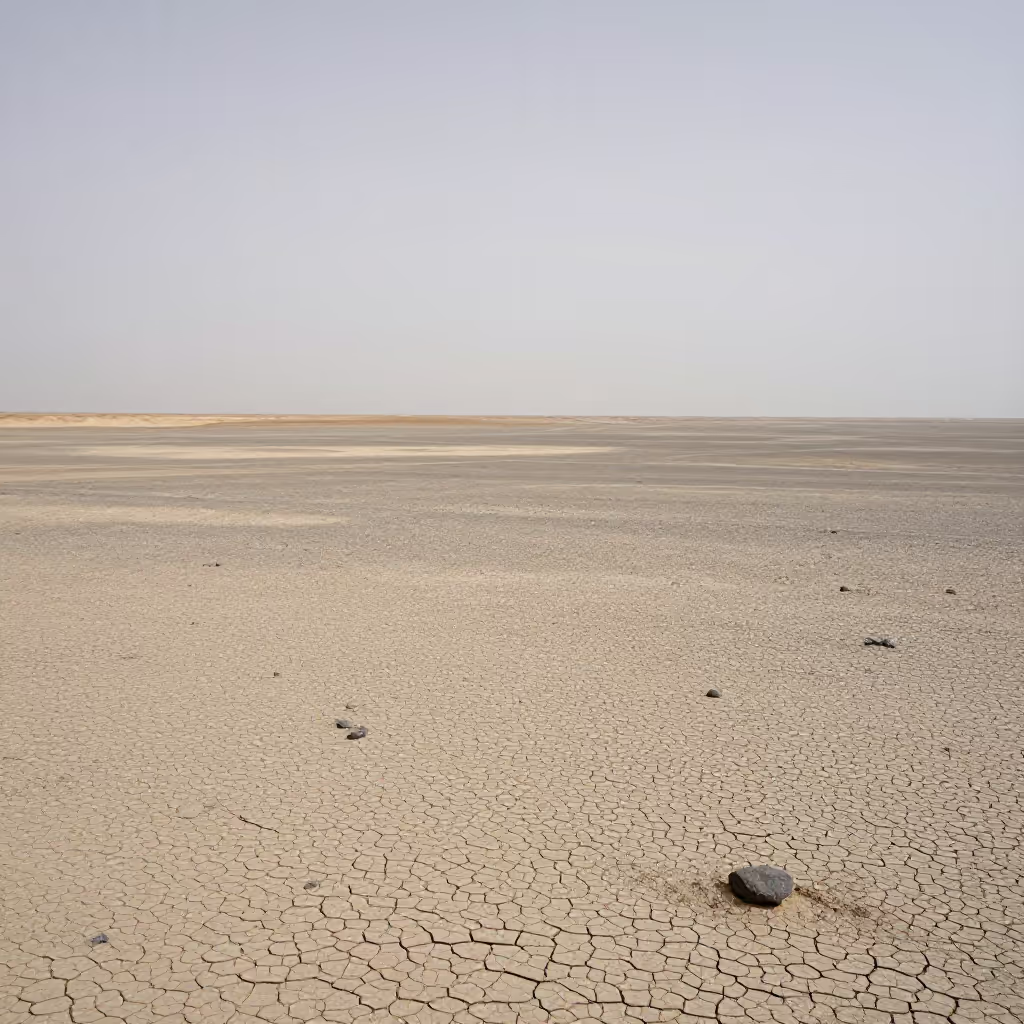
lifeless
Describes an environment or landscape that appears barren, uninhabited, or without visible movement.
Die Wüste wirkte unter der Mittagssonne völlig leblos.
The desert seemed completely lifeless under the midday sun.
The word consists of the noun 'Leben' (life) and the ending '-los' (-less). The ending '-los' means 'without,' so 'leblos' (lifeless) literally means 'without life.'
Nach dem langen Winter wirkte der Garten noch kahl und leblos.
After the long winter, the garden still looked bare and lifeless.
The context reveals the exact meaning. If you are talking about a body or living being, it means 'tot' (dead). If it refers to a voice or a look, it means 'ohne Emotion' (without emotion). If it describes a landscape, it means 'karg' (barren) or 'unbelebt' (uninhabited/lifeless).
Die Retter fanden den Bergsteiger leblos im Schnee.
The rescuers found the mountaineer lifeless in the snow.
In the meaning 'tot' (dead), 'leblos' (lifeless) is often used in formal or official contexts, for example in police or medical reports. Typical combinations are 'ein lebloser Körper' (a lifeless body) or 'jemanden leblos auffinden' (to find someone lifeless).
Am Ufer wurde eine leblose Person gefunden.
A lifeless person was found on the riverbank.
This meaning is often used to describe a lack of energy, feeling, or interest. Common combinations are 'eine leblose Stimme' (a lifeless voice), 'ein lebloser Blick' (a lifeless look), or 'leblos wirken' (to seem lifeless).
Die Schauspieler wirkten auf der Bühne müde und leblos.
The actors seemed tired and lifeless on stage.
dead
“Tot” clearly states that an organism has died. “Leblos” mainly describes the absence of visible signs of life and can therefore also refer to a body that only appears to be so. Choose “tot” for the clear fact and “leblos” for the observed appearance.

Der Vogel lag leblos auf dem Boden, doch kurze Zeit später bewegte er sich wieder.
The bird lay lifeless on the ground, but a short time later it moved again.
Der Tierarzt stellte fest, dass der Vogel tot war.
The veterinarian determined that the bird was dead.