

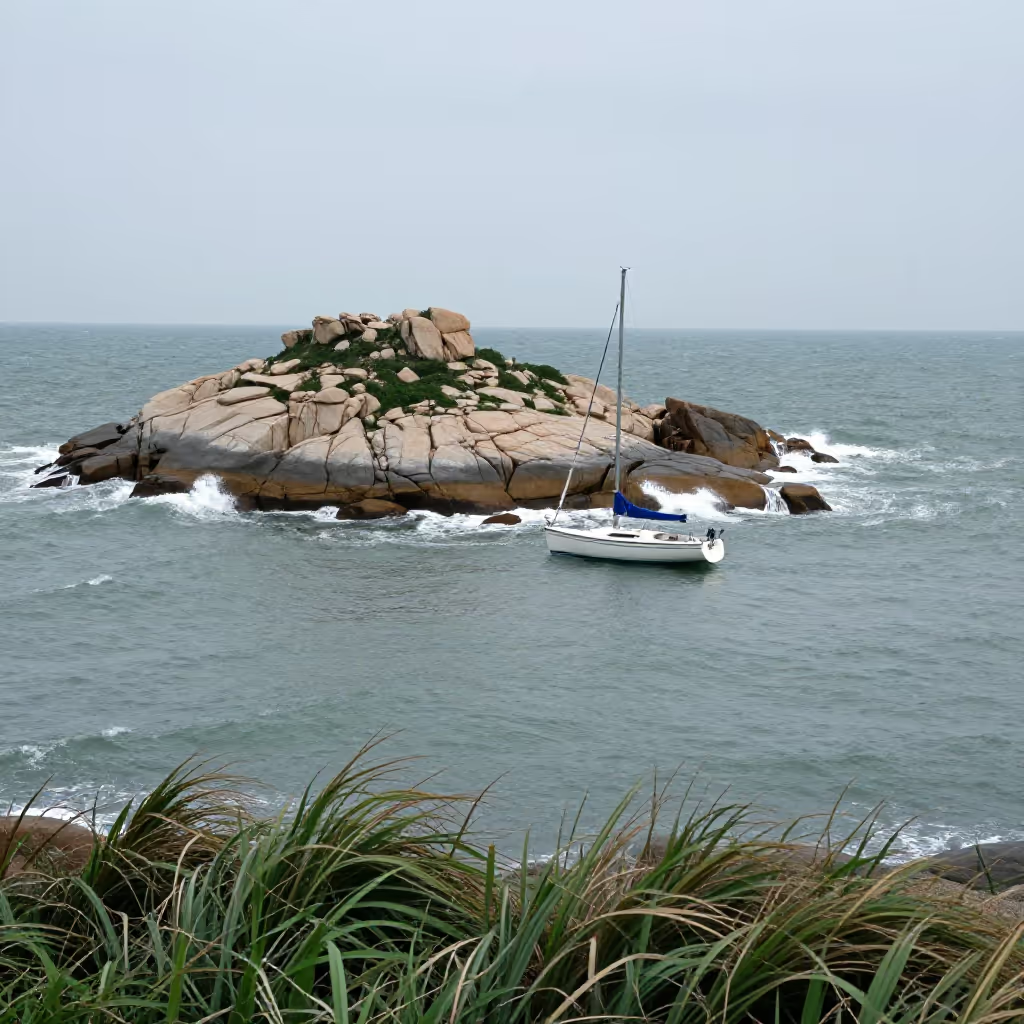
The side of an object that faces away from the wind and is sheltered from it, for example of a ship, an island, or a mountain. It is the opposite of windward, 'Luv' (the side facing the wind).
example
Die Segler suchten im Lee der Insel Schutz vor dem starken Sturm.
The sailors sought shelter from the strong storm in the lee of the island.
Usage tips
Technical term
'Lee' (lee) is a technical term from seafaring, aviation, and geography. It is not used in everyday language to describe a place sheltered from the wind.
EXAMPLE
Die Mannschaft nutzte das Lee der Insel, um das Segel zu reparieren.
The crew used the lee of the island to repair the sail.
Fixed preposition
'Lee' (lee) is almost always used with the preposition 'in' and the dative to describe position: 'im Lee' (in the lee).
EXAMPLE
Wir ankerten im Lee der Bucht, wo das Wasser ruhiger war.
We anchored in the lee of the bay, where the water was calmer.
Opposite: windward/lee
The word 'Lee' (lee) is often used in contrast to 'Luv' (windward, the side facing the wind). This pair of terms helps you understand orientation in relation to the wind.
EXAMPLE
Auf der Luv-Seite des Gebirges gibt es viel Regen, im Lee ist es dagegen oft trocken.
On the windward side of the mountain range there is a lot of rain; in the lee, by contrast, it is often dry.