

leeren
to empty
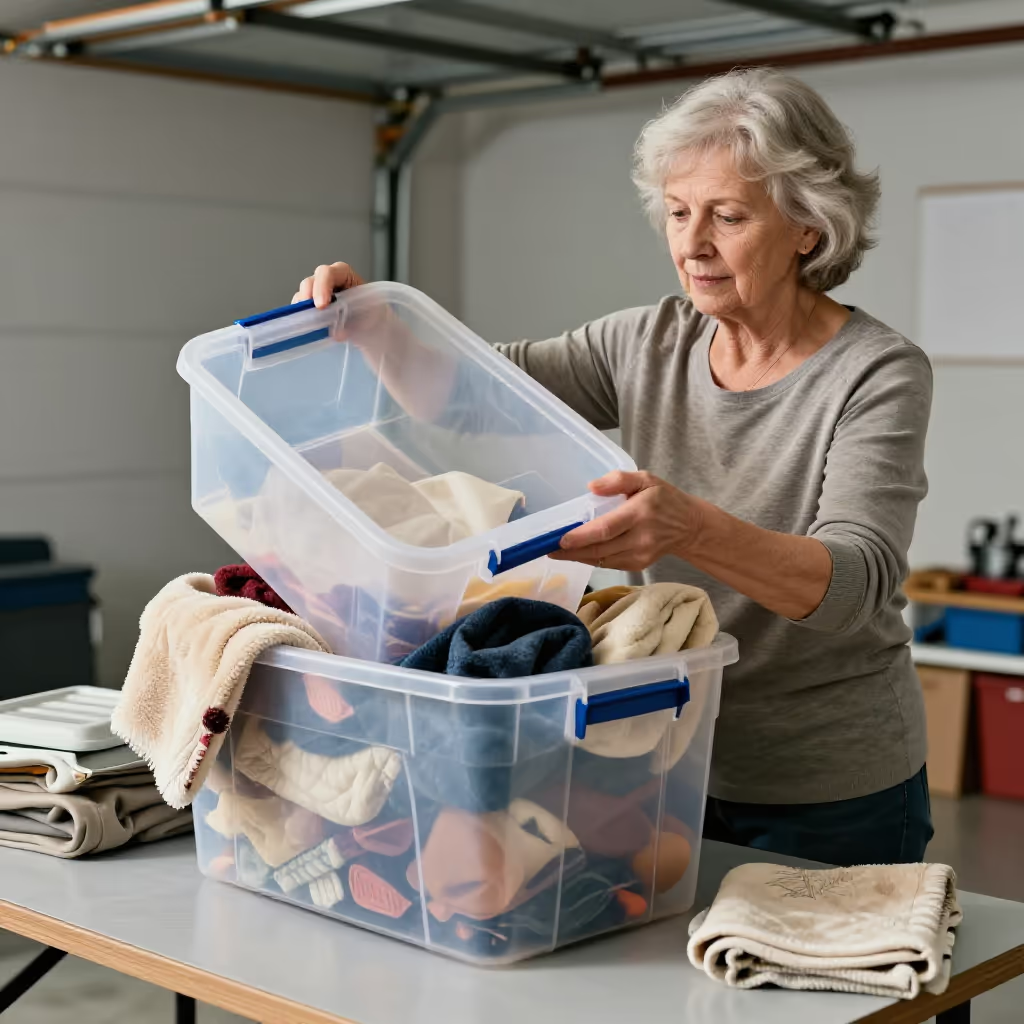
To remove the entire contents from a container or a room.
EXAMPLE
Könntest du bitte den Mülleimer leeren?
Could you please empty the trash can?
to empty
Loading your saved state.
to empty
To remove the entire contents from a container or a room.
Könntest du bitte den Mülleimer leeren?
Could you please empty the trash can?
to empty out
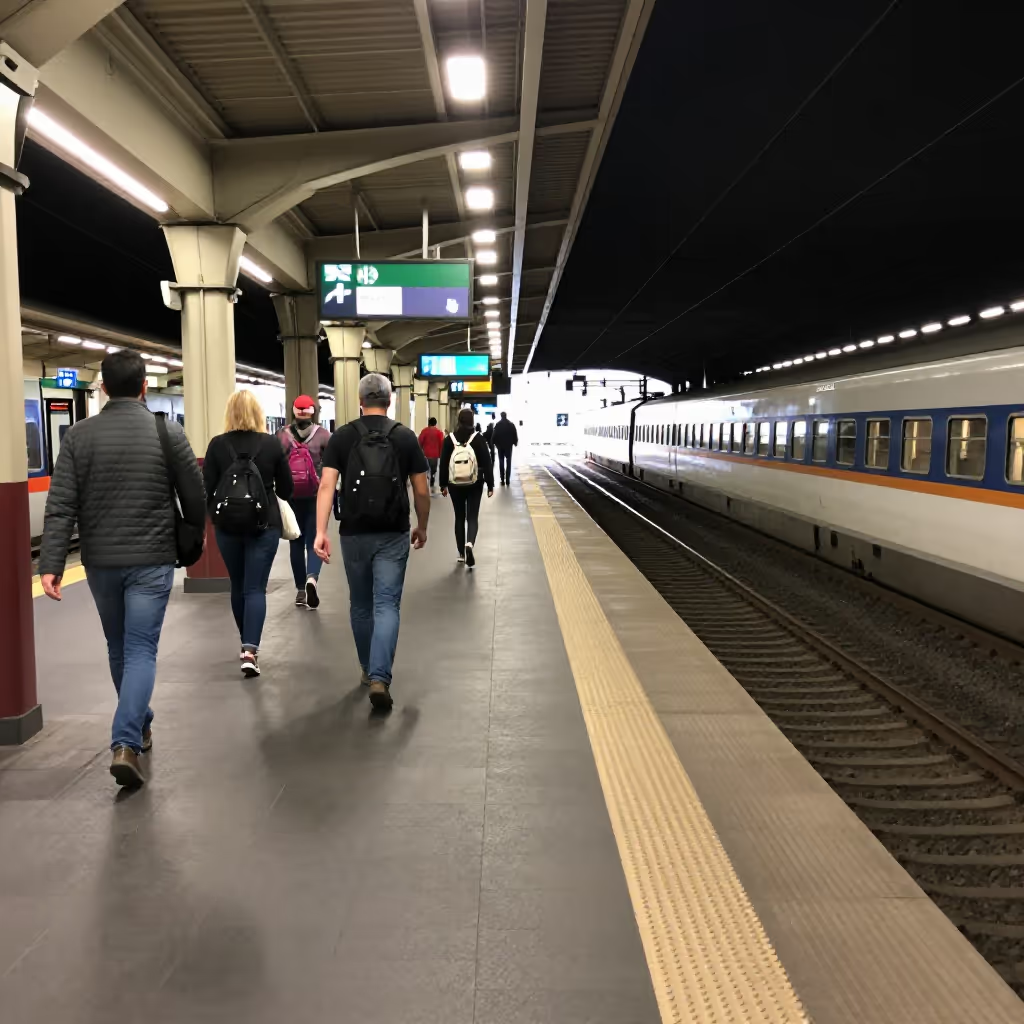
The state in which a place or container becomes empty on its own or because people leave.
Nach dem Ende der Vorstellung leerte sich der Saal sehr schnell.
After the performance ended, the hall emptied out very quickly.

to empty
Colloquial for drinking a beverage completely, often in a short time.
Er hat sein Bierglas in einem einzigen Zug geleert.
He emptied his beer glass in one go.
The verb 'leeren' (to empty) is derived directly from the adjective 'leer' (empty). It describes the action of making something 'empty'.
Vor dem Urlaub müssen wir den Kühlschrank komplett leeren.
Before vacation, we have to completely empty the fridge.
There is an important difference: 'leeren' (active) means that someone empties something. 'Sich leeren' (reflexive) means that a place becomes empty on its own because people leave it.
Der Hausmeister leert jeden Abend die Papierkörbe.
The janitor empties the wastepaper baskets every evening.
Common objects for 'leeren' (to empty) are containers or storage spaces. Typical examples are: 'den Briefkasten leeren' (to empty the mailbox), 'den Papierkorb leeren' (to empty the wastepaper basket / recycle bin), 'den Speicher des Handys leeren' (to clear the phone's storage), or 'das Glas leeren' (to empty the glass).
Ich habe aus Versehen den falschen Ordner geleert.
I accidentally emptied the wrong folder.
The use of 'leeren' (to empty) in the sense of 'austrinken' (to drink up) is colloquial. You often hear it in informal situations among friends.
Sie wetteten, wer die Flasche zuerst leeren kann.
They bet on who could empty the bottle first.
to drink
„Trinken“ neutrally describes someone consuming a drink without emphasizing how long it takes or whether they finish it. „Leeren“ can colloquially mean drinking a beverage completely, often quickly. Use „trinken“ for the process and „leeren“ when the glass is meant to become completely empty.

Nach dem Essen leerte Lara ihr Glas Wein in wenigen Zügen.
After dinner, Lara emptied her glass of wine in a few gulps.
Beim Abendessen trank Lara ihr Glas Wein langsam.
Lara drank her glass of wine slowly during dinner.