räumen
to clear
To remove objects from a place or surface in order to make it empty or create space.
Wir müssen den Keller räumen, um Platz für die neuen Regale zu schaffen.
We need to clear out the basement to make room for the new shelves.
to clear / evacuate
Loading your saved state.

to clear
To remove objects from a place or surface in order to make it empty or create space.
Wir müssen den Keller räumen, um Platz für die neuen Regale zu schaffen.
We need to clear out the basement to make room for the new shelves.


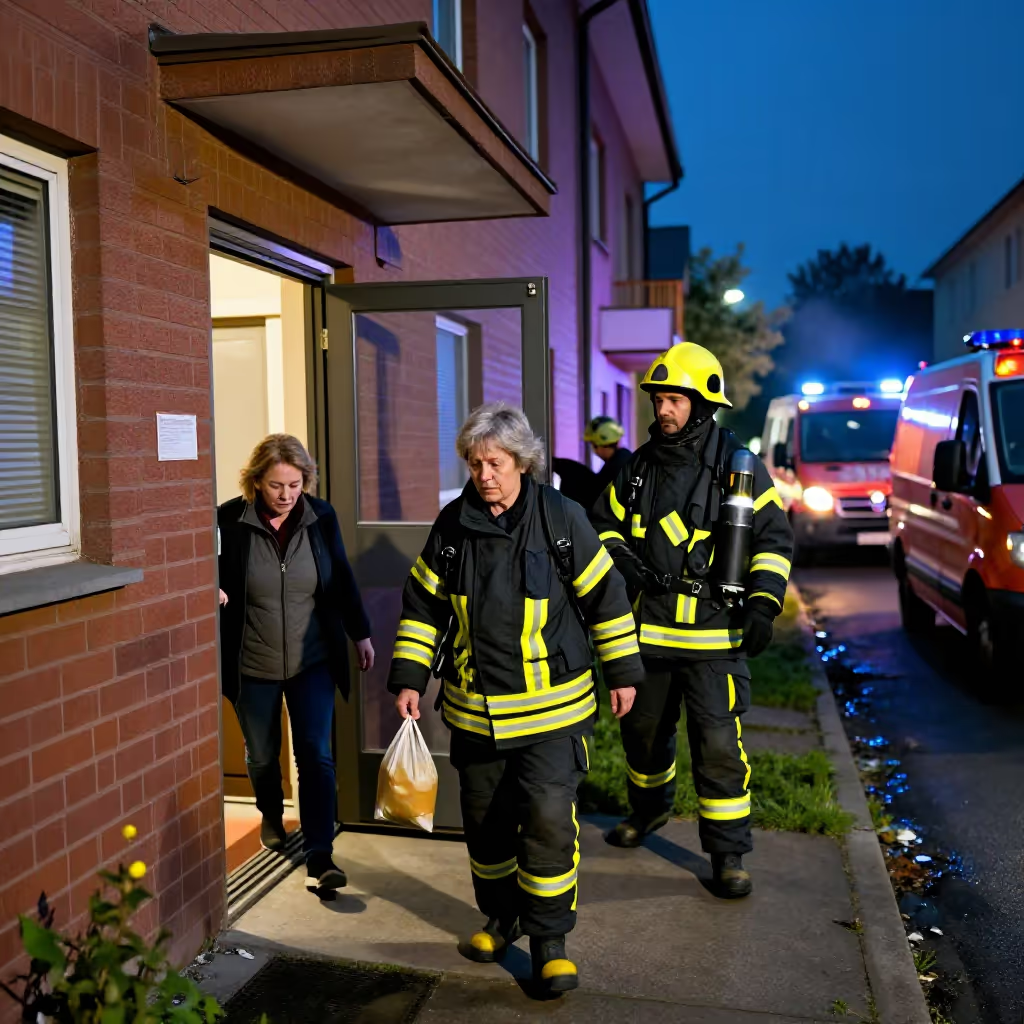
to evacuate
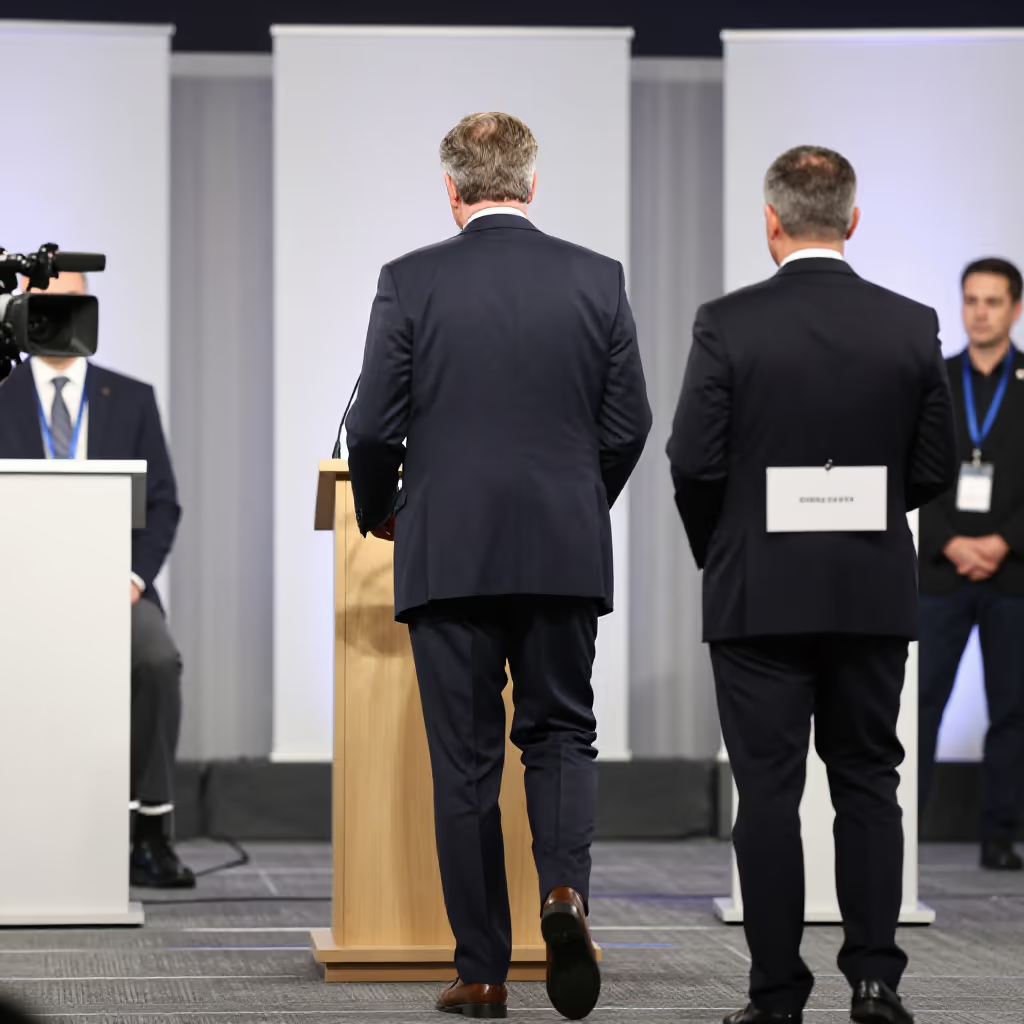
To leave a place, building, or area, often on the instructions of authorities because of danger; to evacuate.
Wegen einer Bombendrohung musste die Polizei das gesamte Gebäude räumen.
Because of a bomb threat, the police had to evacuate the entire building.

to clear
To remove an obstacle in order to make a path free. Used especially in connection with snow or debris.
Der Winterdienst ist unterwegs, um die Straßen vom Schnee zu räumen.
The winter road service is on its way to clear the streets of snow.

to leave the field
To give up a position, task, or competition and leave it to others; to withdraw.
Nachdem der Konkurrent die Preise so stark gesenkt hatte, musste die kleine Firma das Feld räumen.
After the competitor had lowered prices so drastically, the small company had to leave the field.
The verb 'räumen' (to clear / evacuate) is closely related to the noun 'der Raum' (room / space). The basic idea is always to create room or space.
Bitte räum dein Zimmer auf, es ist sehr unordentlich.
Please tidy up your room; it's very messy.
The object of the sentence helps you recognize the meaning. 'Den Tisch räumen' (to clear the table) means to make it empty. 'Ein Gebäude räumen' (to evacuate a building) means to evacuate it. 'Schnee räumen' (to clear snow) means to remove an obstacle.
Nach dem Essen müssen wir noch den Tisch räumen.
After eating, we still have to clear the table.
In the meaning of 'leer machen' (to empty), 'räumen' (to clear) is often combined with places or pieces of furniture where things are stored. Typical examples are: 'den Schreibtisch räumen' (to clear the desk), 'den Schrank räumen' (to clear out the closet), or 'die Garage räumen' (to clear out the garage).
Ich muss endlich mal meinen Schreibtisch räumen.
I really need to clear my desk at some point.
When evacuating, an authority is often the subject in an active sentence. In a passive sentence, the evacuated place becomes the subject, which is very common.
Die Polizei räumte den Platz wegen einer Demonstration.
The police cleared the square because of a demonstration.
The idiom 'das Feld räumen' (to leave the field) is a fixed unit and means to give up a position or withdraw from a competition. 'Das Feld' (the field) is used here metaphorically for the area of action or competition.
Nach der Wahlniederlage musste der Parteivorsitzende das Feld räumen.
After the election defeat, the party leader had to leave the field.
to leave / rely
Both verbs can mean that people do not enter a dangerous place anymore or leave it. „Verlassen“ describes this departure neutrally, while „räumen“ usually suggests an instruction or an official order. For an official evacuation, „räumen“ is therefore more suitable.

Wegen des Rauchs ließ die Polizei das Gebäude durch den Hinterausgang räumen.
Because of the smoke, the police had the building evacuated through the rear exit.
Wegen des Rauchs verließen die Gäste das Gebäude durch den Hinterausgang.
Because of the smoke, the guests left the building through the rear exit.