


legen
to lay / put
To bring something into a lying, horizontal position or put it in a specific place.
EXAMPLE
Sie legte das schlafende Baby vorsichtig in sein Bett.
She carefully laid the sleeping baby in its bed.
to lay
Loading your saved state.
to lay / put
To bring something into a lying, horizontal position or put it in a specific place.
Sie legte das schlafende Baby vorsichtig in sein Bett.
She carefully laid the sleeping baby in its bed.

to lie down
To move oneself into a lying position; to lie down.
Der Hund legte sich vor den warmen Kamin.
The dog lay down in front of the warm fireplace.

to subside
To decrease in intensity; to ease off or stop, e.g. a storm, excitement, or pain.
Warte einfach ab, die ganze Aufregung wird sich bald wieder legen.
Just wait, all the excitement will soon subside again.

to value
To consider something important or significant; to value something.
Meine Chefin legt großen Wert auf Pünktlichkeit und Zuverlässigkeit.
My boss places great value on punctuality and reliability.
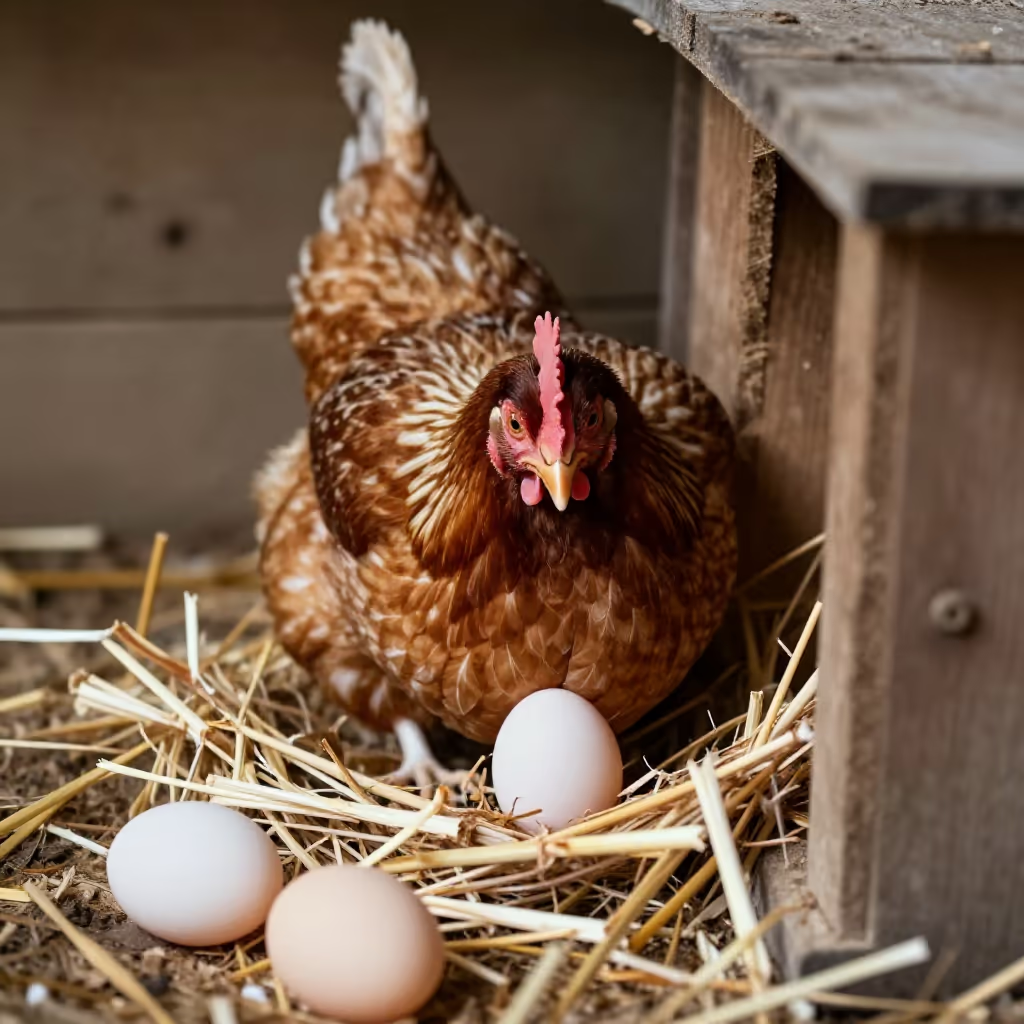
to lay eggs
The action of birds, reptiles, or insects producing and depositing eggs.
Unsere Hühner legen im Sommer fast jeden Tag Eier.
Our chickens lay eggs almost every day in the summer.

to lay the foundation
To create the foundation or basis for a future development.
Mit dieser Entdeckung legte die Forscherin den Grundstein für eine neue Therapie.
With this discovery, the researcher laid the foundation for a new therapy.
'Legen' (to lay/put) describes movement to a place and therefore almost always needs a complement in the accusative. You ask: Whom or what am I laying/putting? Where am I putting it?
Ich lege den Stift auf den Tisch.
I'm putting the pen on the table.
The reflexive form 'sich legen' (to lie down) means that a person or animal moves themselves into a lying position. Here too, a 'where to?' phrase in the accusative often follows.
Nach dem langen Tag möchte ich mich nur noch aufs Sofa legen.
After the long day, I just want to lie down on the sofa.
When the subject is something abstract or a natural phenomenon, e.g. 'der Sturm' (the storm), 'die Aufregung' (the excitement), or 'der Schmerz' (the pain), 'sich legen' means that it loses strength or stops.
Der Wind hat sich über Nacht gelegt.
The wind subsided overnight.
The expression 'Wert legen auf etwas' (to place value on something) is fixed and is always used with the preposition 'auf' and the accusative. It means that you consider something important.
Er legt viel Wert auf eine gesunde Ernährung.
He places a lot of value on a healthy diet.
In biology, 'Eier legen' (to lay eggs) is a fixed collocation that describes how certain animals, such as birds, insects, and reptiles, produce their eggs.
Die Schildkröte hat ihre Eier am Strand gelegt.
The turtle laid its eggs on the beach.
The idiom 'den Grundstein legen für etwas' (to lay the foundation for something) is a fixed expression. It is used with the preposition 'für' and the accusative and means to create the basis for something in the future.
Mit diesem Vertrag legen wir den Grundstein für eine erfolgreiche Zusammenarbeit.
With this contract, we are laying the foundation for a successful collaboration.
to lie / be located
Liegen describes an object's state when it is in a horizontal position. Legen, on the other hand, refers to the action of bringing the object into that position or to a location. So ask: Is it already there, or is someone putting it there?

Ich lege das Buch jetzt auf den Tisch.
I’m putting the book on the table now.
Das Buch liegt jetzt auf dem Tisch.
The book is on the table now.