

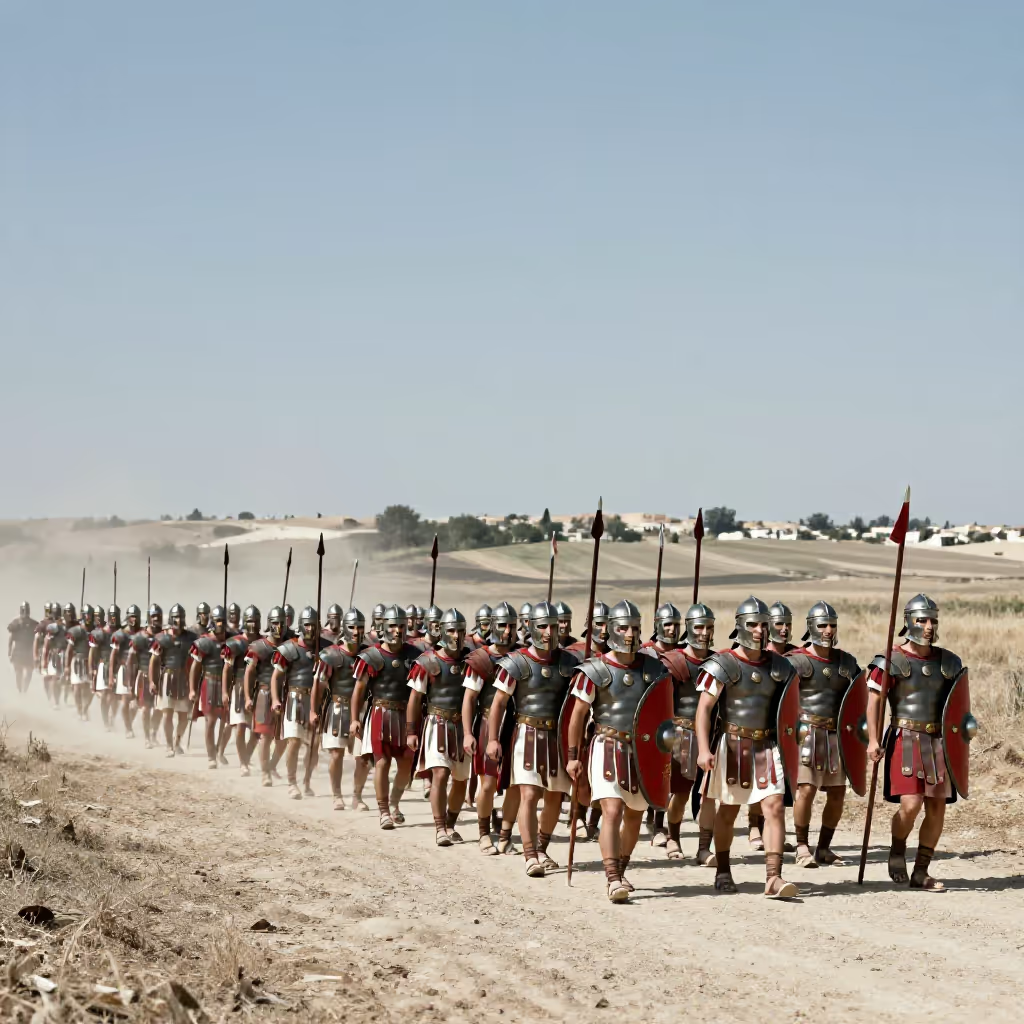
die Legion
legion
A large independent military unit in the army of ancient Rome, consisting of about 3,000 to 6,000 soldiers.
EXAMPLE
Caesar führte seine Legionen erfolgreich durch Gallien.
Caesar successfully led his legions through Gaul.
legion
Loading your saved state.
legion
A large independent military unit in the army of ancient Rome, consisting of about 3,000 to 6,000 soldiers.
Caesar führte seine Legionen erfolgreich durch Gallien.
Caesar successfully led his legions through Gaul.

legion
In a figurative sense, a very large, unmanageable number of people or things.
Eine Legion von Fans wartete vor dem Stadion auf die Ankunft der Mannschaft.
A legion of fans waited outside the stadium for the team to arrive.

legion
The name for certain military elite or volunteer units in modern times, such as the French Foreign Legion.
Nach der Schule verpflichtete er sich für fünf Jahre bei der Legion.
After school, he enlisted in the Legion for five years.
You can recognize the meaning of 'Legion' (legion) from the context. If it is about ancient Rome, it refers to a military unit. In modern contexts, it can mean an elite unit (e.g. Foreign Legion) or, usually with 'von' (of), a huge number.
Die römische Legion marschierte tagelang.
The Roman legion marched for days.
In the figurative meaning 'große Menge' (large number), 'Legion' (legion) is almost always used with the preposition 'von' (of) and a plural noun. The structure is: 'eine Legion von [etwas/jemandem]' (a legion of [something/someone]).
Im Sommer kämpfen wir gegen eine Legion von Mücken.
In summer, we fight against a legion of mosquitoes.
Using 'Legion' (legion) for a large number is figurative and belongs more to written language or an elevated style. It sounds more expressive than simply 'viele' (many).
Er musste sich durch eine Legion von Vorschriften und Formularen kämpfen.
He had to struggle through a legion of regulations and forms.
In a historical context, 'Legion' (legion) is often used with verbs such as 'anführen' (to lead), 'kommandieren' (to command), or 'aufstellen' (to form/raise). Soldiers could 'dienen' (serve) or 'kämpfen' (fight) in a legion.
Der Feldherr führte seine treueste Legion in die Schlacht.
The general led his most loyal legion into battle.
regiment
Regiment and Legion both refer to large military units, but they typically belong to different historical contexts. Regiment fits a unit consisting of battalions or companies; Legion here refers to the independent military unit of the ancient Roman army.
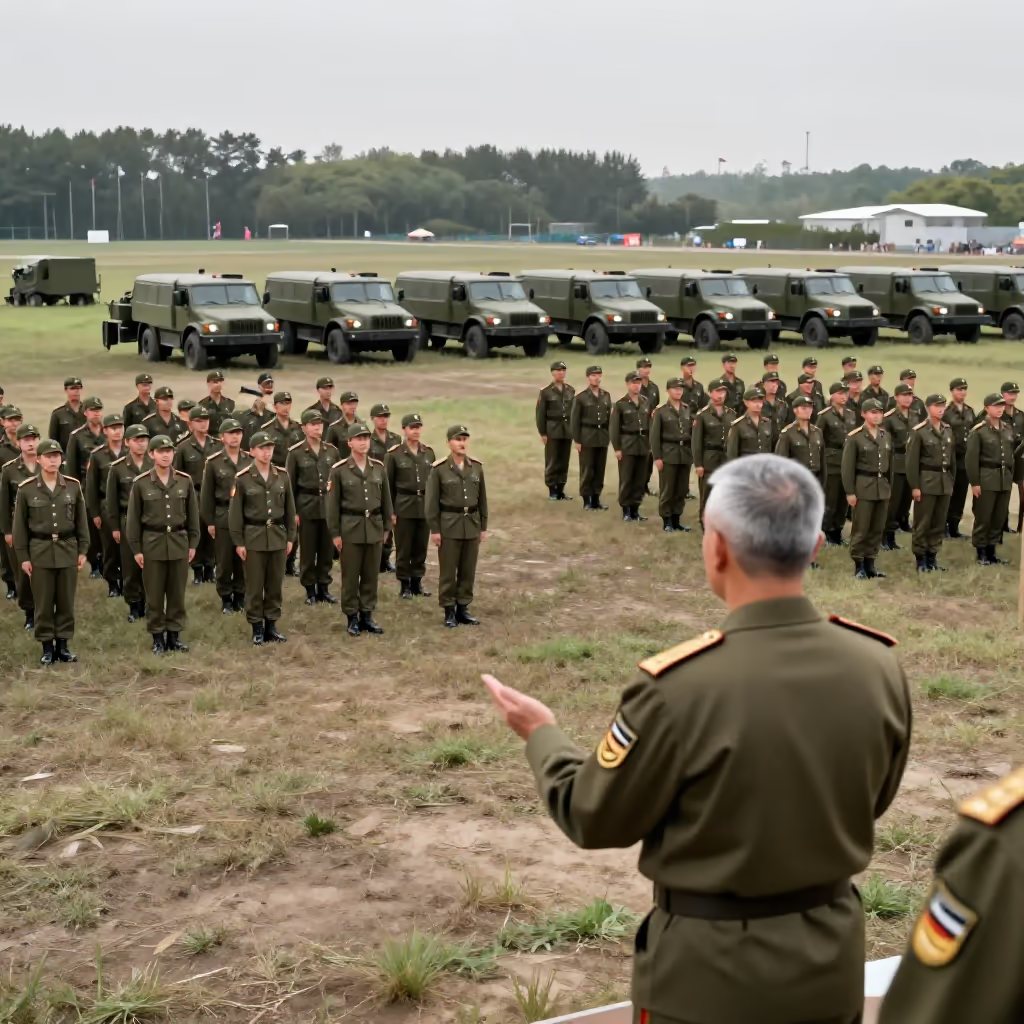
Die römische Legion rückte mit mehreren Tausend Soldaten in die Stadt ein.
The Roman legion entered the city with several thousand soldiers.
Das Regiment rückte mit seinen drei Bataillonen in die Stadt ein.
The regiment entered the city with its three battalions.