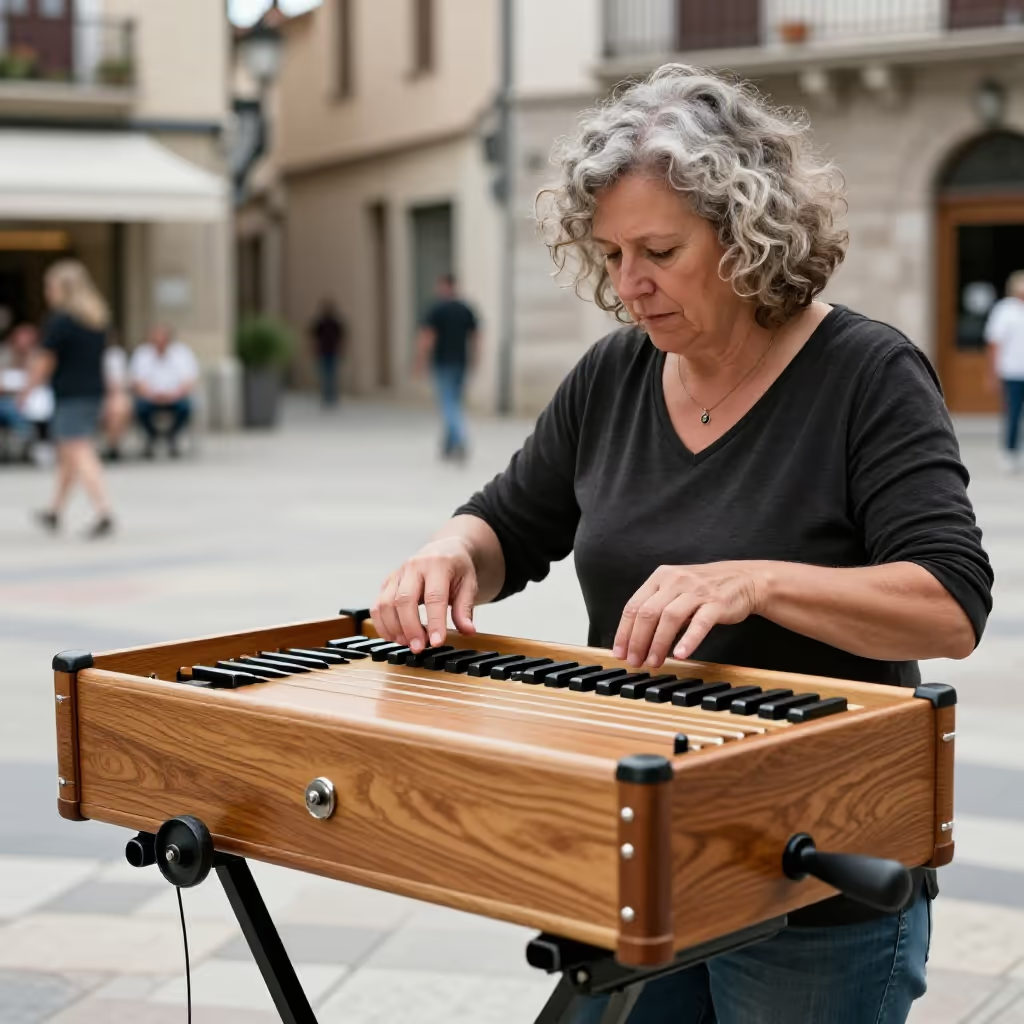
An idiom for a topic, complaint, or story that has been repeated so often that it has become boring or annoying.
example
Bitte nicht schon wieder die alte Leier von der ungerechten Arbeit!
Please, not the same old story about unfair work again!
Usage tips
Fixed expression
The idiom 'die alte Leier' (the same old story) is almost always used with the adjective 'alte' (old). It describes a topic that has been repeated so often that it is perceived as tiring or predictable.
EXAMPLE
Jedes Mal, wenn wir uns treffen, kommt er mit der alten Leier, dass früher alles besser war.
Every time we meet, he comes out with the same old story that everything used to be better.
Context clue
You can almost always recognize the figurative meaning from the adjective 'alte' (old). When people talk about 'der alten Leier' (the same old story), they mean the annoying repetition. Without 'alte', 'Leier' usually refers to a musical instrument.
EXAMPLE
Seine Ausreden sind doch immer die gleiche alte Leier.
His excuses are always the same old story.
Origin of the idiom
The idiom 'die alte Leier' (the same old story) derives from the sound of the hurdy-gurdy. The instrument produces a melody often perceived as monotonous, which serves as a metaphor for a constantly repeated, boring story.
EXAMPLE
Ich kann seine Klagen nicht mehr hören, es ist immer dieselbe Leier.
I can't listen to his complaints anymore; it's always the same old story.
Cultural context
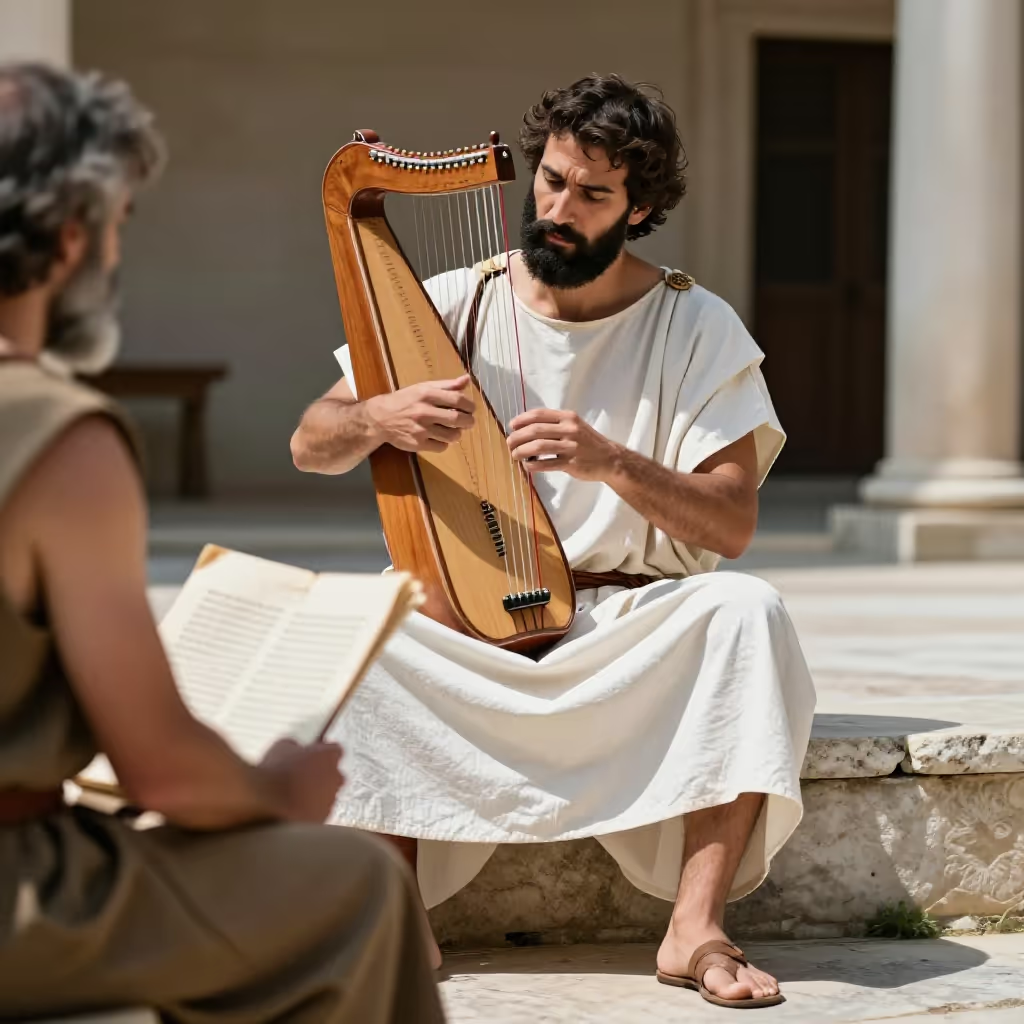
In the meaning of the ancient instrument, the lyre is an important cultural symbol. It stands for poetry and music, especially in ancient Greece, and is often depicted with poets or gods such as Apollo.
EXAMPLE
In der griechischen Mythologie ist die Leier das Instrument des Gottes Apollon.
In Greek mythology, the lyre is the instrument of the god Apollo.
Typical context
As a term for the hurdy-gurdy, the word is often found in the context of medieval markets, folk festivals, or street music. The instrument produces a characteristic continuous tone through a crank.
EXAMPLE
Auf dem Mittelaltermarkt spielte ein Mann auf einer alten Leier.
At the medieval market, a man played an old hurdy-gurdy.
Compare with
near_synonym · confusable
Leier vs Harfe
harp
'Harfe' and 'Leier' can both refer to string instruments. A 'Harfe' is a large instrument that you hear today, for example, in an orchestra. A 'Leier' is more likely to be a historical instrument from antiquity, or colloquially a hurdy-gurdy with a crank. So the words are not simply the same. Learners may confuse them because both can fit old or unusual string instruments. Also important: 'die alte Leier' is an idiom and does not mean music, but rather a boring, often repeated story or complaint.
Leier
Im Museum sahen die Kinder eine alte Leier aus Griechenland.
In the museum, the children saw an old lyre from Greece.
Harfe
Im Konzert spielte die Musikerin ein ruhiges Stück auf der Harfe.
At the concert, the musician played a quiet piece on the harp.