

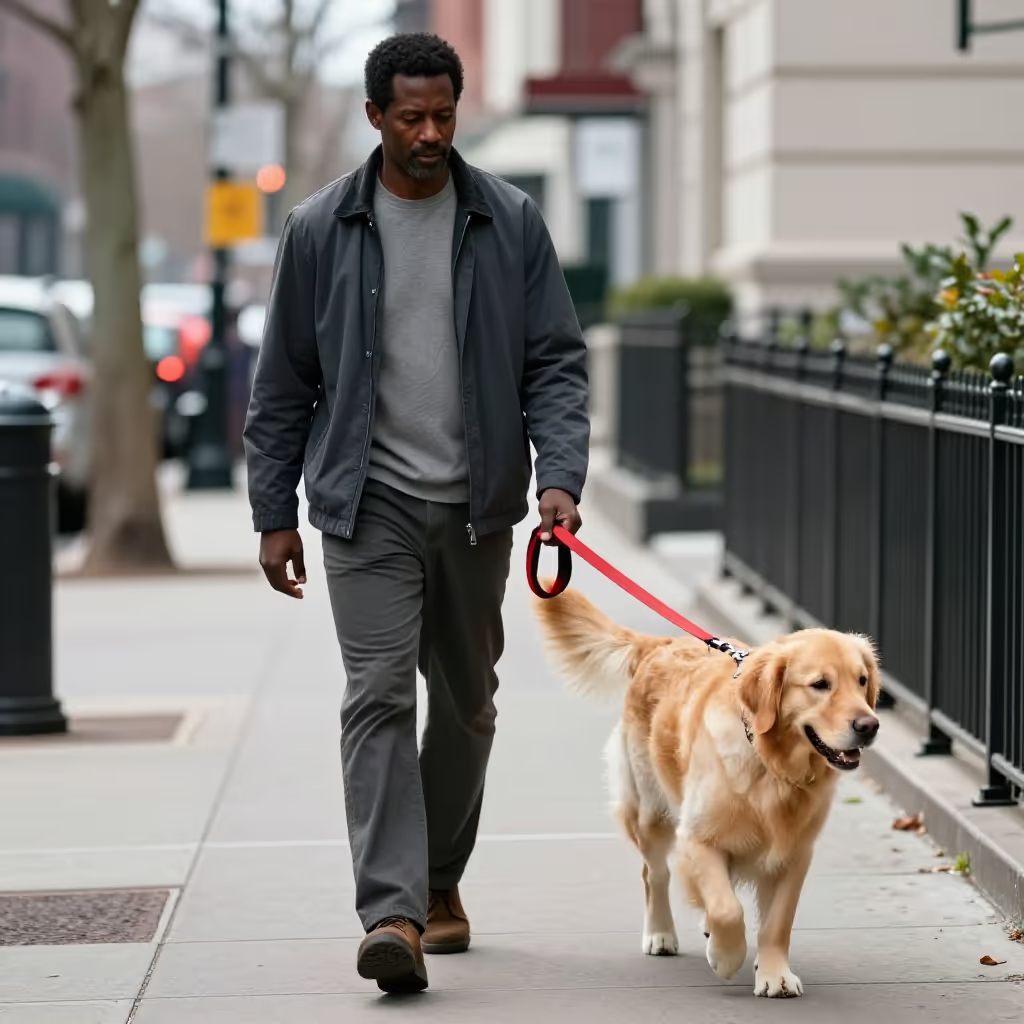
die Leine
leash
A long, thin rope or strap used to lead or tie up an animal, especially a dog.
EXAMPLE
Im Stadtpark müssen Hunde an der Leine geführt werden.
In the city park, dogs must be kept on a leash.
leash / line
Loading your saved state.
leash
A long, thin rope or strap used to lead or tie up an animal, especially a dog.
Im Stadtpark müssen Hunde an der Leine geführt werden.
In the city park, dogs must be kept on a leash.
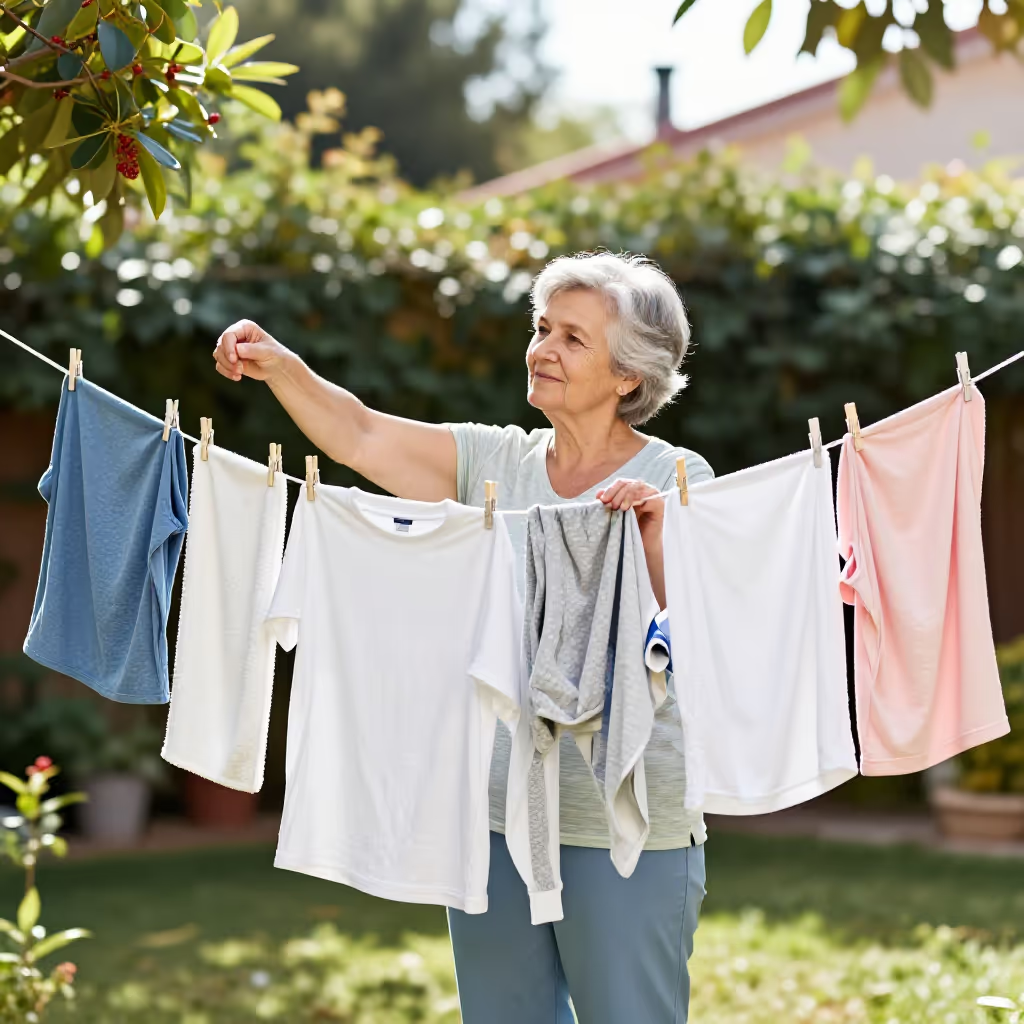
line / cord
A rope or cord for various purposes, for example for hanging laundry (clothesline) or tying up a boat.
Sie hängte die frisch gewaschenen Handtücher auf die Leine im Garten.
She hung the freshly washed towels on the line in the garden.

to keep someone on a short leash
To strongly control a person and give them little freedom.
Seit er sein ganzes Geld ausgegeben hat, wird er von seinen Eltern an der kurzen Leine gehalten.
Since he spent all his money, his parents have been keeping him on a short leash.
When an animal is tied up or on a leash, you use the preposition 'an' with the dative: 'Der Hund ist an der Leine' (The dog is on the leash). When you put it on a leash, you use 'an' with the accusative: 'Nimm den Hund an die Leine!' (Put the dog on the leash!).
Mein Hund läuft im Wald immer ohne Leine, aber in der Stadt ist er an der Leine.
My dog always runs without a leash in the forest, but in the city he is on a leash.
'Leine' (line/cord) is often used as the base word in compound nouns to describe the function of the cord. Common examples are 'Wäscheleine' (clothesline), 'Angelleine' (fishing line), or 'Hundeleine' (dog leash).
Die Wäsche trocknet draußen auf der Wäscheleine.
The laundry is drying outside on the clothesline.
The idiom 'jemanden an der kurzen Leine halten' (to keep someone on a short leash) is fixed. The person being controlled is in the accusative. The adjective 'kurzen' is a fixed part of the expression.
Ihre neue Chefin hält alle Mitarbeiter an einer sehr kurzen Leine.
Her new boss keeps all employees on a very short leash.
rope
Leine and Seil can both be used to tie up an animal. Leine primarily refers to its function as a means of leading or restraining an animal, while Seil emphasizes a strong, thick construction. Leine is the appropriate choice for ordinary leading; Seil is more suitable when it needs to withstand a particular load.

Beim Spaziergang führt Tom den großen Hund an einer Leine.
During the walk, Tom leads the large dog on a leash.
Nach dem Sturm bindet Tom den großen Hund vorübergehend mit einem starken Seil fest.
After the storm, Tom temporarily ties the large dog up with a strong rope.