

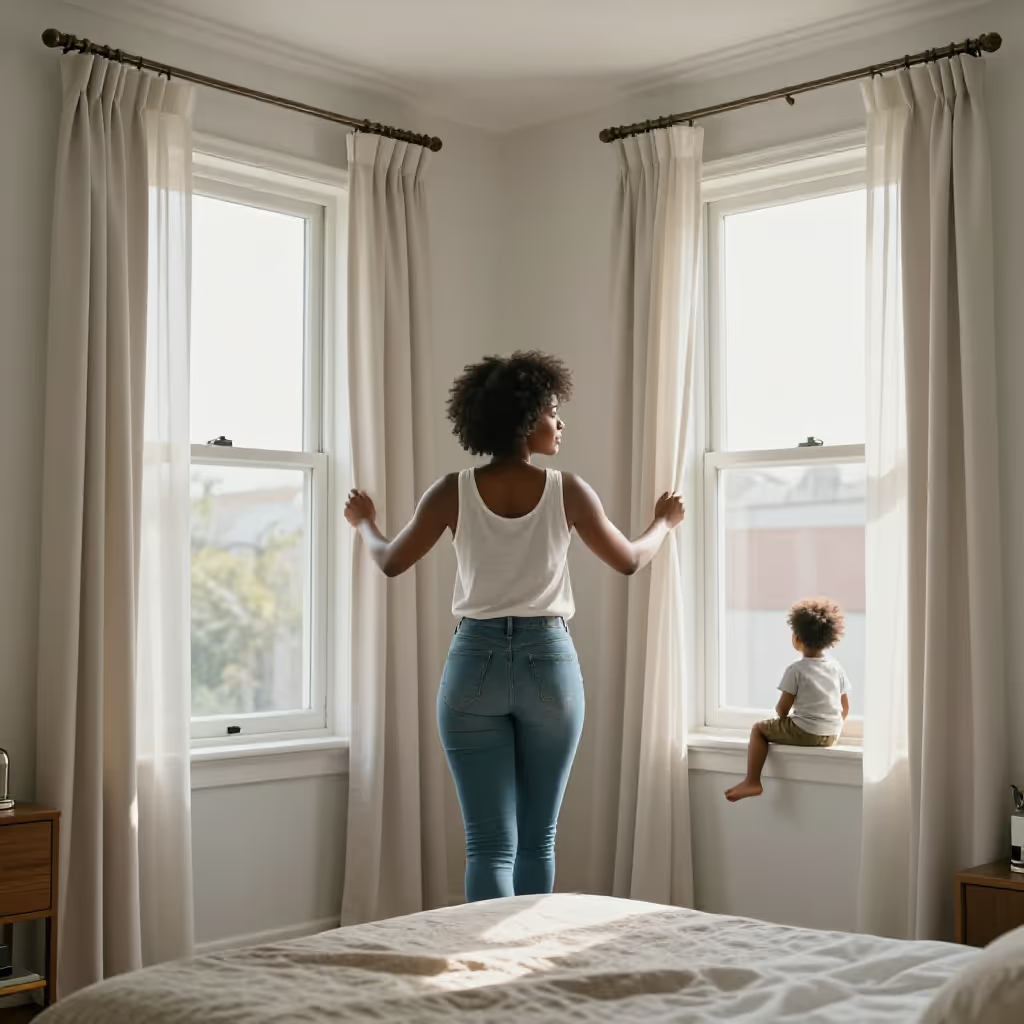
lüften
to air
To let fresh air into an enclosed room by opening windows or doors.
EXAMPLE
Ich muss dringend mal das Schlafzimmer lüften, hier ist ganz schlechte Luft.
I really need to air out the bedroom; the air in here is terrible.
to air / reveal / lift
Loading your saved state.
to air
To let fresh air into an enclosed room by opening windows or doors.
Ich muss dringend mal das Schlafzimmer lüften, hier ist ganz schlechte Luft.
I really need to air out the bedroom; the air in here is terrible.

to reveal a secret
To uncover and make known a secret or a mystery.
Der Detektiv konnte endlich das Geheimnis um den verschwundenen Schatz lüften.
The detective was finally able to reveal the secret of the missing treasure.
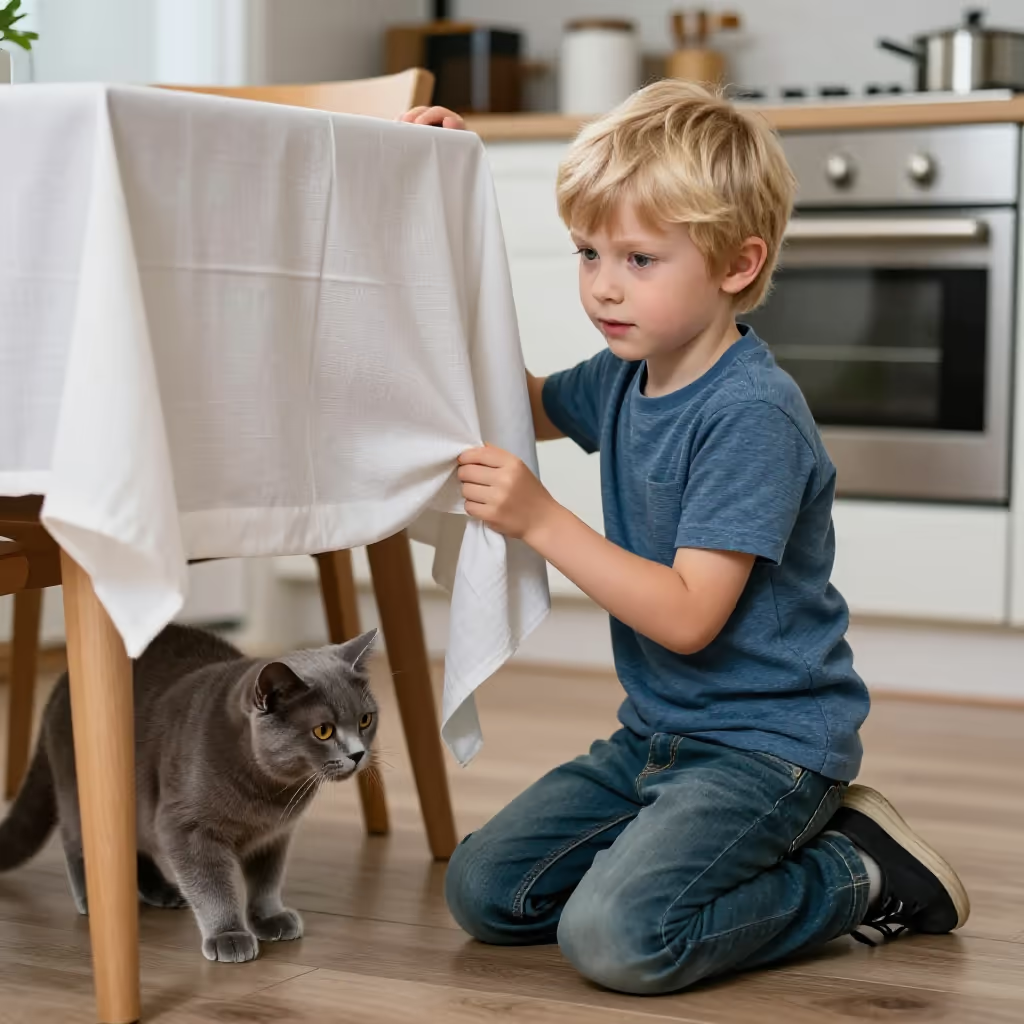
to lift
To raise something slightly, often in order to look underneath it or uncover something.
Sie lüftete vorsichtig den Deckel des Topfes, um zu sehen, ob das Wasser schon kochte.
She carefully lifted the lid of the pot to see whether the water was already boiling.

to tip one's hat
To briefly lift one's hat from one's head as a gesture of greeting or respect.
Der ältere Herr lüftete seinen Hut, als die Dame vorbeiging.
The elderly gentleman tipped his hat as the lady walked by.
The verb 'lüften' (to air) is derived directly from the noun 'die Luft' (air). All meanings have to do with 'Luft' (air) or creating free space, whether literally or figuratively.
Kannst du bitte kurz das Fenster öffnen und lüften?
Could you please open the window briefly and air the room out?
The object of the verb reveals the exact meaning. You air 'ein Zimmer' (a room) for fresh air, reveal 'ein Geheimnis' (a secret), or tip 'einen Hut' (a hat) as a greeting.
Er lüftete den Vorhang, um aus dem Fenster zu sehen.
He lifted the curtain to look out the window.
In the meaning 'frische Luft hereinlassen' (to let fresh air in), 'lüften' (to air) is typically used with rooms or textiles. Common combinations are 'das Zimmer lüften' (to air the room), 'die Wohnung lüften' (to air the apartment), or 'die Betten lüften' (to air the beds).
Nach dem Kochen sollten wir die Küche gut lüften.
After cooking, we should air the kitchen out well.
The figurative meaning is used almost exclusively in fixed expressions. The most common are 'ein Geheimnis lüften' (to reveal a secret) and 'ein Rätsel lüften' (to solve a mystery).
Die Polizei hofft, das Rätsel des Falles bald lüften zu können.
The police hope to be able to solve the mystery of the case soon.
The expression 'den Hut lüften' (to tip one's hat) describes a traditional gesture of greeting or respect, now rather rare, that was mainly performed by men.
Er lüftete kurz seinen Hut, als er den Direktor traf.
He briefly tipped his hat when he met the director.
to pull / move
Both words can describe moving a hat. „Lüften“ emphasizes briefly lifting it, while „den Hut ziehen“ is a fixed expression that conveys greeting or respect toward someone. „Den Hut ziehen“ is usually appropriate for a respectful gesture, while „lüften“ is used for simply lifting the hat.

Als die Nachbarin vorbeikam, lüftete der Mann kurz den Hut.
When the neighbor passed by, the man briefly tipped his hat.
Zur Begrüßung zog der Mann höflich den Hut vor seiner Nachbarin.
As a greeting, the man politely tipped his hat to his neighbor.