

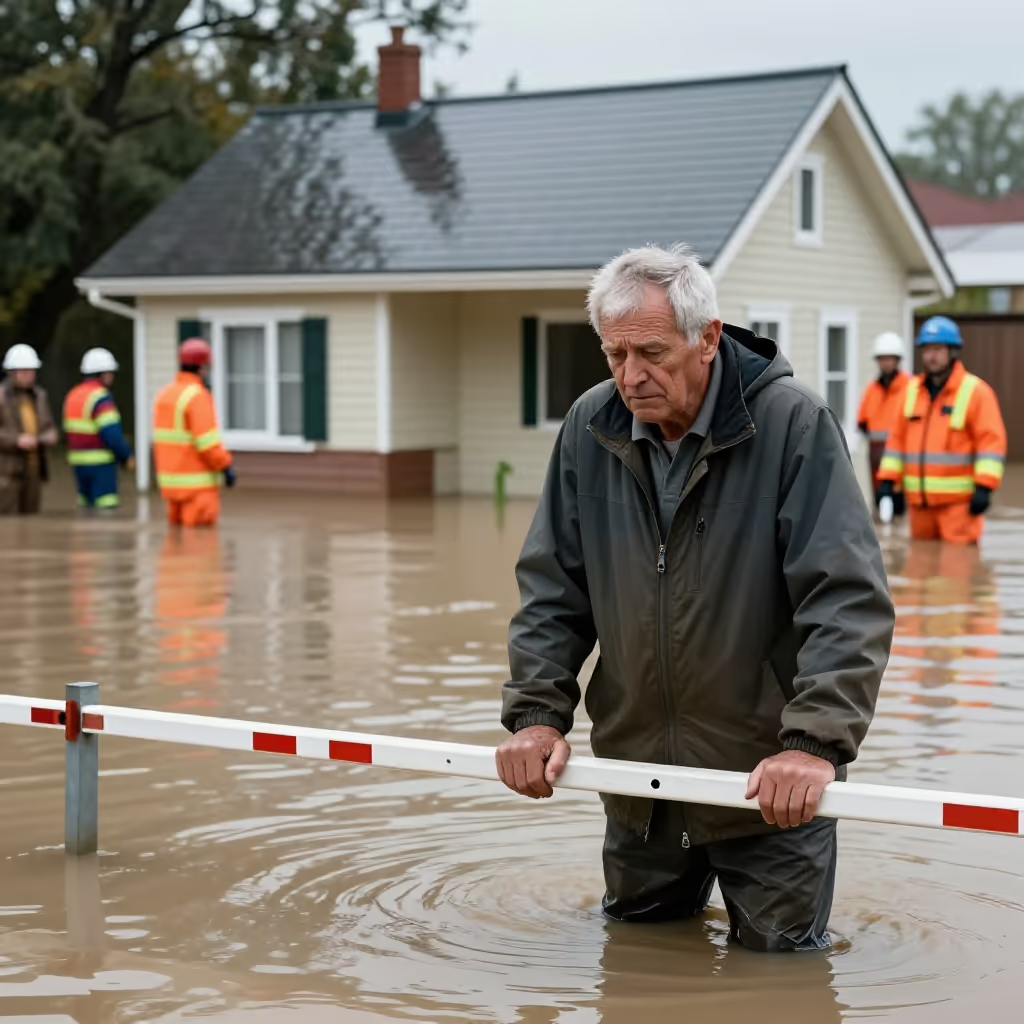
machtlos
powerless
Without power, influence, or the ability to change or control a situation.
EXAMPLE
Angesichts der Naturkatastrophe fühlten sich die Menschen machtlos.
In the face of the natural disaster, people felt powerless.
powerless
Loading your saved state.
powerless
Without power, influence, or the ability to change or control a situation.
Angesichts der Naturkatastrophe fühlten sich die Menschen machtlos.
In the face of the natural disaster, people felt powerless.
The word has a simple structure: it consists of 'die Macht' (power) and the ending '-los' (-less), which means 'without'. So 'machtlos' literally means 'without power'.
Ohne die nötigen Werkzeuge war er machtlos.
Without the necessary tools, he was powerless.
To say what someone is powerless against, the preposition 'gegenüber' with the dative or 'gegen' with the accusative is often used.
Der Einzelhandel ist gegenüber der Online-Konkurrenz oft machtlos.
Retail stores are often powerless against online competition.
Common phrases are 'sich machtlos fühlen' (to feel powerless) and 'machtlos zusehen müssen' (to have to watch helplessly). The latter expresses that you have to watch a negative situation without being able to intervene.
Er musste machtlos zusehen, wie das Feuer sein Haus zerstörte.
He had to watch helplessly as the fire destroyed his house.
helpless
Someone who is hilflos is unable to help themselves in a difficult situation and needs support. Someone who is machtlos lacks the necessary influence or control to change a situation, even if they do not personally need immediate help.

Die Helfer standen dem schnell steigenden Wasser machtlos gegenüber und konnten es nicht aufhalten.
The rescuers were powerless against the rapidly rising water and could not stop it.
Nach dem Sturz lag der Wanderer hilflos am steilen Hang und brauchte Unterstützung.
After the fall, the hiker lay helpless on the steep slope and needed assistance.