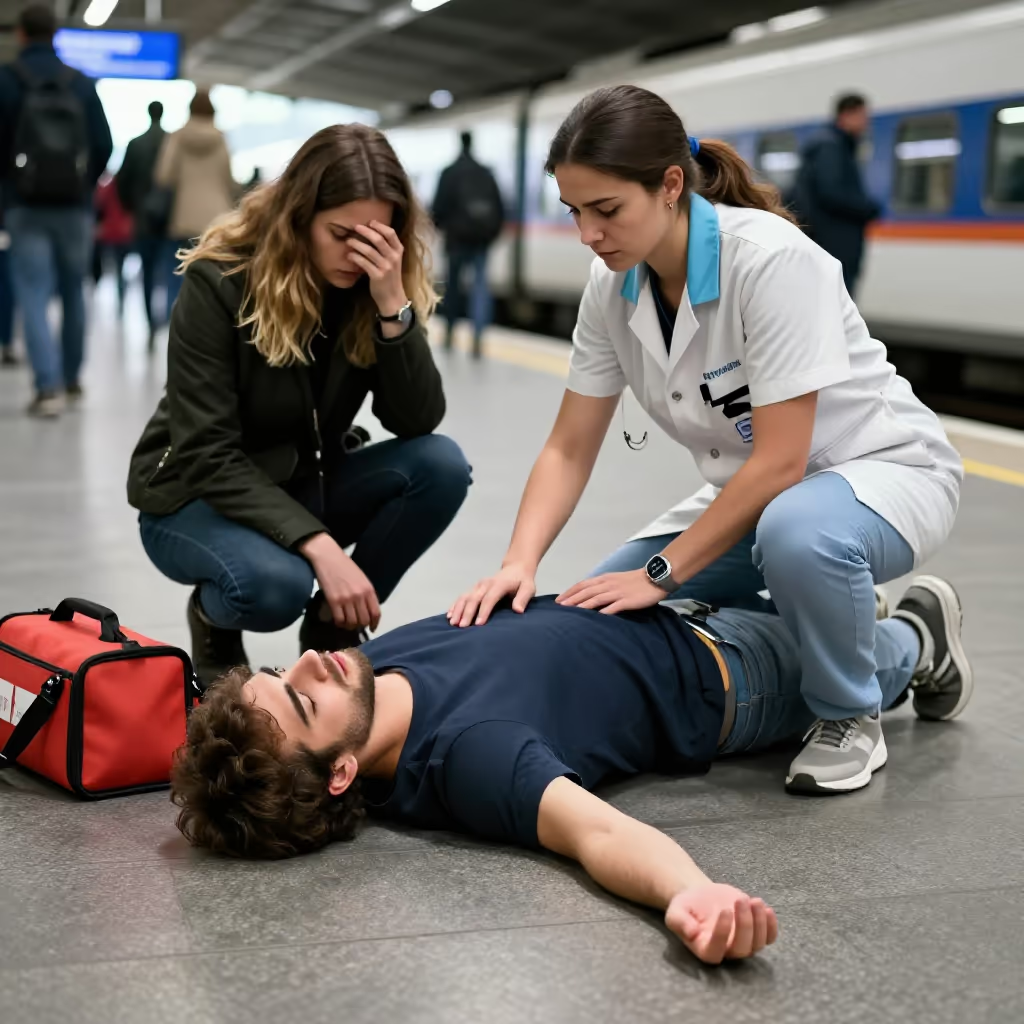
Describing the state in which someone has lost consciousness; unconscious.
example
Wegen der großen Hitze und der stickigen Luft wurde er plötzlich ohnmächtig.
Because of the intense heat and the stuffy air, he suddenly became unconscious.
Usage tips
Word structure
The word is made up of 'ohn' (an old form of 'ohne', meaning 'without') and 'Macht' (power). So it literally means 'without power', which explains both meanings: losing power over the body (unconscious) and the feeling of having no power over a situation.
EXAMPLE
Ohne Wasser in der Wüste fühlte er sich bald ohnmächtig.
Without water in the desert, he soon felt powerless.
Body or feeling?
The context makes clear which meaning is intended. If it is about a physical state (heat, shock), it refers to unconsciousness. If it is about an uncontrollable situation, it refers to the feeling of helplessness.
EXAMPLE
Der Läufer brach im Ziel ohnmächtig zusammen.
The runner collapsed unconscious at the finish line.
Typical verbs: unconsciousness
In connection with unconsciousness, 'ohnmächtig' (unconscious) is almost always used with the verb 'werden' (to become) to describe the moment of collapse. The state is described with 'sein' (to be).
EXAMPLE
Als sie die schlechte Nachricht hörte, ist sie ohnmächtig geworden.
When she heard the bad news, she became unconscious.
Typical verbs: helplessness
In the figurative meaning 'helpless', 'ohnmächtig' (powerless) often appears with the verb 'sich fühlen' (to feel). The expression 'ohnmächtig zusehen müssen' (to have to watch helplessly) is also very common.
EXAMPLE
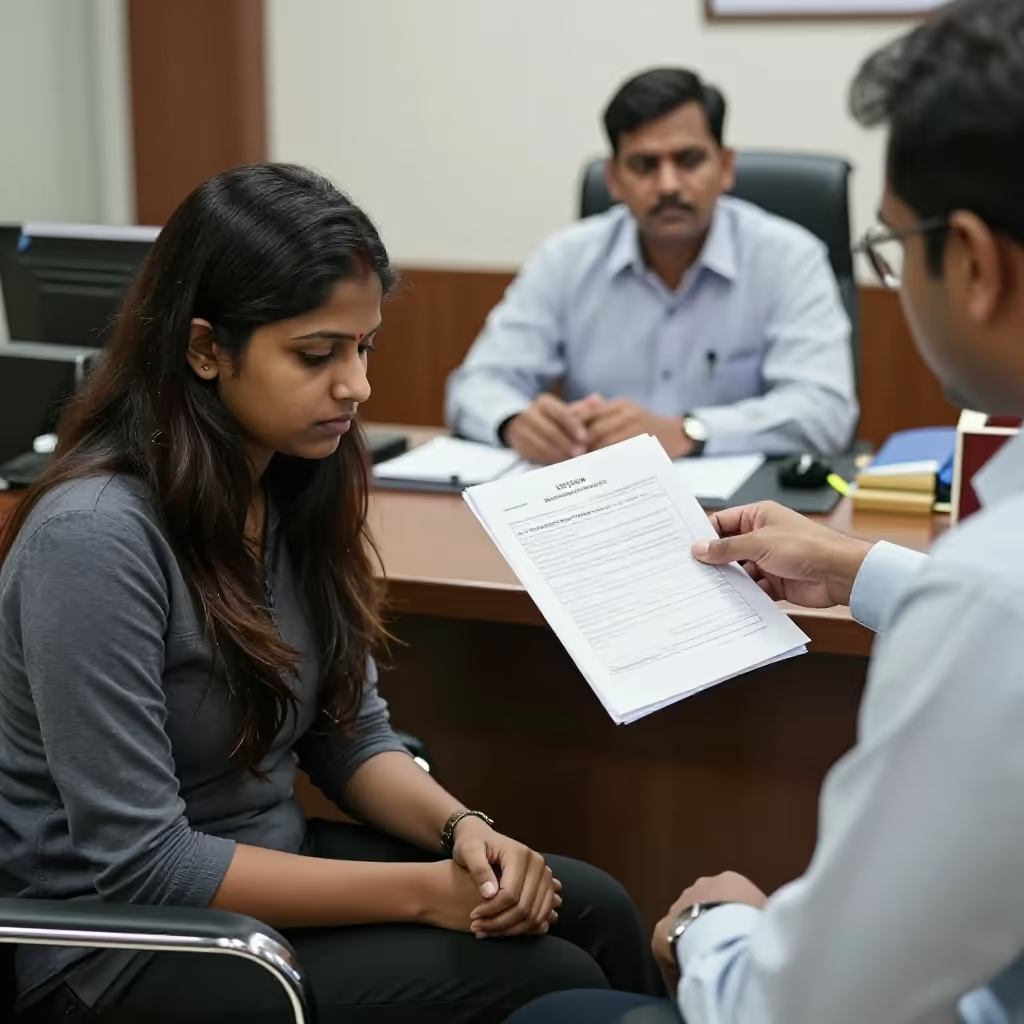
Angesichts der Bürokratie fühlte er sich völlig ohnmächtig.
Faced with the bureaucracy, he felt completely powerless.
Compare with
antonym
ohnmächtig vs wach
awake / alert
'wach' and 'ohnmächtig' are opposites when it comes to consciousness. Someone who is 'wach' is not sleeping and can perceive their surroundings. Someone who is 'ohnmächtig' has lost consciousness and does not respond normally. 'wach' can also mean attentive or alert, but in this contrast the physical state is important. After an accident or a circulatory problem, for example, you might ask whether someone is 'wach' or 'ohnmächtig'.
ohnmächtig
Wegen der Hitze wurde eine Frau im Bus ohnmächtig.
Because of the heat, a woman on the bus became unconscious.
wach
Nach der Operation war Paul schnell wieder wach.
After the operation, Paul was awake again quickly.