

männlich
male / masculine
Refers to the biological or grammatical gender of men, boys, or male animals.
EXAMPLE
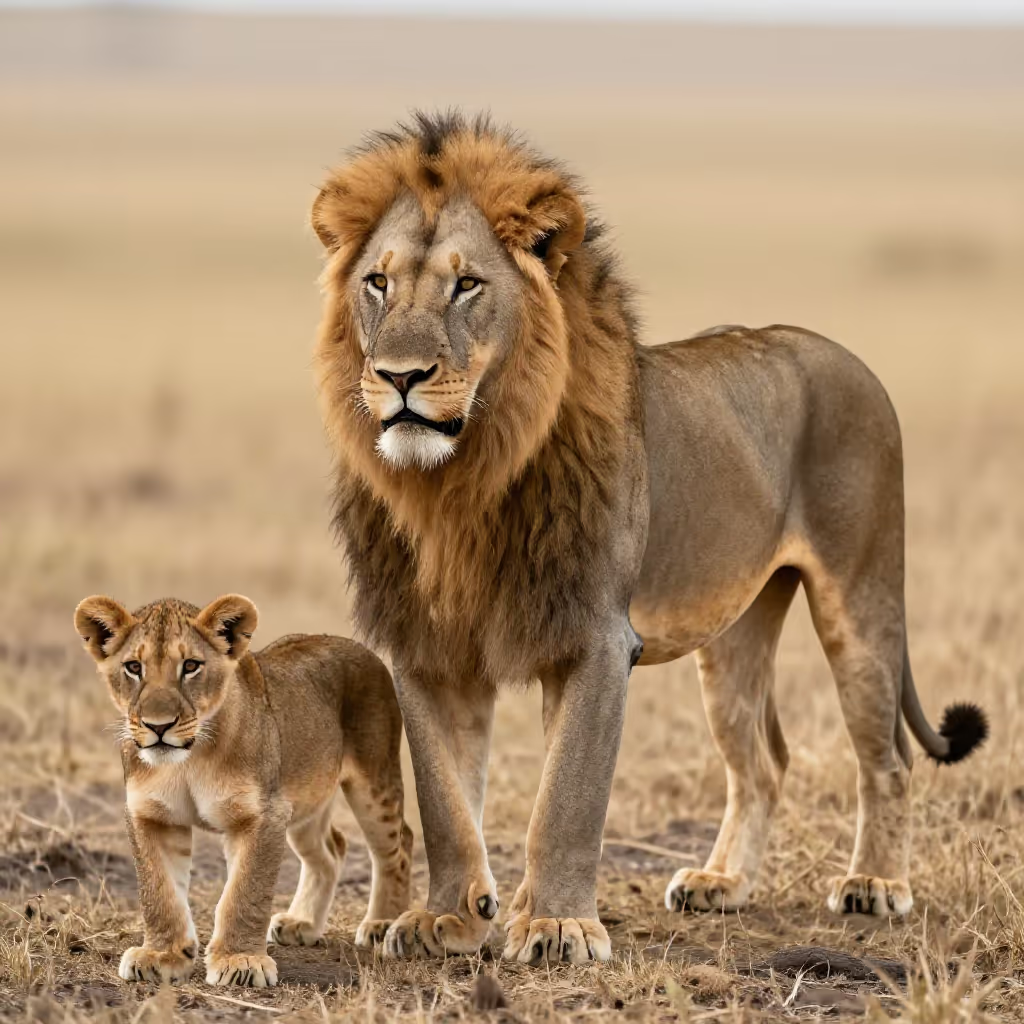
Der Löwe mit der Mähne ist das männliche Tier.
The lion with the mane is the male animal.
male / masculine
Loading your saved state.
male / masculine
Refers to the biological or grammatical gender of men, boys, or male animals.
Der Löwe mit der Mähne ist das männliche Tier.
The lion with the mane is the male animal.
masculine
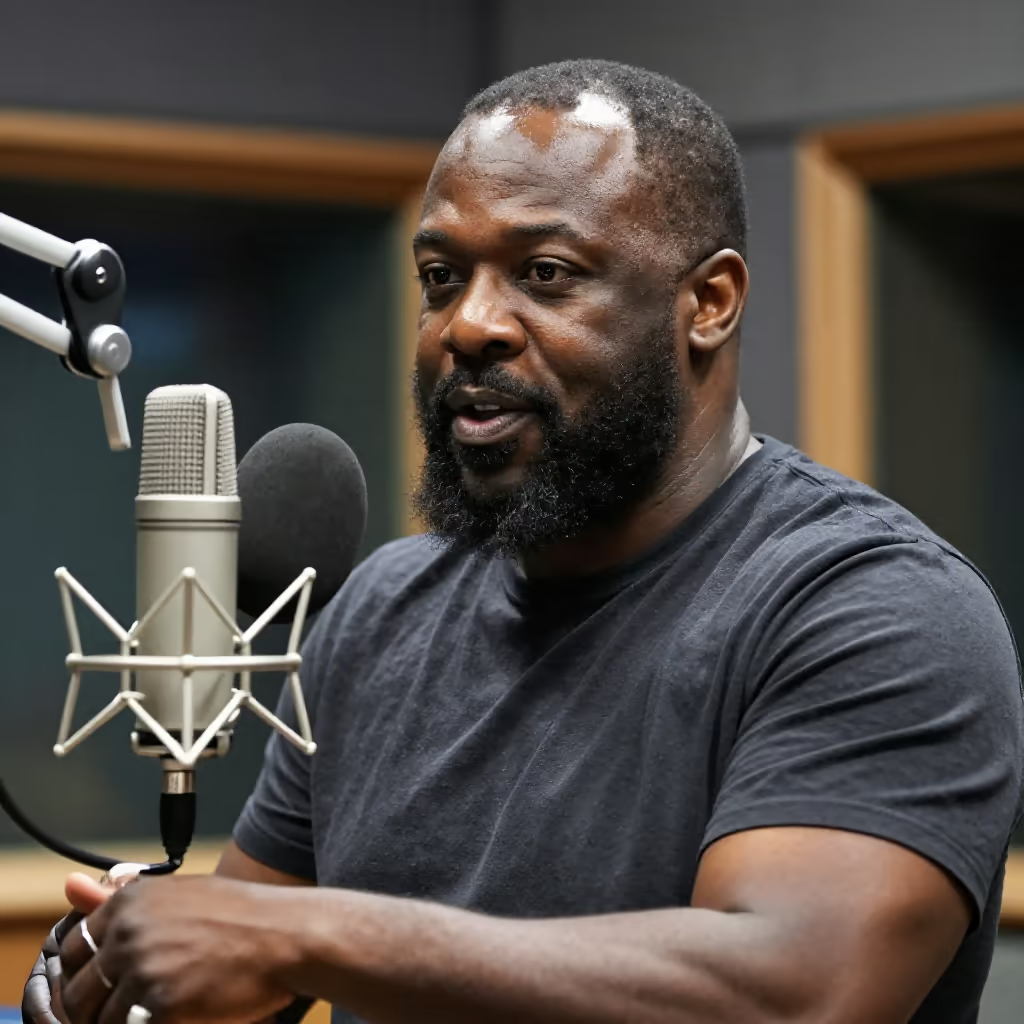
Having qualities that are typically considered characteristic of men, such as a deep voice or a distinctive face.
Er hat eine sehr männliche, tiefe Stimme.
He has a very masculine, deep voice.
The adjective 'männlich' (male/masculine) is derived from the noun 'der Mann' (man). The ending '-lich' turns the noun into an adjective meaning 'like a man' or 'belonging to a man.'
Er ist ein typischer Mann.
He is a typical man.
In the meaning of 'biological or grammatical gender,' 'männlich' (male/masculine) is used in specific contexts. You find it in biology (male animals), in grammar (masculine nouns), or on forms (gender: male).
Das Nomen „Tisch“ ist männlich.
The noun 'Tisch' (table) is masculine.
When 'männlich' (masculine) is used to describe qualities, it is often combined with certain nouns. Typical examples are 'eine männliche Stimme' (a masculine voice), 'männliche Gesichtszüge' (masculine facial features), or 'männliches Verhalten' (masculine behavior).
Er hat sehr markante, männliche Gesichtszüge.
He has very distinctive, masculine facial features.
masculine
Männlich and maskulin can both describe qualities typically associated with men. Männlich is the neutral everyday choice, while maskulin usually sounds more formal or technical. Männlich fits an ordinary description, while maskulin is more appropriate for a deliberately formal characterization.
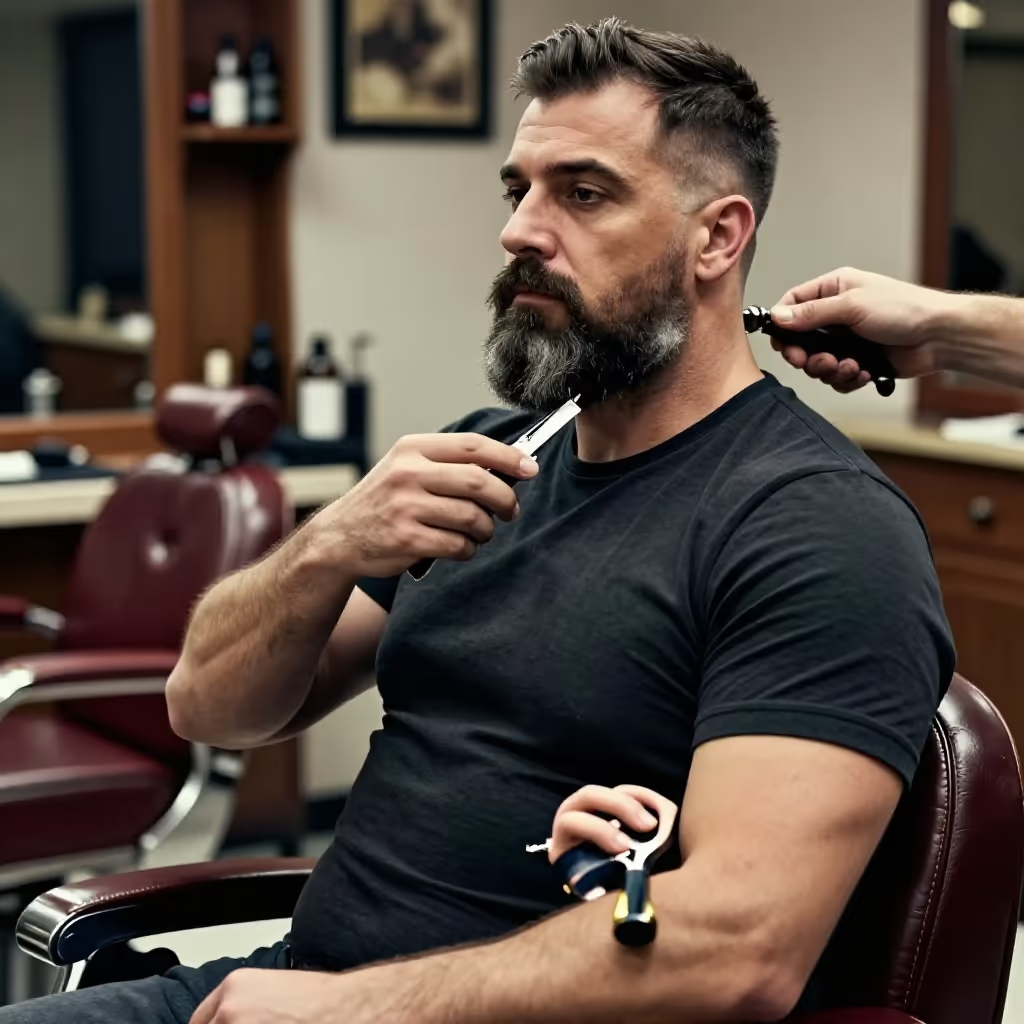
Im Alltag beschreibt sie seine tiefe Stimme als männlich.
In everyday conversation, she describes his deep voice as masculine.
Im formellen Porträt beschreibt sie seine tiefe Stimme als maskulin.
In the formal portrait, she describes his deep voice as masculine.