

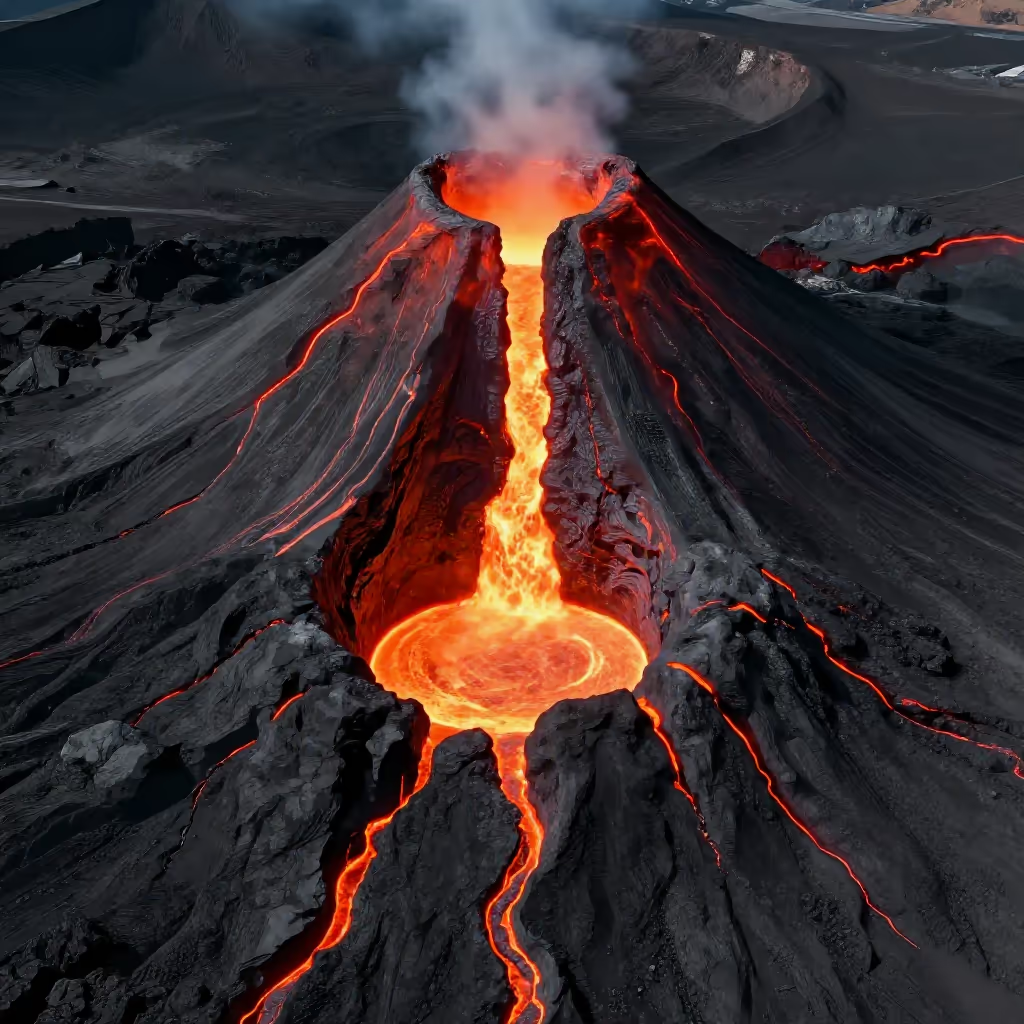
Molten rock located beneath the Earth's surface. When magma reaches the surface during a volcanic eruption, it is called lava.
example
Tief unter dem Vulkan sammelt sich das heiße Magma in einer großen Kammer.
Deep beneath the volcano, the hot magma collects in a large chamber.
Usage tips
Register
'Magma' (magma) is a technical term from geology. You mainly find it in scientific texts, documentaries, or school lessons when the topic is volcanoes.
EXAMPLE
Im Erdkundeunterricht haben wir über Magma und Vulkanausbrüche gesprochen.
In geography class, we talked about magma and volcanic eruptions.
Typical collocations
'Magma' (magma) is often described with adjectives such as 'heiß' (hot), 'flüssig' (liquid), or 'zähflüssig' (viscous). Typical verbs are 'aufsteigen' (to rise) or 'sich ansammeln' (to collect/accumulate), usually in a 'Magmakammer' (magma chamber).
EXAMPLE
Forscher messen, wie schnell das zähflüssige Magma aufsteigt.
Researchers measure how quickly the viscous magma rises.
Precise usage
The term 'Magma' (magma) is used exclusively for molten rock as long as it is beneath the Earth's surface. A different term is used for the rock that reaches the surface.
EXAMPLE
Das Gestein im Erdinneren wird Magma genannt.
The rock inside the Earth is called magma.
Compare with
near_synonym · confusable
Magma vs Lava
lava
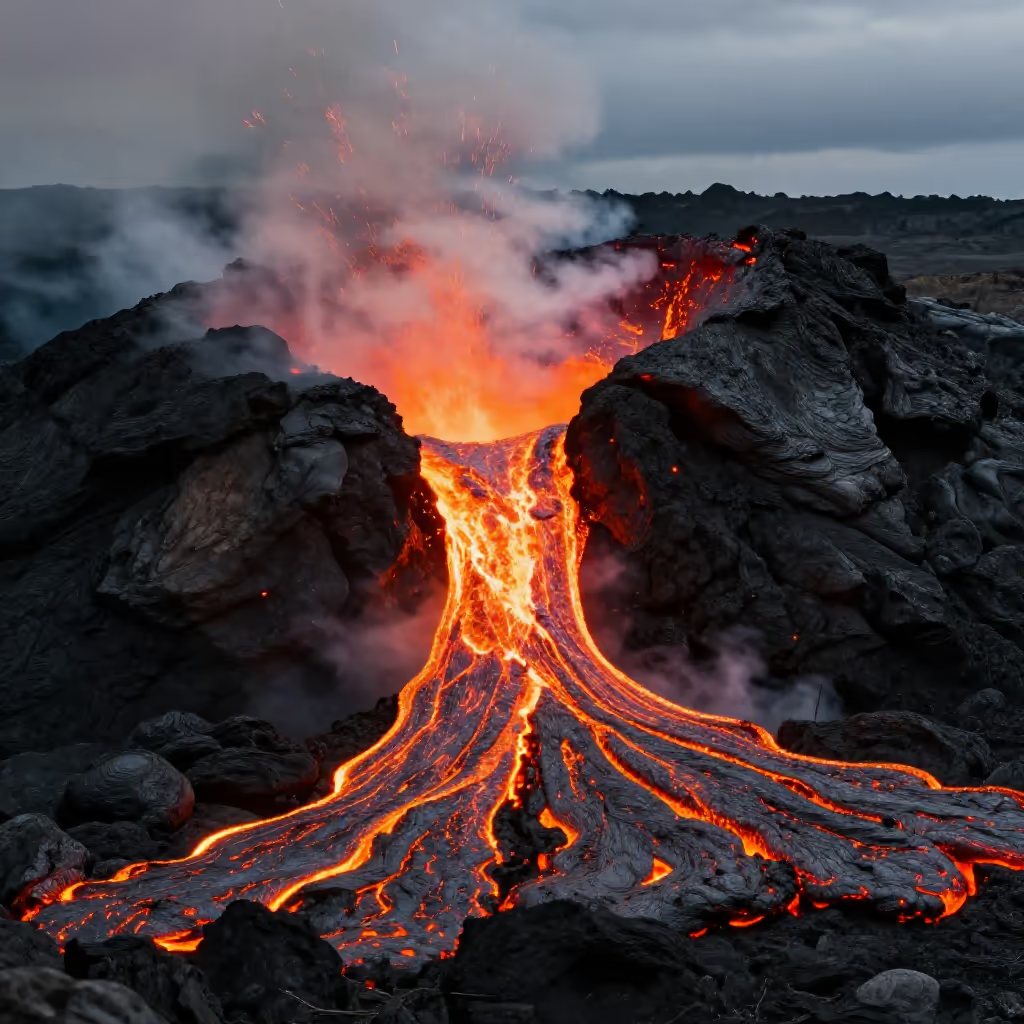
'die Lava' and 'das Magma' both mean molten rock, but in different places. 'Magma' is located beneath the Earth's surface. When this molten rock comes out during a volcanic eruption, it is called 'Lava'. The words are easy to confuse because they are basically about the same material. The simple guide is: underground, 'Magma'; on the surface, 'Lava'.
Magma
Unter dem Vulkan sammelt sich Magma in einer großen Kammer.
Magma collects in a large chamber beneath the volcano.
Lava
Nach dem Ausbruch bedeckte schwarze Lava einen Teil der Straße.
After the eruption, black lava covered part of the road.