

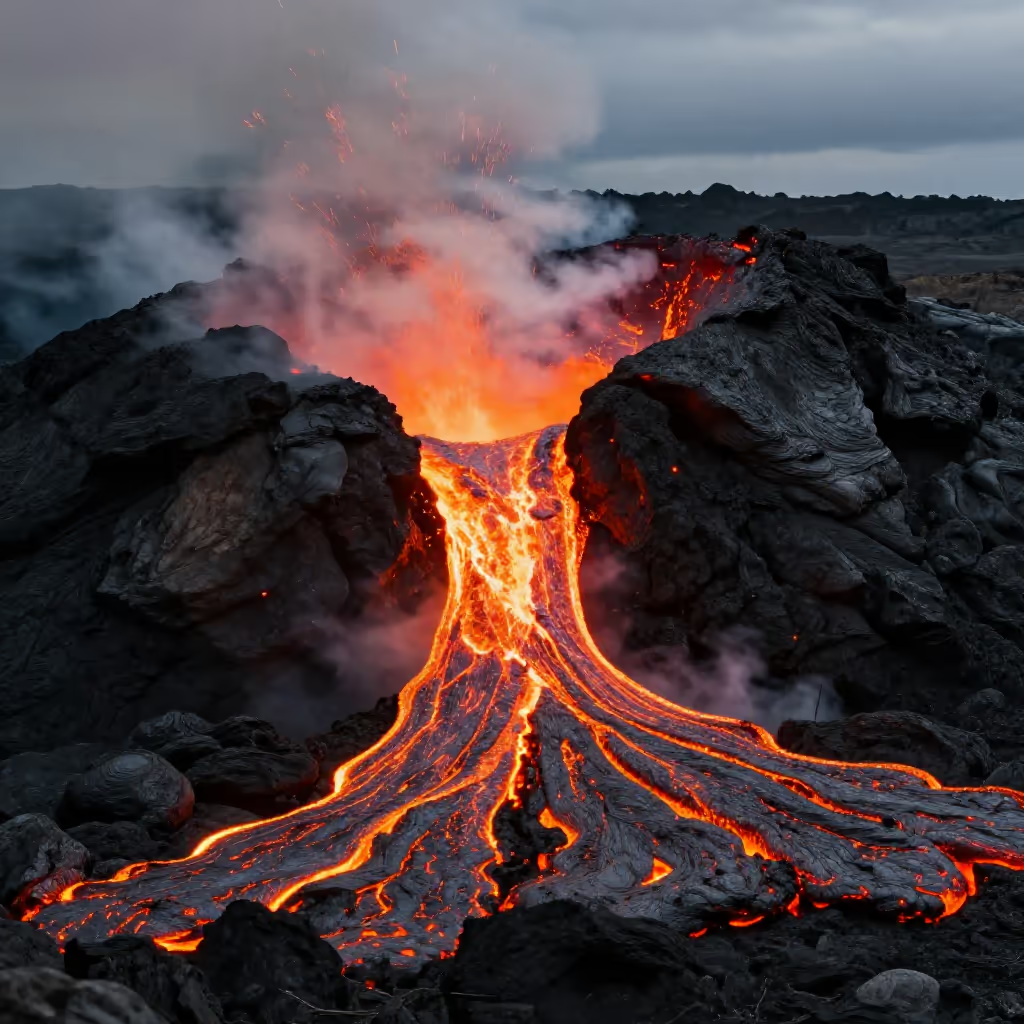
die Lava
lava
Molten rock that reaches the Earth's surface during a volcanic eruption. After cooling, it becomes solid rock.
EXAMPLE
Die heiße Lava floss langsam den Hang des Vulkans hinab.
The hot lava flowed slowly down the slope of the volcano.
lava
Loading your saved state.
lava
Molten rock that reaches the Earth's surface during a volcanic eruption. After cooling, it becomes solid rock.
Die heiße Lava floss langsam den Hang des Vulkans hinab.
The hot lava flowed slowly down the slope of the volcano.
'Lava' is the name of a substance, similar to 'Wasser' (water) or 'Sand' (sand). Therefore, the word is almost always used in the singular without an article, or with the definite article 'die' when a specific mass is meant.
Überall auf der Insel sieht man erstarrte Lava.
You can see solidified lava everywhere on the island.
Lava is often combined with verbs of movement. Typical phrases are 'Lava fließt' (lava flows), 'Lava strömt aus dem Vulkan' (lava streams out of the volcano), or 'Lava ergießt sich' (lava pours) over the land.
Man konnte beobachten, wie die Lava langsam ins Meer floss.
You could observe how the lava slowly flowed into the sea.
Common adjectives that describe lava refer to its temperature or state: 'heiße Lava' (hot lava), 'flüssige Lava' (liquid lava), or after cooling, 'erkaltete' (cooled) or 'erstarrte Lava' (solidified lava).
Die Landschaft besteht aus schwarzer, erstarrter Lava.
The landscape consists of black, solidified lava.
magma
Lava and Magma are both molten rock, but they differ in location. Beneath the Earth's surface it is called Magma; as soon as it reaches the surface during an eruption, it is called Lava.
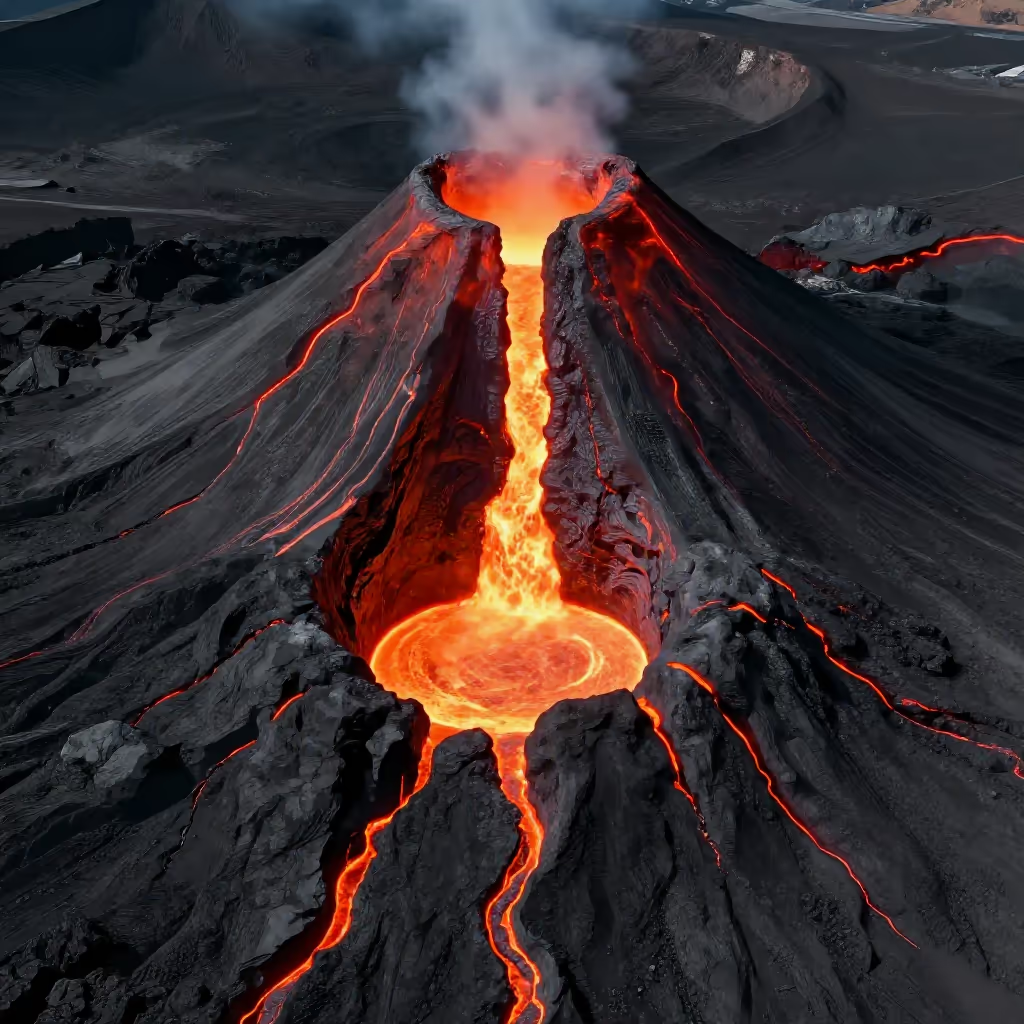
Nach dem Ausbruch floss die heiße Lava den Vulkan hinunter.
After the eruption, hot lava flowed down the volcano.
Vor dem Ausbruch sammelte sich heißes Magma unter dem Vulkan.
Before the eruption, hot magma gathered beneath the volcano.