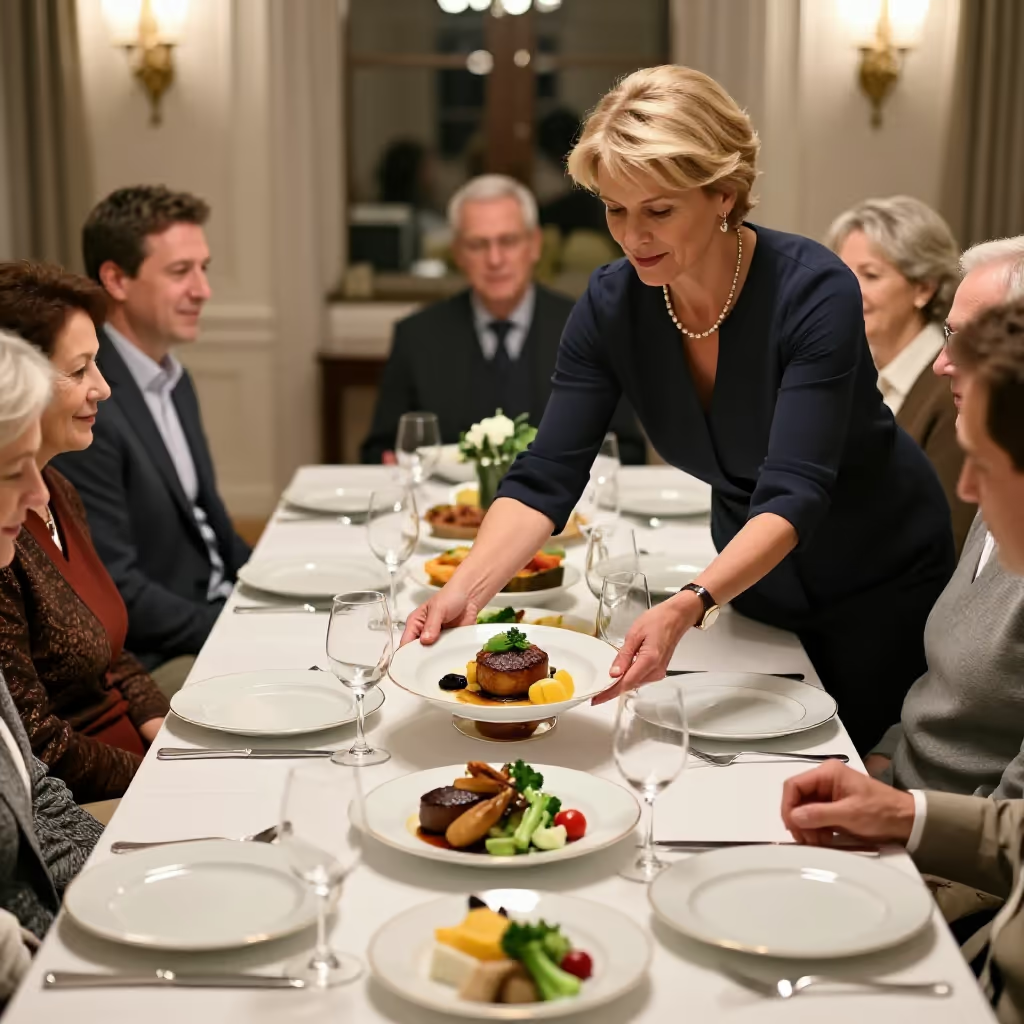
Prepared food eaten at a specific time of day, such as lunch or dinner. The term is often used in a somewhat more formal or elevated context than the word 'Essen' (food/meal).
example
Die ganze Familie versammelte sich zum festlichen Mahl an Weihnachten.
The whole family gathered for the festive meal at Christmas.
Usage tips
Word family
The word 'Mahl' (meal) is closely related to 'Mahlzeit' (mealtime/meal). The well-known greeting 'Mahlzeit!' which you hear around lunchtime, literally wishes someone a good meal.
EXAMPLE
Wir wünschen Ihnen eine gesegnete Mahlzeit.
We wish you a blessed meal.
Elevated style
'Mahl' is often used in a more formal or literary context. In normal everyday life, the word 'Essen' (food/meal) or 'Mahlzeit' (meal) is much more common.
EXAMPLE
Der König lud zu einem opulenten Mahl in seinen Palast ein.
The king invited them to an opulent meal in his palace.
Typical collocations
'Mahl' is frequently combined with adjectives that describe the occasion or quality. Typical examples are 'ein festliches Mahl' (a festive meal), 'ein einfaches Mahl' (a simple meal), or 'ein gemeinsames Mahl' (a shared meal).
EXAMPLE
Nach der Wanderung gab es ein einfaches, aber stärkendes Mahl.
After the hike, there was a simple but fortifying meal.
Context clue
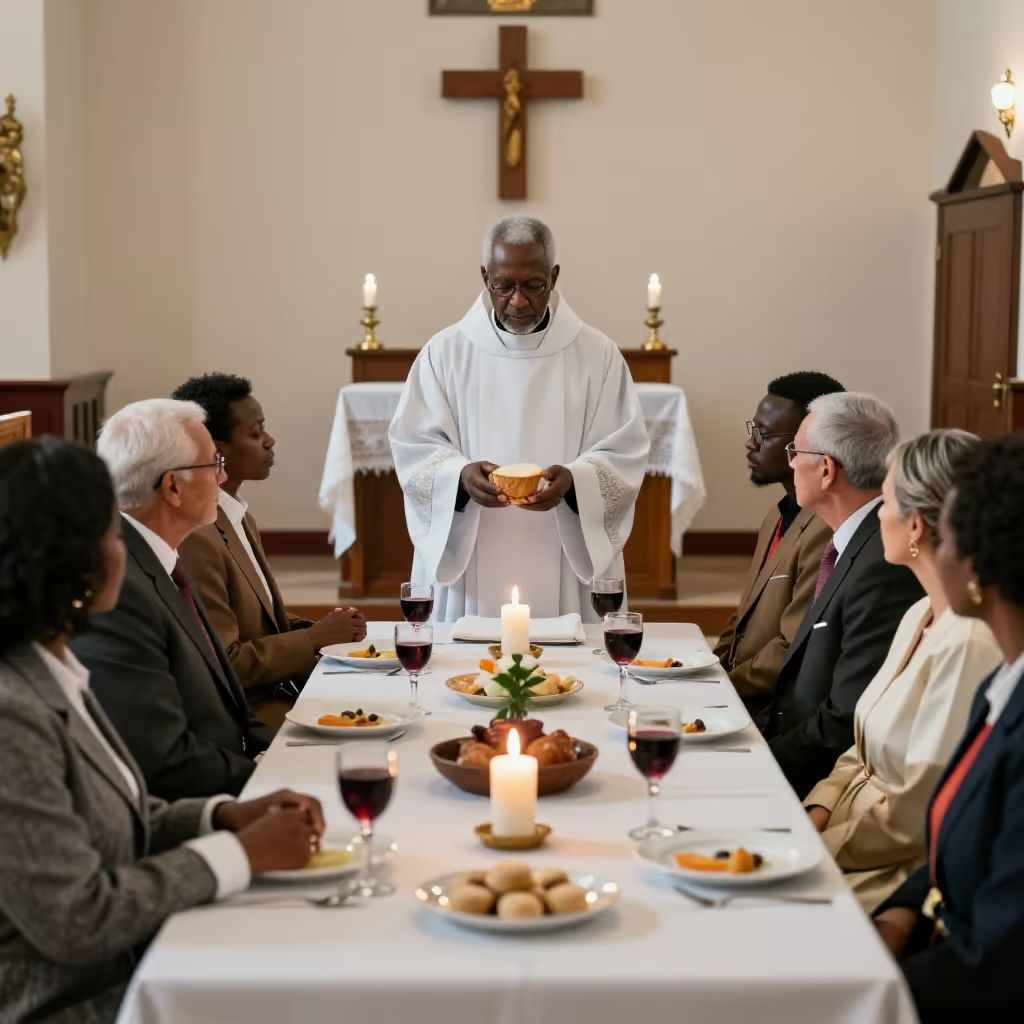
The ceremonial meaning can often be recognized in compound words such as 'Abendmahl' (Lord's Supper/communion) or 'Henkersmahl' (last meal). Religious or historical contexts also point to this meaning.
EXAMPLE
Das Passahfest beginnt mit einem rituellen Mahl.
Passover begins with a ritual meal.
Compare with
near_synonym · confusable
Mahl vs Essen
food / meal / eating
'das Essen' and 'das Mahl' can both mean a meal or the food that you eat. 'das Essen' is the normal everyday word and fits almost everywhere: at home, in a restaurant, or during a break. 'das Mahl' sounds more formal, elevated, or sometimes ceremonial. It is more appropriate for special situations, festive texts, or religious contexts. Learners may confuse the words because both refer to a meal. In normal conversation, however, 'das Mahl' often sounds too ceremonial. As a practical rule: in everyday life, you usually say 'das Essen'; you use 'das Mahl' only when the situation is special or the style is elevated.
Mahl
Nach der Feier saßen alle noch lange bei einem gemeinsamen Mahl zusammen.
After the celebration, everyone sat together for a shared meal for a long time.