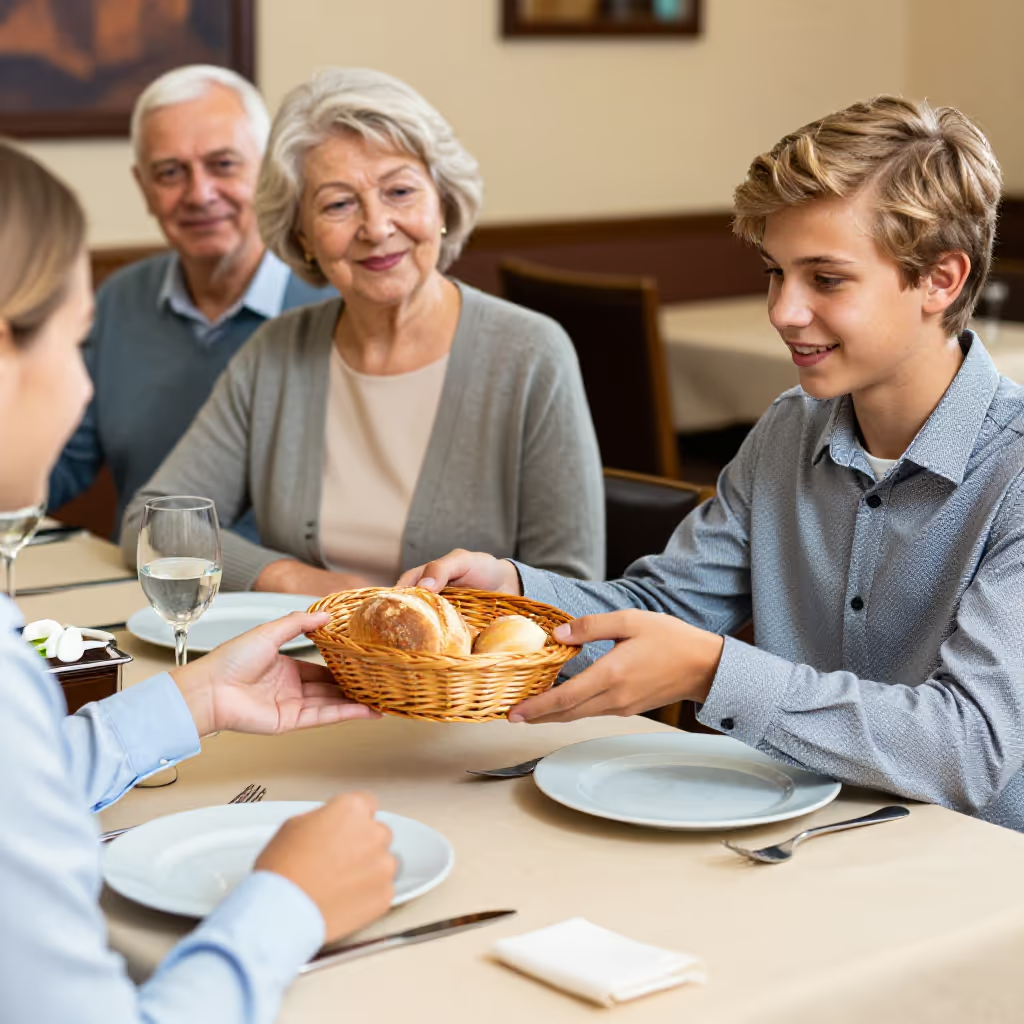
The way a person behaves in social situations, often in the sense of good behavior or politeness. Used almost exclusively in the plural.
example
Er hat wirklich ausgezeichnete Manieren und hält jeder Frau die Tür auf.
He really has excellent manners and holds the door open for every woman.

Usage tips
Plural and singular
This word is almost always used differently for its two main meanings. When it refers to good behavior, it is used almost exclusively in the plural: 'die Manieren' (manners). When an artistic style is meant, the singular form 'die Maniere' or 'die Manier' (manner/style) is used.
EXAMPLE
Kinder sollten früh gute Manieren lernen.
Children should learn good manners early.
Typical collocations
In connection with behavior, 'Manieren' (manners) is often combined with the verb 'haben' (to have). Typical expressions are 'gute Manieren haben' (to have good manners), 'schlechte Manieren haben' (to have bad manners), or also 'keine Manieren haben' (to have no manners).
EXAMPLE
Er hat leider überhaupt keine Manieren.
Unfortunately, he has no manners at all.
Fixed expression
When referring to a style, the fixed expression 'in der Manier(e) von jemandem/etwas' (in the manner of someone/something) is often used. It is followed by the dative.
EXAMPLE
Sie schrieb den Roman in der Manier ihres großen Vorbilds.
She wrote the novel in the manner of her great role model.
Compare with
near_synonym · confusable
Maniere vs Art
kind / way
'die Art' and 'die Maniere' can both describe how someone does something or how someone behaves. 'die Art' is neutral and very general. You can talk about the way someone speaks, works, or solves a problem. 'die Maniere' is narrower: in the plural, 'Manieren' usually refers to good or bad manners. In the meaning 'style', 'die Manier' often sounds more natural, especially in art or music. The risk of confusion comes from the fact that both words have to do with 'Art und Weise' (way / manner). In everyday language, 'Art' is usually safer; use 'Manieren' when you mean manners or behavior.
Maniere
Nach dem Gespräch lobt Frau Müller die guten Manieren des Bewerbers.
After the interview, Ms. Müller praised the applicant's good manners.
Art
Die ruhige Art des Arztes hat dem Kind die Angst genommen.
The doctor's calm manner helped the child feel less afraid.