

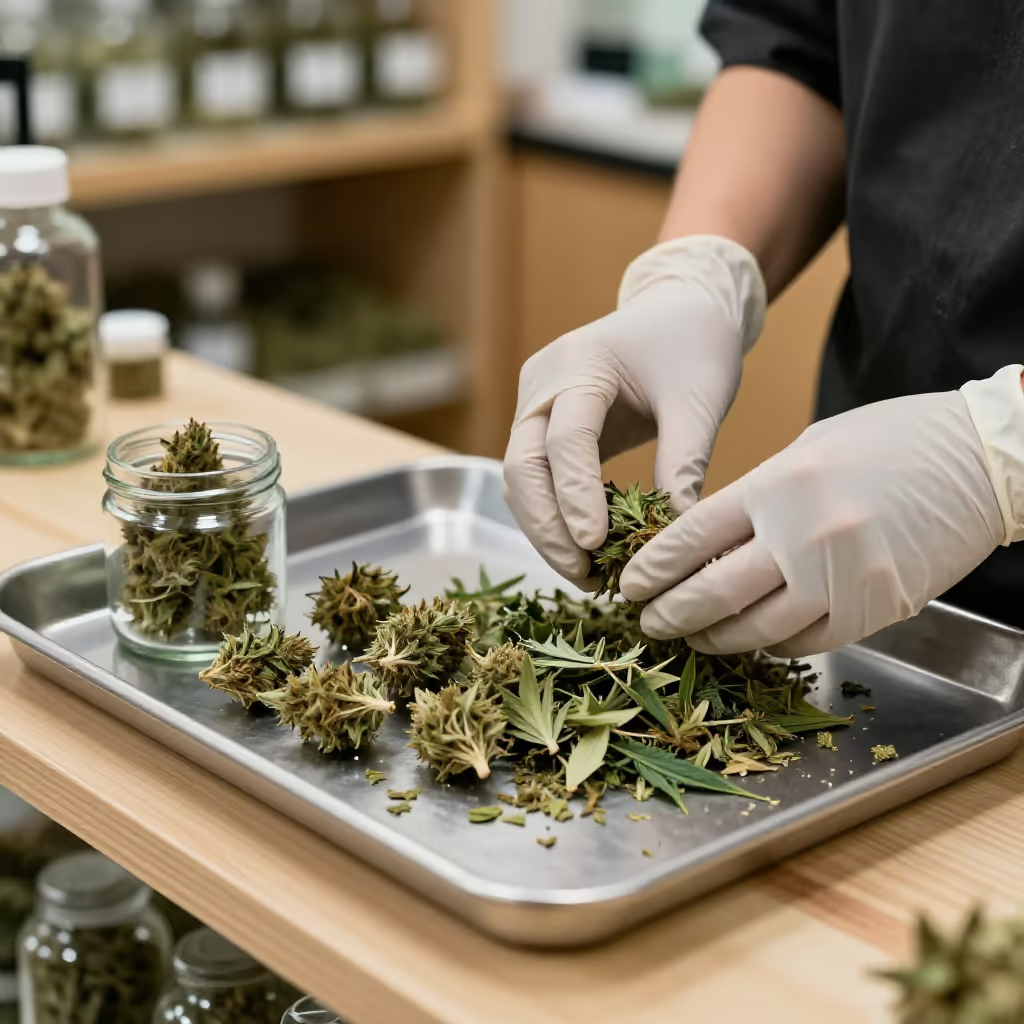
The dried leaves and flowers of the female hemp plant, consumed as an intoxicant. It is also referred to as cannabis or weed.
example
Der Besitz von Marihuana ist in vielen Ländern gesetzlich geregelt.
Possession of marijuana is regulated by law in many countries.
Usage tips
Uncountable noun
'Marihuana' (marijuana) is an uncountable noun, or mass noun. It is therefore almost always used in the singular and often without an article, especially when referring to general consumption.
EXAMPLE
Er wurde verhaftet, weil er Marihuana verkaufte.
He was arrested because he sold marijuana.
Typical collocations
Common verbs in connection with marijuana are 'konsumieren' (to consume), 'rauchen' (to smoke), or 'anbauen' (to grow). In official contexts, people often speak of the 'Besitz' (possession) or 'Handel' (trade) of marijuana.
EXAMPLE
Der Konsum von Marihuana kann die Fahrtüchtigkeit beeinträchtigen.
The use of marijuana can impair the ability to drive.
Register and style
The word 'Marihuana' (marijuana) is a neutral to official term. It is often found in news reports, laws, or medical texts.
EXAMPLE
Die Regierung diskutiert über die Legalisierung von Marihuana.
The government is discussing the legalization of marijuana.
Compare with
synonym
Marihuana vs Gras
grass
'das Gras' and 'das Marihuana' can mean the same thing in this sense: the dried parts of the hemp plant that are consumed as an intoxicant. 'Gras' is colloquial and sounds casual. 'Marihuana' is somewhat more precise and more neutral. In conversations among friends, you are more likely to hear 'Gras'; in more factual texts, you are more likely to see 'Marihuana'. But they can refer to the same drug.
Marihuana
Im Bericht steht, dass das Marihuana im Rucksack versteckt war.
The report says that the marijuana was hidden in the backpack.
Gras
Die Polizei fand bei der Kontrolle eine kleine Menge Gras.
During the check, the police found a small amount of weed.