

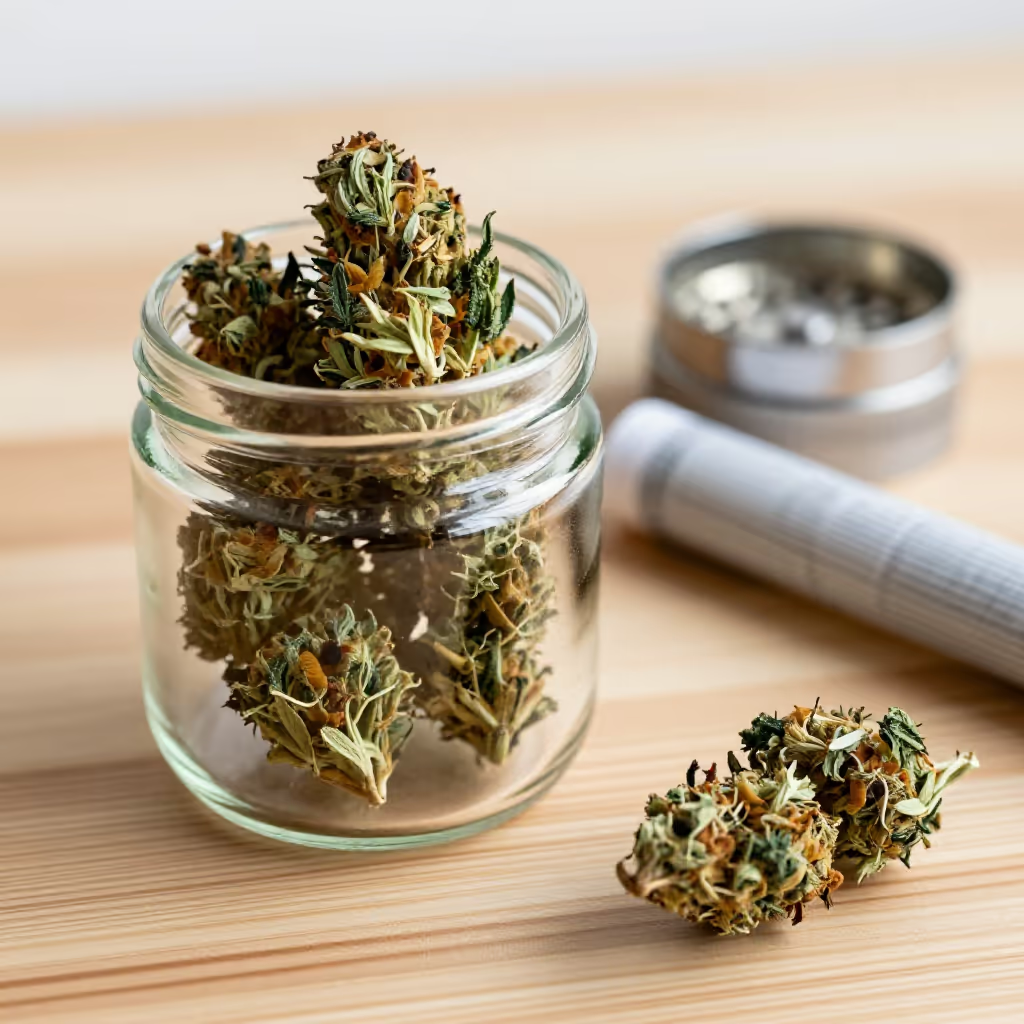
das Weed
weed
A colloquial term borrowed from English for marijuana or cannabis as an intoxicant.
EXAMPLE
In vielen Ländern ist der Besitz von Weed illegal.
In many countries, possession of weed is illegal.
weed
Loading your saved state.
weed
A colloquial term borrowed from English for marijuana or cannabis as an intoxicant.
In vielen Ländern ist der Besitz von Weed illegal.
In many countries, possession of weed is illegal.
In German, 'Weed' (weed/cannabis) refers exclusively to marijuana. It does not mean 'Unkraut' (weed) like the English word 'weed'. Unwanted plants in the garden are called 'das Unkraut' in German.
Die Polizei fand bei der Kontrolle eine kleine Menge Weed im Auto.
During the check, the police found a small amount of weed in the car.
'Weed' is a colloquial term borrowed from English. In official contexts such as news reports or legal texts, the words 'Cannabis' (cannabis) or 'Marihuana' (marijuana) are used.
Unter Jugendlichen ist der Begriff „Weed“ sehr verbreitet.
Among young people, the term 'Weed' is very common.
'Weed' is used as an uncountable noun (mass noun), similar to 'Wasser' (water) or 'Sand' (sand). Therefore, it usually appears in the singular and often without an article when the substance is meant in general.
Er wurde wegen des Verkaufs von Weed verhaftet.
He was arrested for selling weed.
grass
Gras and Weed can both be colloquial terms for marijuana. Gras is the common German expression, while Weed sounds more like an English slang word adopted into German. In an everyday German utterance, das Gras is usually the better fit; Weed is more likely to signal a particular slang style.

Er benutzt in seiner Nachricht bewusst das Wort Weed, weil er englischen Slang mag.
He deliberately uses the word “Weed” in his message because he likes English slang.
Er hat etwas Gras dabei und will es später mit Freunden rauchen.
He has some weed with him and wants to smoke it with friends later.