

der Martini
martini
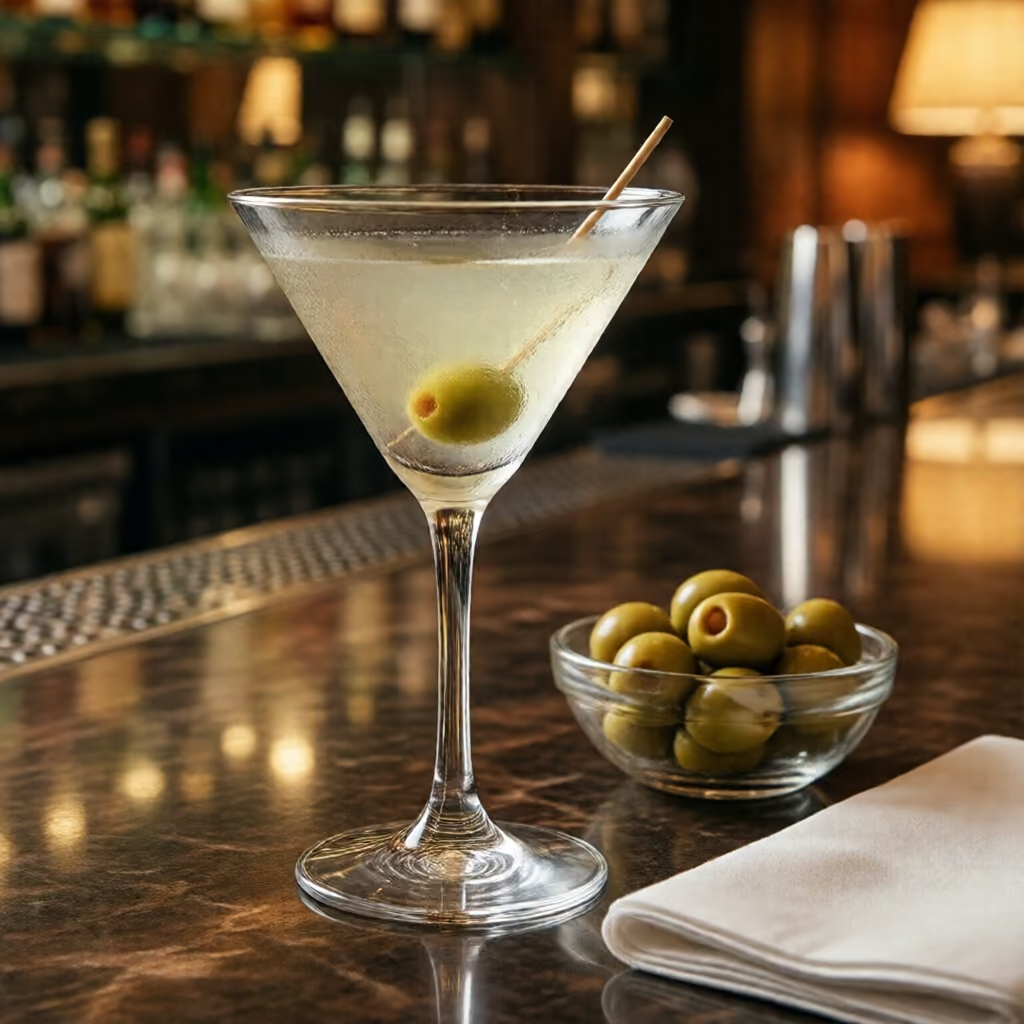
An alcoholic cocktail made with gin and dry vermouth, usually served chilled with an olive or a twist of lemon peel.
EXAMPLE
Sie bestellte einen Martini mit einer Olive.
She ordered a martini with an olive.
martini / St. Martin's Day
das Martini
Loading your saved state.
martini
An alcoholic cocktail made with gin and dry vermouth, usually served chilled with an olive or a twist of lemon peel.
Sie bestellte einen Martini mit einer Olive.
She ordered a martini with an olive.
St. Martin's Day
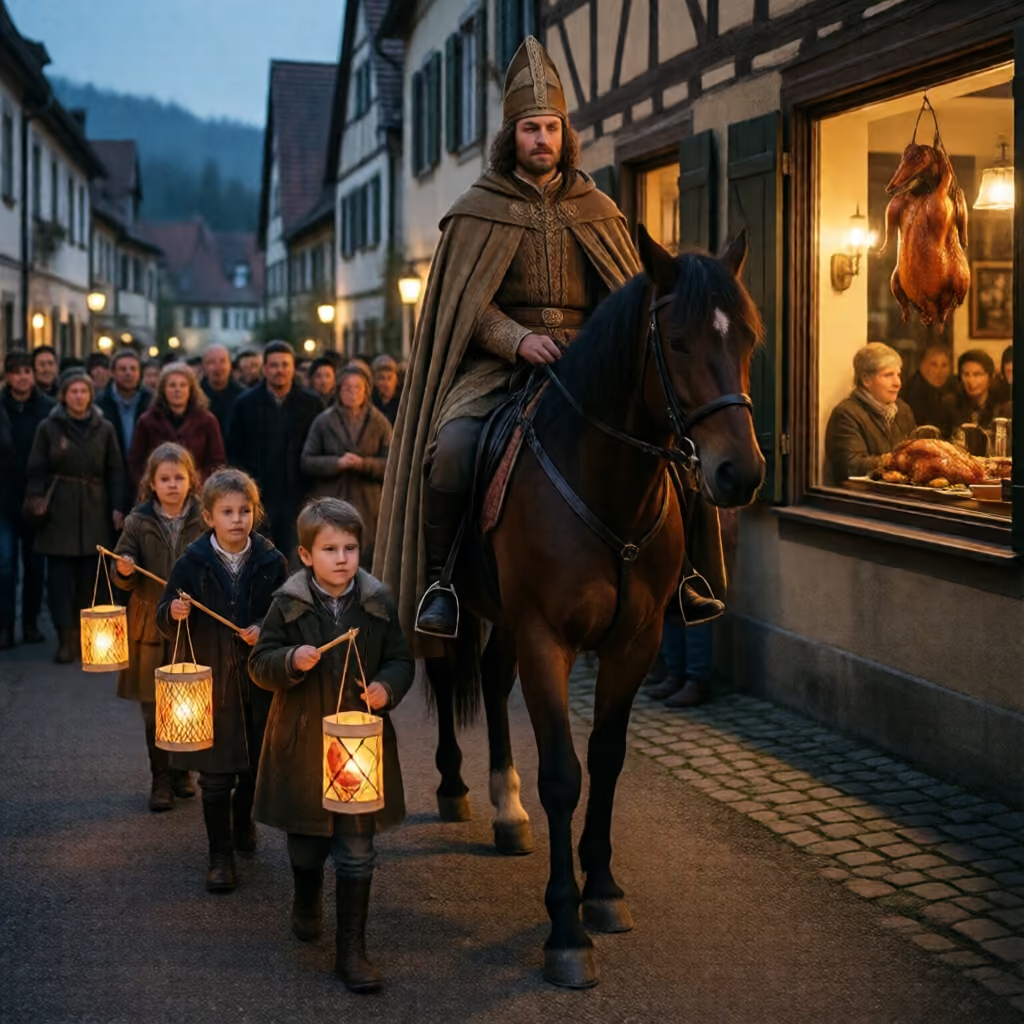
A regional name for St. Martin's Day on November 11; usually used without an article, as in 'zu Martini' (on St. Martin's Day) or 'an Martini' (on St. Martin's Day).
An Martini beginnt in manchen Regionen traditionell die Gänsesaison.
In some regions, the season for eating goose traditionally begins on St. Martin's Day.
| gender | neuter das |
|---|---|
| genitive | des Martini |
| singular | plural | |
|---|---|---|
| nominative | das Martini | – |
| accusative | das Martini | – |
| dative | dem Martini | – |
| genitive | des Martini | – |
The article changes with the case; it is shown in colour.
| gender | masculine der |
|---|---|
| plural | die Martinis |
| genitive | des Martini |
| singular | plural | |
|---|---|---|
| nominative | der Martini | die Martinis |
| accusative | den Martini | die Martinis |
| dative | dem Martini | den Martinis |
| genitive | des Martini | der Martinis |
The article changes with the case; it is shown in colour.
The meaning of 'Martini' (martini / St. Martin's Day) depends on the context: words like 'Cocktail' (cocktail), 'Gin' (gin), or 'Olive' (olive) point to the cocktail, while '11. November' (November 11), 'Gänse' (geese), or 'Fest' (celebration) indicate the regional name for St. Martin's Day.
Der Barkeeper schüttelte den Martini mit Gin und servierte ihn mit einer Olive.
The bartender shook the martini made with gin and served it with an olive.
Zu Martini gibt es in der Region ein traditionelles Fest mit Gänsebraten.
On St. Martin's Day, there is a traditional celebration with roast goose in the region.
For the cocktail, phrases such as 'einen Martini bestellen' (to order a martini), 'einen Martini trinken' (to drink a martini), and 'ein Martini mit Olive' (a martini with an olive) are especially common. The word 'trocken' (dry) is also often used to describe the desired version of the cocktail.
Zum Aperitif trinken wir gern einen sehr trockenen Martini.
We like to have a very dry martini as an aperitif.
'Martini' (St. Martin's Day) as a name for November 11 is only common in certain regions. The word is usually used without an article, as in 'zu Martini' (on St. Martin's Day), 'an Martini' (on St. Martin's Day), or 'bis Martini' (until St. Martin's Day), and often appears in connection with customs, celebrations, or the start of the season for eating goose.
Zu Martini beginnt in diesem Dorf traditionell der Wintermarkt.
In this village, the winter market traditionally begins on St. Martin's Day.