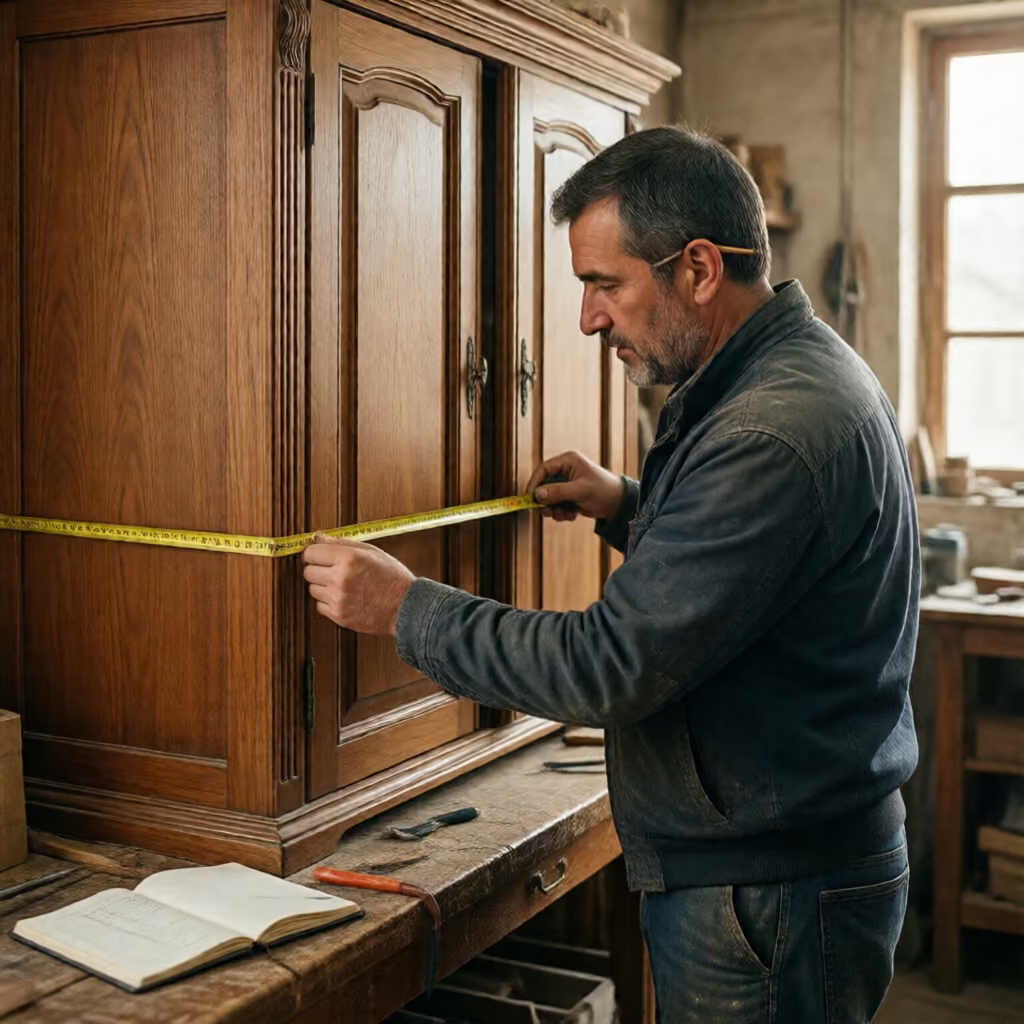
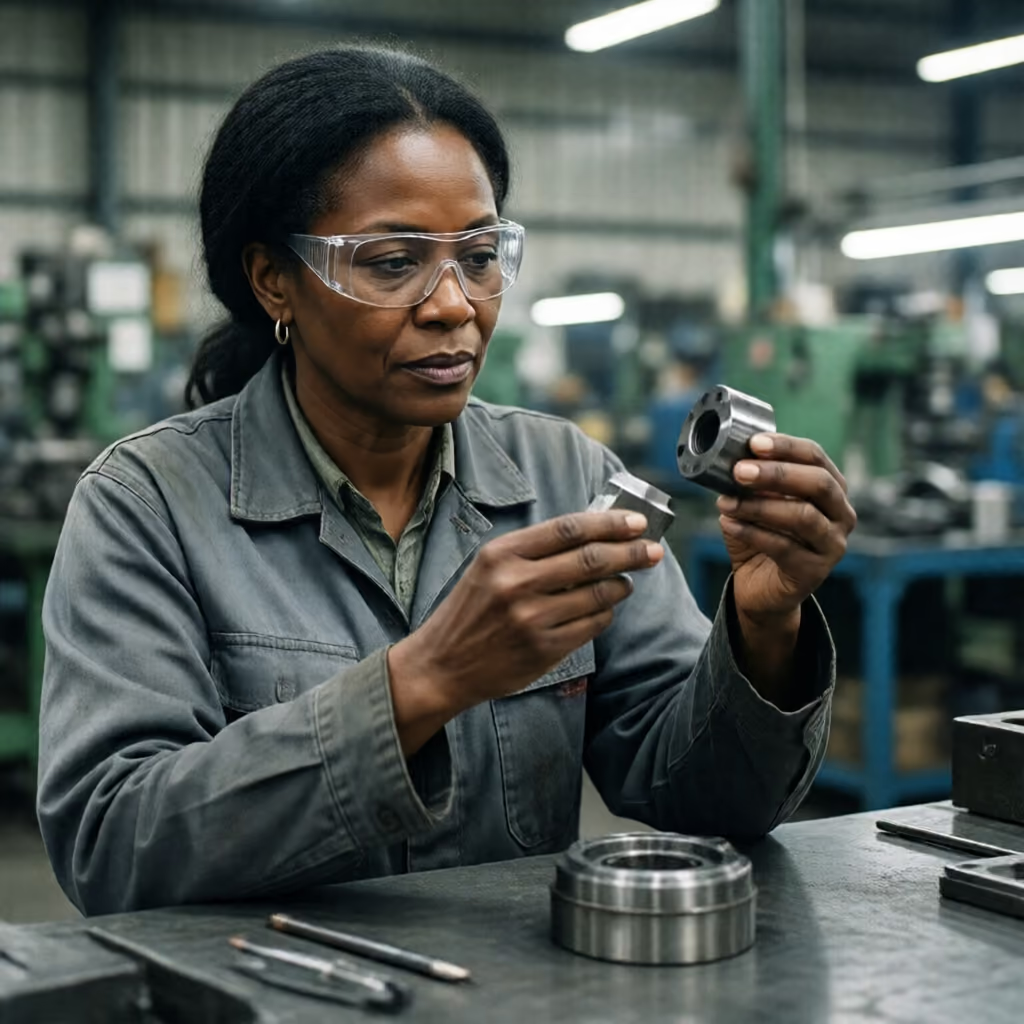
A measurable dimension of an object or body, especially its length, width, or height. In this meaning, the word is often used in the plural.
EXAMPLE
Bitte notieren Sie die genauen Maße des Schranks.
Please note down the cabinet's exact measurements.
das Maß
degree / extent
The extent or degree to which something exists or happens.
EXAMPLE
Diese Aufgabe verlangt ein hohes Maß an Konzentration.
This task requires a high degree of concentration.
das Maß
standard
A standard by which something is judged, evaluated, or compared.
EXAMPLE
Für sie ist finanzieller Erfolg das einzige Maß für ein gelungenes Leben.
For her, financial success is the only standard by which to judge a fulfilling life.
das Maß
limit
A limit of what is appropriate, reasonable, or bearable.
EXAMPLE
Mit diesen Forderungen überschreitet er jedes vernünftige Maß.
With these demands, he is exceeding every reasonable limit.
Maß nehmen
to take measurements
To determine a person's body measurements or an object's dimensions in order to make something that fits.
EXAMPLE
Die Schneiderin nimmt Maß für meinen neuen Anzug.
The tailor is taking my measurements for my new suit.
nach Maß
made-to-measure
Made according to individual measurements. Figuratively, the expression means that something fits someone's wishes or needs exactly.
EXAMPLE
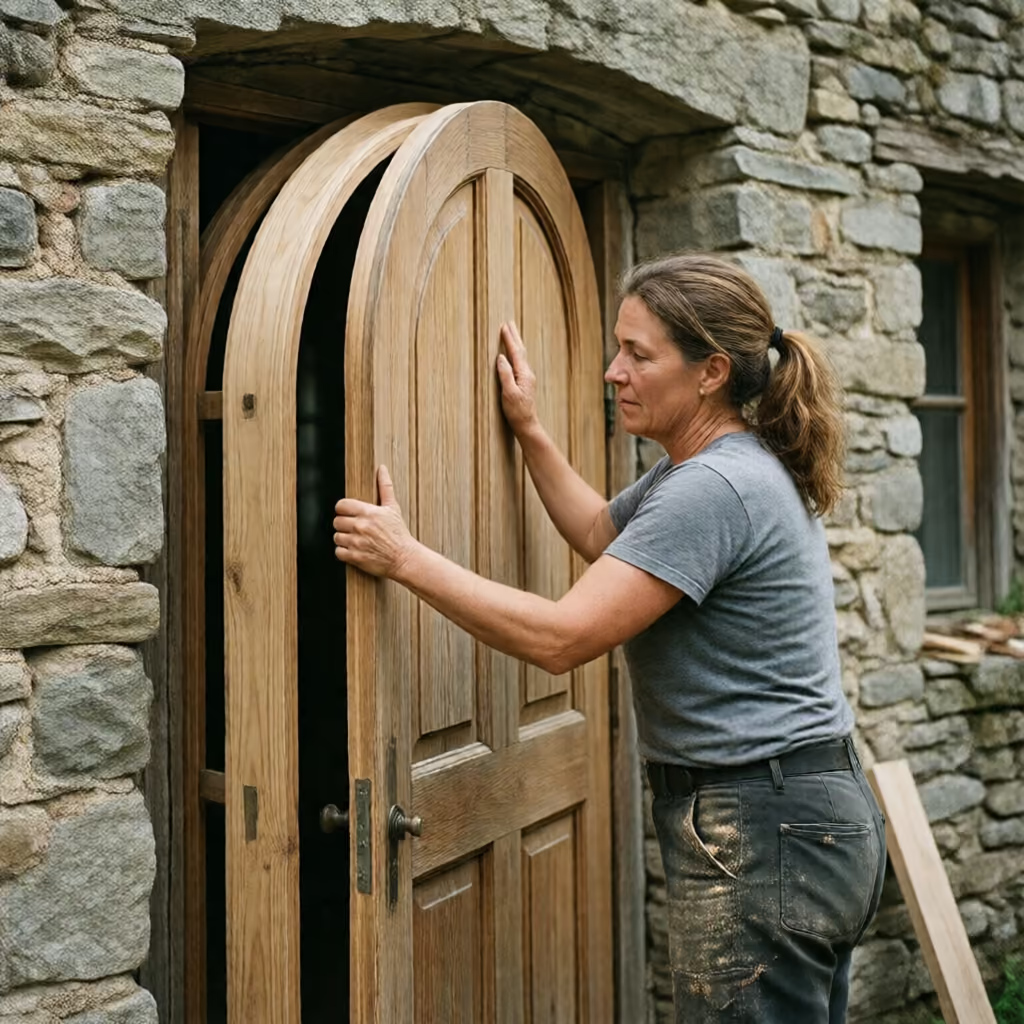
Weil keine fertige Tür in die Öffnung passte, bestellten wir eine Tür nach Maß.
Because no ready-made door fit the opening, we ordered a made-to-measure door.
Maß halten
to show restraint
To limit oneself and avoid overdoing something.
EXAMPLE
Beim Essen und Trinken sollte man Maß halten.
You should show restraint when it comes to eating and drinking.
in ... Maße
to a ... degree
Indicates how strongly or to what extent something applies or happens.
EXAMPLE
Die neue Regelung betrifft kleine Betriebe in besonderem Maße.
The new regulation affects small businesses to a particularly significant degree.
mit zweierlei Maß messen
to judge by different standards
To judge comparable people or situations by different standards and thereby treat them unfairly.
EXAMPLE
Wer denselben Fehler bei Freunden entschuldigt und bei anderen verurteilt, misst mit zweierlei Maß.
Anyone who excuses the same mistake when friends make it but condemns it in others is judging by different standards.
das Maß ist voll
enough is enough
The limit of one's patience or of what is bearable has been reached.
EXAMPLE
Nach deiner dritten Lüge ist das Maß jetzt voll.
After your third lie, enough is enough.
das Maß aller Dinge
the ultimate standard
The most important or highest standard against which everything else is measured and judged.
EXAMPLE
Diese Kamera gilt unter Profis als das Maß aller Dinge.
Among professionals, this camera is considered the ultimate standard.
über alle Maßen
to an extraordinary degree
Exceptionally strongly or very much; beyond the ordinary degree.
EXAMPLE
Sie freute sich über alle Maßen über seine Rückkehr.
She was extraordinarily happy about his return.
das Maß
unit of measurement
A defined unit used to measure a quantity.
EXAMPLE
Die Elle war früher ein verbreitetes Maß für die Länge von Stoffen.
The ell was once a common unit of measurement for the length of fabric.
das Maß
measuring vessel
A device or vessel used to measure a specific length or quantity.
EXAMPLE
Der Händler prüfte die Getreidemenge mit einem geeichten Maß.
The merchant checked the amount of grain with a calibrated measuring vessel.
Forms
Forms adapted from the German Wiktionary entry Maß, by Wiktionary contributors, licence CC BY-SA 4.0.
At a glance (das)
gender
neuter das
plural
die Maße
genitive
des Maßes
The four cases (das)
singular
plural
nominative
das Maß
die Maße
accusative
das Maß
die Maße
dative
dem Maße
den Maßen
genitive
des Maßes
der Maße
The article changes with the case; it is shown in colour.
At a glance (die)
gender
feminine die
plural
die Maß
genitive
der Maß
The four cases (die)
singular
plural
nominative
die Maß
die Maß die Maßen
accusative
die Maß
die Maß die Maßen
dative
der Maß
den Maß den Maßen
genitive
der Maß
der Maß der Maßen
The article changes with the case; it is shown in colour.
Usage tips
Plural for dimensions
When the length, width, or height of an object is meant, „Maß“ (measurement) is very often used in the plural: „die Maße“ (the measurements). Specific figures or the words „Länge“ (length), „Breite“ (width), and „Höhe“ (height) often appear in this context.
EXAMPLE
Die Maße des Fensters stehen auf dem Bauplan.
The window's measurements are shown on the building plan.
Maß an
The fixed combination „ein Maß an“ (a degree of) is typical for this meaning. After „an“ (of), the dative is used, as in „ein hohes Maß an Geduld“ (a high degree of patience).
EXAMPLE
In diesem Job hat man ein gewisses Maß an Freiheit.
In this job, you have a certain degree of freedom.
Maß für
When something serves as a criterion for evaluation, the combination „ein Maß für“ (a measure of) with the accusative is often used. The noun that follows refers to what something is judged by.
EXAMPLE
Die Kundenzufriedenheit ist ein wichtiges Maß für den Erfolg eines Unternehmens.
Customer satisfaction is an important measure of a company's success.
Exceeding the limit
In this meaning, „Maß“ (limit) often appears in fixed combinations such as „jedes Maß überschreiten“ (to exceed every limit) or „über jedes Maß hinausgehen“ (to go beyond all limits). The word refers to a limit that should not be exceeded.
EXAMPLE
Seine Wut ging bald über jedes Maß hinaus.
His anger soon went beyond all limits.
Maß nehmen
The person whose body measurements are being determined usually appears with „bei“ (from) and the dative: „bei jemandem Maß nehmen“ (to take someone's measurements). The bare dative is also possible: „jemandem Maß nehmen“ (to take someone's measurements).
EXAMPLE
Vor der Hochzeit hat der Schneider bei meinem Bruder Maß genommen.
Before the wedding, the tailor took my brother's measurements.
Fixed expression
„Nach Maß“ (made-to-measure) is often used with verbs such as „anfertigen“ (to make), „bestellen“ (to order), or „schneidern“ (to tailor). The expression can refer to exact measurements or to individual customization.
EXAMPLE
Wir ließen für das schwierige Fenster eine Gardine nach Maß anfertigen.
We had a made-to-measure curtain made for the unusual window.
Maß halten
„Maß halten“ (to show restraint) is used without an article and often appears with information about the area in which one should limit oneself. Combinations with „bei“ (when) or „beim“ (when) and an activity are typical.
EXAMPLE
Beim Feiern fällt es ihm schwer, Maß zu halten.
He finds it difficult to show restraint when celebrating.
In hohem Maße
This meaning is especially often used in the fixed combinations „in hohem Maße“ (to a high degree) or „in besonderem Maße“ (to a particularly significant degree). „In“ takes the dative here.
EXAMPLE
Der Erfolg der Ernte hängt in hohem Maße vom Wetter ab.
The success of the harvest depends to a large degree on the weather.
Fixed idiom
In „mit zweierlei Maß messen“ (to judge by different standards), „mit“ (with) takes the dative. The idiom describes the unfair evaluation of comparable cases.
EXAMPLE
Die Öffentlichkeit kritisierte den Verband, weil er mit zweierlei Maß gemessen hatte.
The public criticized the association because it had judged by different standards.
Das Maß ist voll
In this idiom, „das Maß“ (the measure) is the subject and „voll“ (full) is the predicative. Words such as „jetzt“ (now), „nun“ (now), or „endgültig“ (finally) often intensify the statement.
EXAMPLE
Jetzt ist das Maß endgültig voll: Ich suche mir eine neue Wohnung.
Now enough is finally enough: I'm going to look for a new apartment.
Aller Dinge
The fixed expression is „das Maß aller Dinge“ (the ultimate standard). „Aller Dinge“ (of all things) is a genitive construction and refers to the area in which something is considered the highest standard.
EXAMPLE
Für meine Großmutter war Pünktlichkeit das Maß aller Dinge.
For my grandmother, punctuality was the ultimate standard.
Über alle Maßen
„Über alle Maßen“ (to an extraordinary degree) is a fixed adverbial expression and is usually used with verbs or adjectives that express a particularly strong reaction or quality.
EXAMPLE
Die Kinder waren über alle Maßen stolz auf ihre selbst gebaute Seifenkiste.
The children were extraordinarily proud of their homemade soapbox car.
Historical units
In historical or cultural history texts, „Maß“ (measure) often refers to an old unit. Words such as „Elle“ (ell), „Zoll“ (inch), or „Fuß“ (foot) may be mentioned as specific units of measurement.
EXAMPLE
Im Mittelalter hatte fast jede Stadt ihre eigenen Maße und Gewichte.
In the Middle Ages, almost every town had its own weights and measures.
Calibrated measure
When „Maß“ (measure) refers to a vessel or device used for measuring, it often appears with adjectives such as „geeicht“ (calibrated) or verbs such as „abmessen“ (to measure out) and „abfüllen“ (to fill). It particularly often refers to liquids or grain.
EXAMPLE
Auf dem Markt wurde die Milch früher mit einem geeichten Maß abgemessen.
At the market, milk used to be measured out with a calibrated measure.