


massig
plenty
Colloquial for a very large amount or number of something.
EXAMPLE
Auf der Party gab es massig zu essen und zu trinken.
There was plenty to eat and drink at the party.
plenty / massive
Loading your saved state.
plenty
Colloquial for a very large amount or number of something.
Auf der Party gab es massig zu essen und zu trinken.
There was plenty to eat and drink at the party.
massive
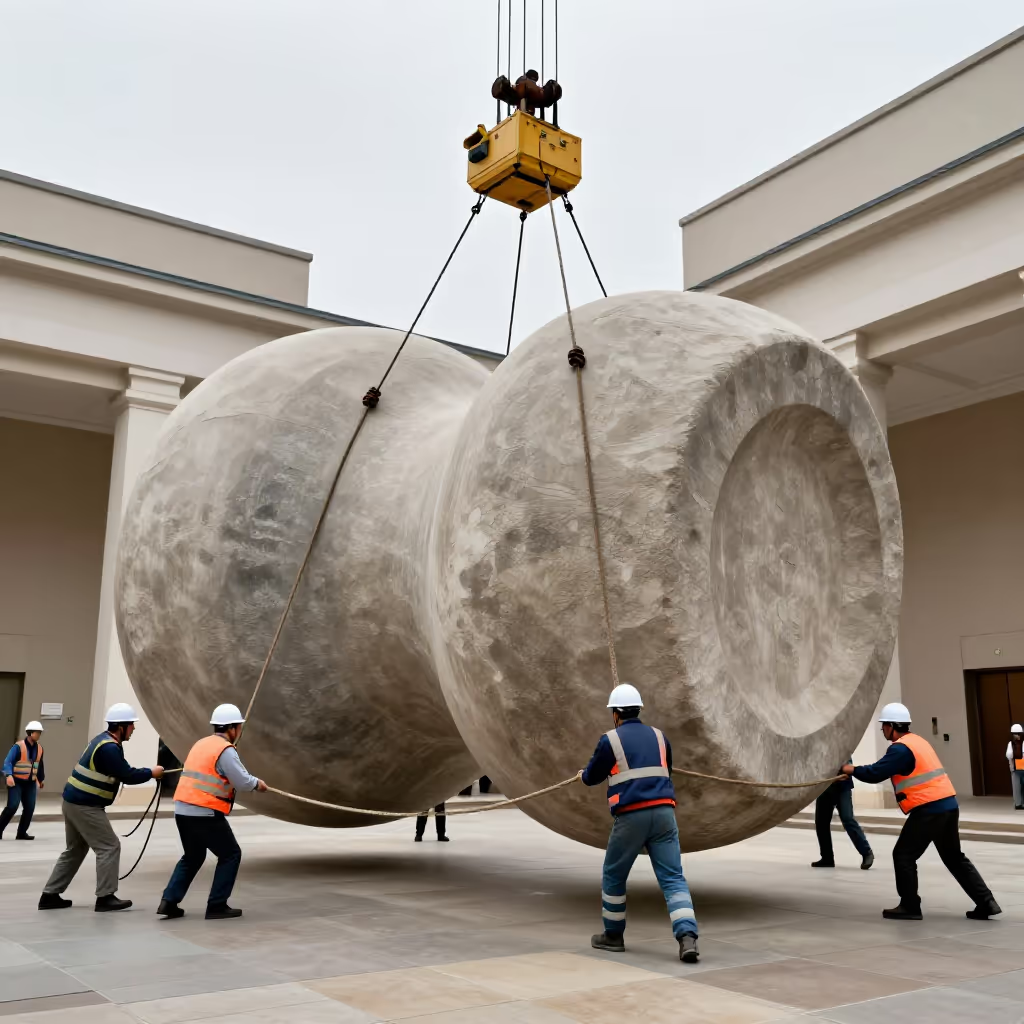
Describes something that is very large, heavy, and compact, often with an imposing or bulky appearance.
Der massige Eichenschrank passte kaum durch die Tür.
The massive oak cabinet barely fit through the door.
The adjective 'massig' (plenty/massive) is derived from the noun 'die Masse' (mass). This explains both meanings: a large 'Masse' (mass) of something, as in 'Massen von Menschen' (masses of people), or an object that has a lot of physical 'Masse' (mass) and is therefore heavy.
Im Lager standen massige Kisten aus Eichenholz.
Massive crates made of oak stood in the warehouse.
When 'massig' (plenty) describes a large amount, it often stands alone or is used with things like 'Zeit' (time), 'Geld' (money), or 'Leute' (people). When it describes an object as heavy and compact, it usually appears as an adjective directly before a noun like 'Schrank' (cabinet) or 'Stein' (stone).
Ich habe massig Fehler im Text gefunden.
I found plenty of mistakes in the text.
In the meaning 'sehr viel' (a lot), 'massig' (plenty) is a typical colloquial word. It is used less often in more formal or written contexts.
Wir haben noch massig Zeit, bis der Zug fährt.
We still have plenty of time before the train leaves.
In the colloquial meaning 'sehr viel' (a lot), 'massig' (plenty) can be used like an adverb or an undeclined adjective. It then remains unchanged before a noun.
Auf dem Festival waren massig Leute.
There were plenty of people at the festival.
In the meaning 'schwer und kompakt' (heavy and compact), 'massig' (massive) is often used to describe sturdy furniture, structural components, or strongly built people or animals.
Sein massiger Körper passte kaum auf den kleinen Stuhl.
His massive body barely fit on the small chair.
numerous
Zahlreich and massig can both express a large number of people or things. Zahlreich is a neutral, inflected adjective; massig is colloquial in this meaning and emphasizes a very large quantity. Zahlreich fits a factual text, while massig is more appropriate in a casual, emphatic statement.
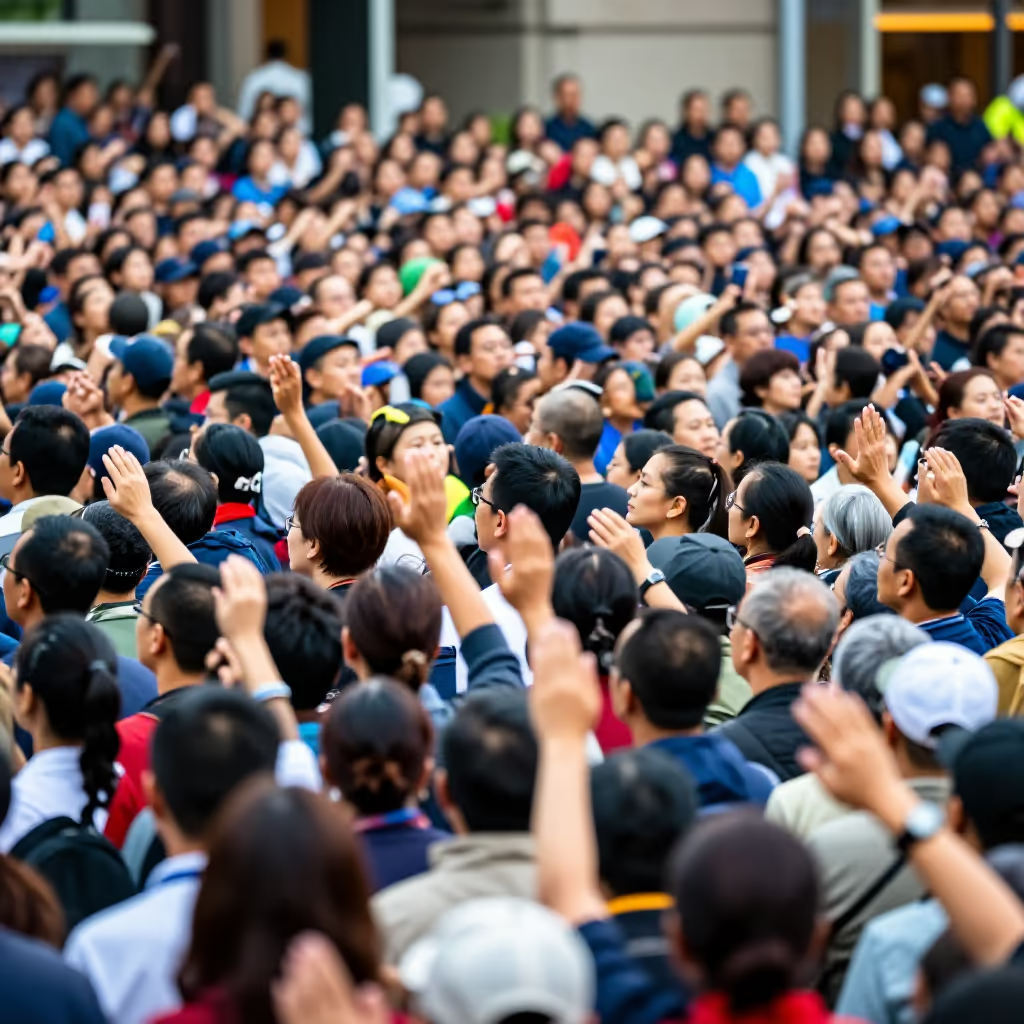
Vor dem Konzertsaal warteten massig Zuschauer.
There were loads of spectators waiting outside the concert hall.
Zahlreiche Zuschauer warteten vor dem Konzertsaal.
Numerous spectators were waiting outside the concert hall.