

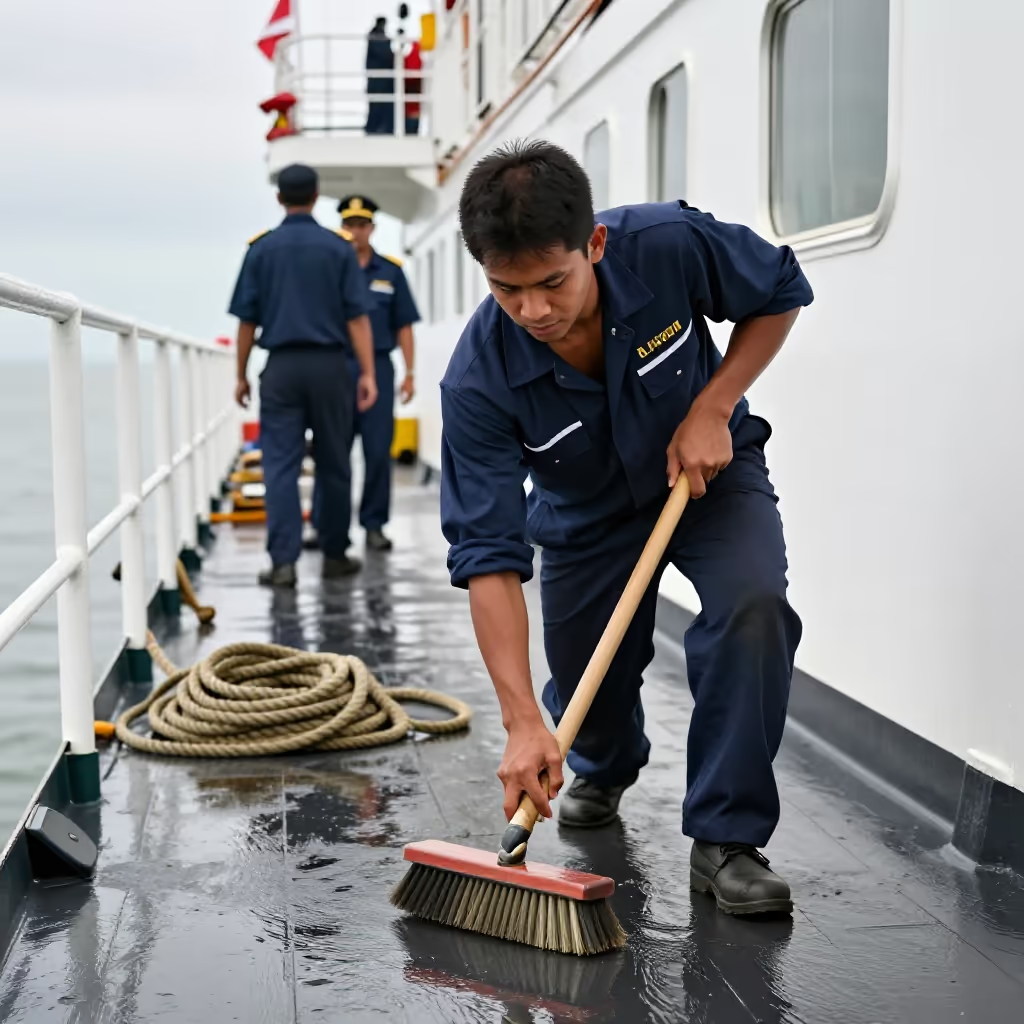
A seaman of the lowest rank on board a ship, responsible for general work on deck and maintenance. He is part of the crew, but not an officer.
example
Der junge Matrose schrubbte das Deck des großen Segelschiffs.
The young sailor scrubbed the deck of the large sailing ship.
Usage tips
Watch the N-declension
'Matrose' (sailor) is a masculine noun of the N-declension. This means it takes the ending '-n' in all cases except the nominative singular.
EXAMPLE
Der Kapitän gab dem Matrosen einen Befehl.
The captain gave the sailor an order.
Typical activities
'Matrose' (sailor) is often associated with typical work on board a ship. This includes 'das Deck schrubben' (scrubbing the deck), 'die Segel hissen' (hoisting the sails), or 'Wache halten' (keeping watch).
EXAMPLE
Die Matrosen mussten bei jedem Wetter die Segel setzen.
The sailors had to set the sails in all kinds of weather.
Context: seafaring
The word 'Matrose' (sailor) is firmly part of seafaring vocabulary. You often find it together with words like 'Schiff' (ship), 'Mannschaft' (crew), 'Kapitän' (captain), 'Anker' (anchor), and 'Hafen' (harbor).
EXAMPLE
An Bord des Schiffes gab es zehn Matrosen und zwei Offiziere.
On board the ship there were ten sailors and two officers.
Compare with
confusable
Matrose vs Offizier
officer
'Offizier' and 'Matrose' can be confused because both can be people on a ship. However, they are on different levels. An 'Offizier' has a higher rank and is responsible for leadership or for certain areas on board. A 'Matrose' is part of the crew, has a low rank, and often does practical work on deck. So on a ship, not every seaman is an officer. 'Matrose' fits for regular crew work, while 'Offizier' fits for a higher rank.
Matrose
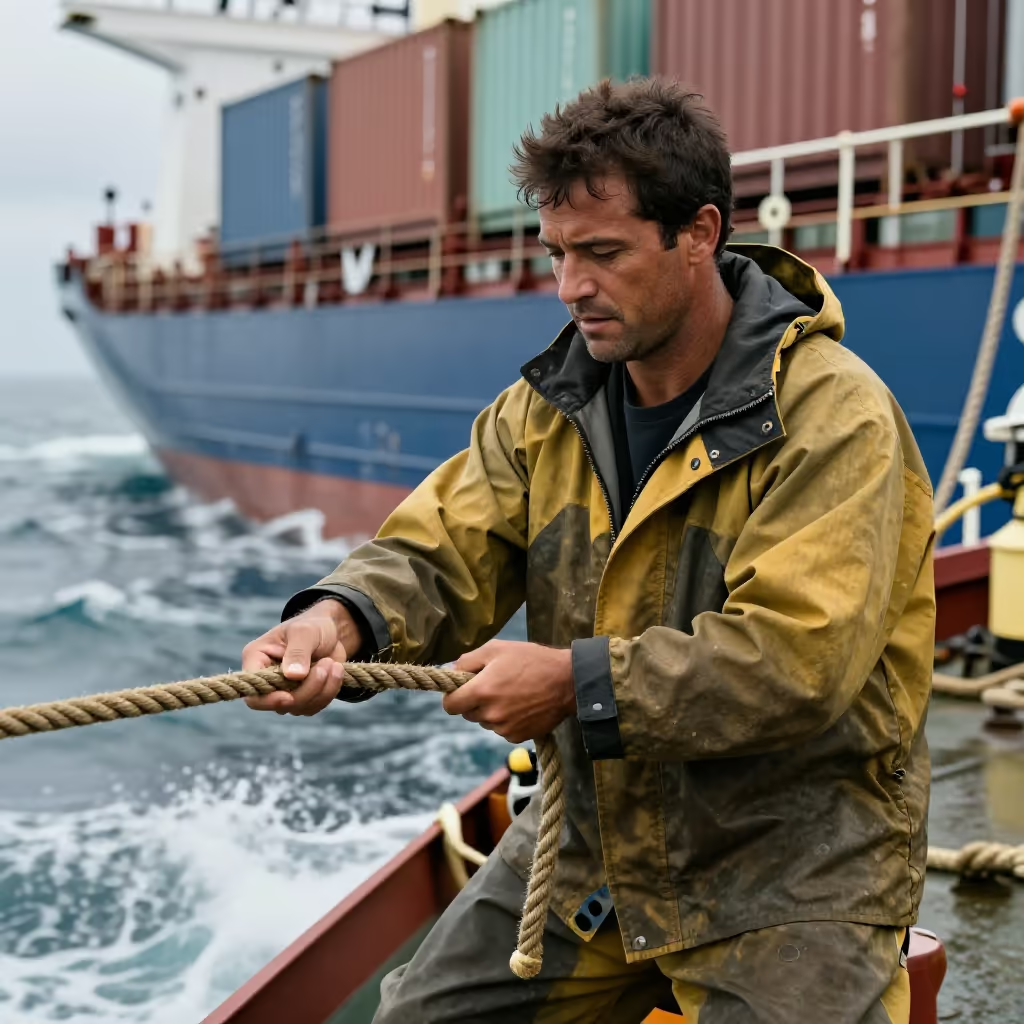
An Deck hilft der Matrose beim Festmachen der Leinen.
On deck, the sailor helps tie up the ropes.
Offizier
Auf dem Frachtschiff bespricht der Offizier die Route mit dem Kapitän.
On the cargo ship, the officer discusses the route with the captain.